What Happens To Sky Lanterns When They Burn Out Over Shifen?
A sky lantern released in Shifen burns out mid-air and falls back into the hills around the Pingxi branch line. Here is what the law says about the lantern itself, why each one carries the seller's name, and what actually happens to the paper.
What Happens To Sky Lanterns When They Burn Out Over Shifen?
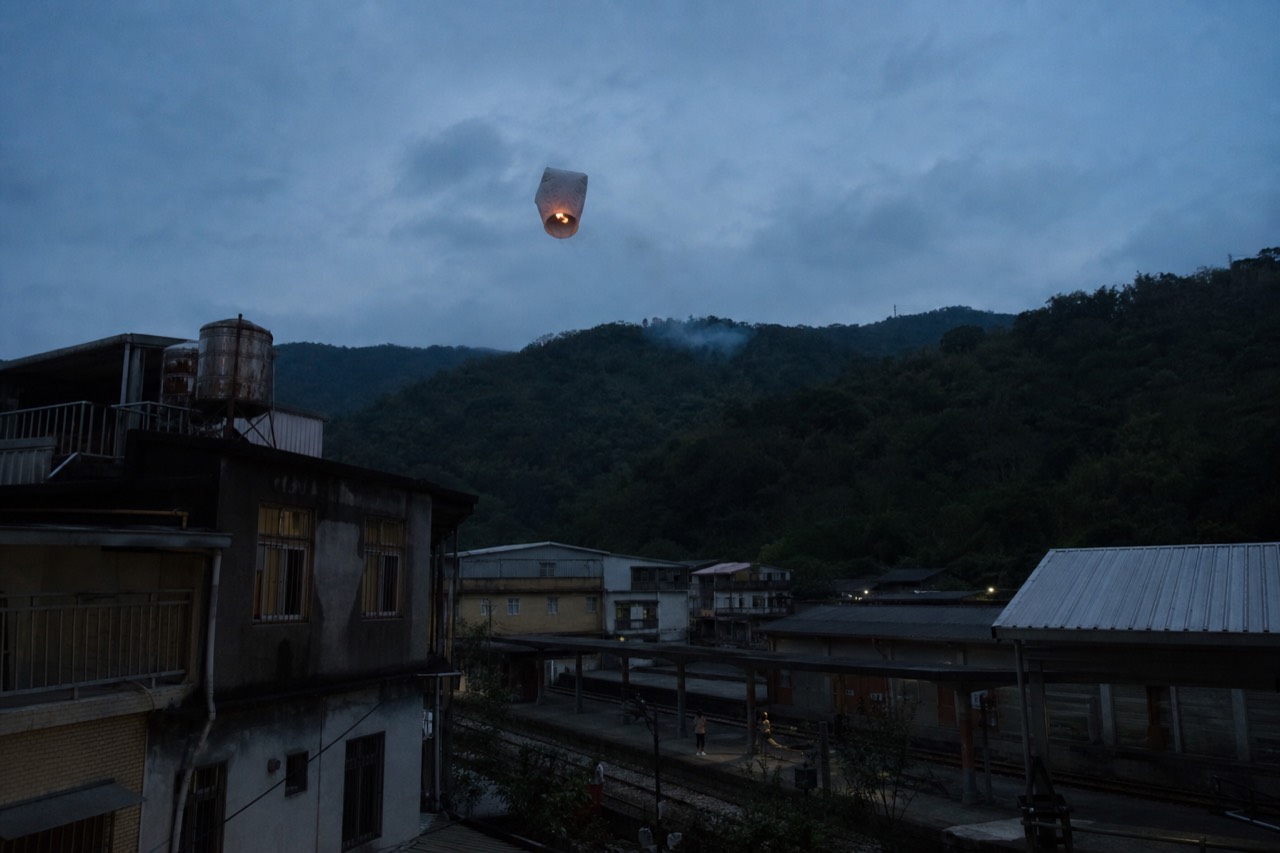
When a Shifen sky lantern burns out, the flame dies within minutes, the hot air stops, and the lantern sinks back toward the hills it rose from. It does not vanish or burn to nothing: the bamboo ring, wire frame and most of the treated paper fall as litter across the Pingxi valley, which is why New Taipei City passed a dedicated ordinance in 2011 to manage what comes down.
The physics is simple and slightly deflating after the beauty of the release. A lantern rises because the flame heats the air inside the shell, and it keeps rising only while that flame lives. When the fuel paste is spent, the lift dies, the shell cools, and the whole assembly drifts downwind. Over Shifen that downwind is usually toward the wooded slopes above the Keelung River, the same valley the release law was written to protect.
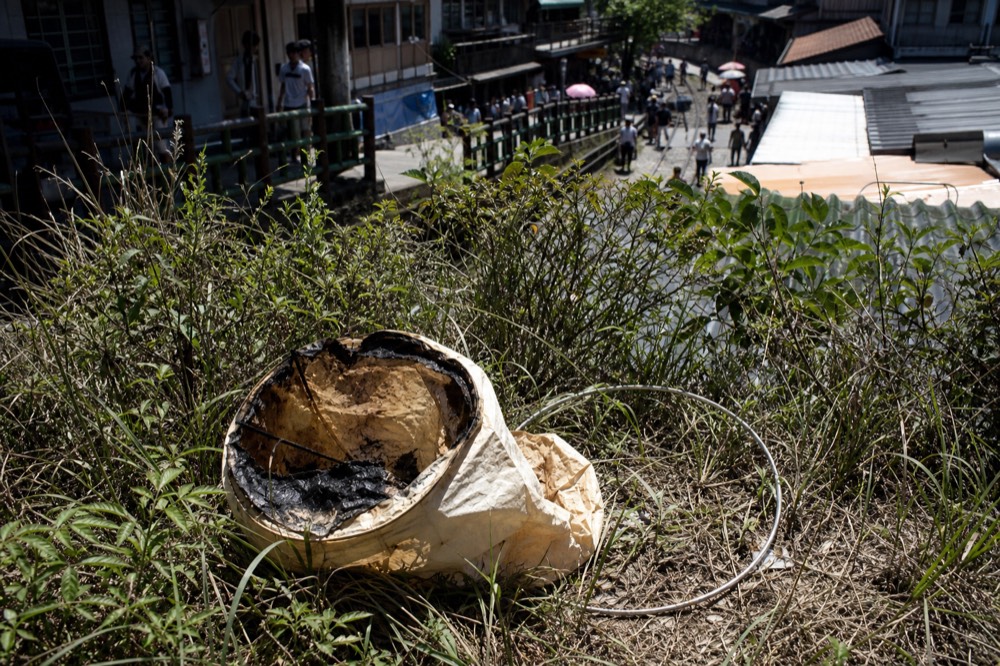
What happens on the ground afterwards is the part of the story that most pages skip. The paper is treated to burn slowly rather than flare, so a fallen lantern is usually a scorched husk rather than ash. The bamboo base ring and the wire or bamboo stiffeners do not burn at all. Multiply one lantern by the steady traffic of visitors on a normal weekend, and the valley accumulates paper and frame material along its slopes and stream banks, which is the problem the local recovery programme exists to address.
That programme, and the law behind it, are the real story here. Almost every number that circulates in English about lantern litter, release volumes, fire statistics and recovery totals fails a basic source check, and this site will not repeat them. What can be stated with certainty comes from the statute itself, from the New Taipei City Sky Lantern Release Management Measures promulgated on 15 June 2011 under the Fire Services Act, and it is more interesting than the invented figures. The full statutory text is published at the city's online law database.
If you would rather see the release in person than read about it, these are the three tours on this site that put you on the Shifen lantern stretch with the least friction:
Where Is Releasing A Sky Lantern Actually Legal?
Releasing a sky lantern is banned everywhere in New Taipei City except one marked stretch of Pingxi District: from the Shifen Visitor Center to Shigong Bridge, within 200 metres of the Keelung River along County Road 106, plus any extra zones the city announces. Release sites must be clear of flammable material and at least 100 metres from any petrol station, gas station, oil tank farm, magazine or chemical plant.
That single-exception structure surprises people who assume lanterns are a general Taiwanese custom. They are, in folk memory, but in law they are a tightly rationed activity confined to one valley, because that valley is where the tradition has its home and where the fire risk has been assessed and managed. Release anywhere else in the city, including Jiufen, is simply illegal. The permitted area is marked on the ground by government notice boards, so a visitor can see the boundary rather than guess at it.
Two further provisions shape the experience. No releases are allowed between 22:00 and 06:00, except at New Year or festivals the government announces, which is why the Shifen street goes quiet in the evening rather than glowing all night. And any organisation releasing 100 or more lanterns at once must apply to the Fire Bureau five days in advance with a safety plan and a map of the guarded release zone, which is how festival-scale events are controlled rather than banned.
| Rule | What the law says |
|---|---|
| Where release is allowed | One marked Pingxi stretch: Shifen Visitor Center to Shigong Bridge, within 200 m of the Keelung River along County Road 106, plus announced zones |
| Where it is banned | Everywhere else in New Taipei City |
| Night curfew | No releases 22:00 to 06:00, except New Year and announced festivals |
| Mass releases | 100+ lanterns requires a Fire Bureau application five days ahead, with safety plan and zone map |
| Safety distances | At least 100 m from petrol stations, gas stations, tank farms, magazines and chemical plants |
| Marking | The permitted area is marked by government notice boards on the ground |
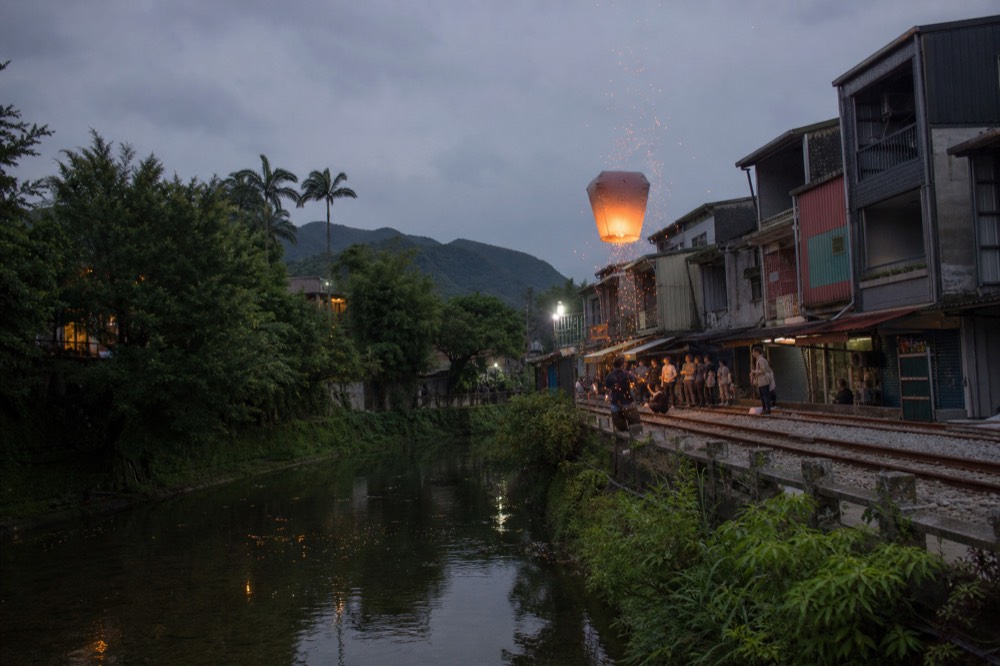
The practical reading for a visitor: the lantern shops on Shifen Old Street sit inside the legal zone, and the rails running down the middle of the street are the classic release point. You are not choosing to do something risky or borderline. You are doing the one thing, in the one place, that the city has decided to permit, under conditions the shops are legally required to explain to you.
What Does A Legal Shifen Lantern Look Like?
The law specifies the lantern itself: a base of 60 to 70 cm, a height of 130 to 140 cm, an outer circumference of 360 to 370 cm, a total weight of not more than 300 g, and fuel of kerosene mixed with soybean oil or an equivalent. No firecrackers or fireworks may be attached. Anyone under 14, and any person with a disability, must be accompanied when releasing one.
This is the detail that changes how you see the object in your hands. A legal Shifen lantern is not a folk craft of arbitrary size; it is a manufactured item built to a statutory specification, light enough and shaped so that its flight is predictable and its burn is contained. The weight ceiling of 300 g, combined with the fuel mix, is what keeps the flame gentle enough that a lantern that drifts onto damp vegetation is unlikely to ignite it.
The no-firecrackers rule sounds odd until you imagine the alternative. A lantern carrying pyrotechnics would descend as a small airborne hazard, and the ordinance closes that door explicitly. The accompaniment rule for children and disabled visitors is a supervision requirement, not a ban: a legal guardian, an accompanying adult or another adult family member must be present.
| Specification | Legal requirement |
|---|---|
| Base | 60 to 70 cm |
| Height | 130 to 140 cm |
| Outer circumference | 360 to 370 cm |
| Weight | Not more than 300 g |
| Fuel | Kerosene and soybean oil mixture, or equivalent |
| Attachments | No firecrackers or fireworks |
| Supervision | Under-14s and disabled persons must be accompanied |
If you want the lantern release built into a booked day rather than arranged on the street, one product on this site does exactly that: the From Taipei: Yehliu, Jiufen, Shifen Day Tour & Sky Lantern includes the lantern release in its price, runs 9 hours with hotel pickup, and confirms free cancellation. It is the only shared coach day tour on this roster with the release built into the fare.
Wondering whether to plan the whole coast around the lantern stop? A question heading for that: is a guided day the easy way to reach the release zone?
How Does The Labelling Rule Make Recovery Possible?
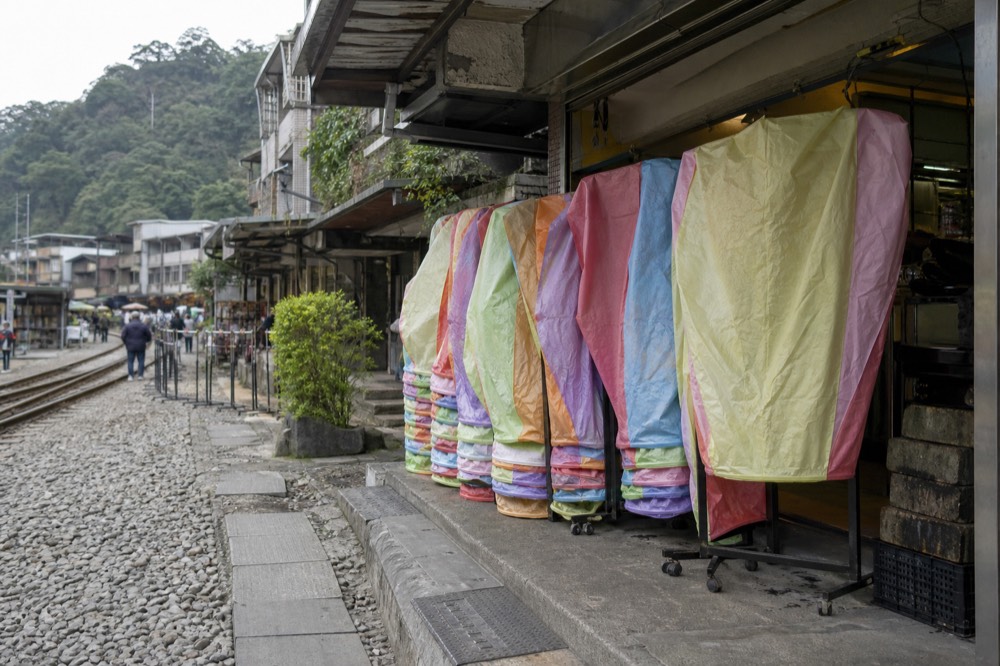
Every lantern sold in the permitted zone must be labelled with the seller's name and address, and every shop must display the official release safety notice. That labelling requirement is the quiet mechanism that makes the aftermath manageable: a recovered paper can be traced to the shop that sold it, which turns anonymous litter into a countable, attributable stream and gives the recovery programme something to work with.
Most coverage of lantern litter treats the fallen paper as an anonymous problem. The law does not. By requiring each lantern to carry its seller's identity, the ordinance creates a paper trail in the most literal sense: when volunteers or the programme collect fallen lanterns, the material points back to a specific business, and responsibility for the waste stream has an address attached.
The safety notice requirement works alongside it. A shop that displays the official notice is a shop that has acknowledged the rules: the legal zone, the curfew, the specification, the supervision requirement. A visitor buying a lantern can look for that notice as a rough signal that the operation is inside the regulated system rather than outside it.
It is worth being precise about what this does and does not achieve. Labelling does not stop a lantern from falling, and it does not make the paper decompose faster. What it does is convert an unmanageable problem, anonymous waste of unknown origin, into a manageable one, attributable waste from a known set of sellers, and that is the foundation the recovery programme stands on.
What Does The Recovery Programme Pay?
New Taipei City runs a lantern-paper recovery programme that pays collectors in goods rather than in cash. People who gather fallen lantern papers can exchange them for practical items, which keeps a steady volunteer supply going without the programme needing a cash budget. No official figure for how many papers have been recovered, or how many lanterns are released, has been published in a form this site could verify, so none is printed here.
The goods-not-cash design is the interesting part. A cash bounty on lantern paper would create its own distortions, including the risk of papers being hoarded or even released-then-collected for the reward. Paying in kind, in everyday household goods, keeps the incentive modest and local, aimed at residents and volunteers who walk the slopes anyway.
What this site will not do is quote the numbers that circulate. You will find claimed annual release totals, claimed cumulative recovery figures, claimed exchange rates of so many papers per sack of refuse bags or per roll of toilet paper, and claimed fire counts over multi-year spans. Every one of those figures, when traced, comes back to secondary reports or to claims this site could not fetch and confirm from a primary source, and a number that cannot be shown its source does not belong on a page that people use to plan a trip.
The honest sentence is the shorter one: the programme exists, it pays in goods, and the scale of both release and recovery is not published in a verifiable form. If a number matters to your decision, the place to ask is the programme itself or the local shops, not a blog that copied a figure from another blog.
Why Are So Many Lantern Statistics Unverified?
Because almost none of them trace to a primary source. The verified record on this site, built from the statute, official pages and fetched reporting, contains the legal specification, the release zone, the curfew, the mass-release application rule and the labelling requirement, and nothing else. Release volumes, recovery totals, fire counts, litter studies and price histories all failed verification, and a page that prints them is passing on somebody's guess.
This deserves its own section because it is the actual information gain on this topic. The English-language story of sky lantern litter is a hall of mirrors: one page estimates a release total, a second copies it and adds the word "reportedly", a third drops the hedge, and by the fourth hop a round number is being stated as fact. The same pattern produced the fire statistics, the recovery percentages and the exchange rates.
The rule this site works under is strict, and it is worth stating plainly so you can apply it elsewhere. If a figure cannot be shown to come from an official page, a statute, or a fetched, dated report from a named outlet, it is not printed. Not hedged, not softened with "reportedly", not debunked by quoting it, because reprinting a number to debunk it still puts the number on the page. The result is that this article can tell you exactly what the law requires and cannot tell you how many lanterns fly, and it says so rather than filling the gap.
| Claim | Status |
|---|---|
| Legal lantern specification (size, weight, fuel) | Verified, from the 2011 ordinance |
| Permitted release zone in Pingxi | Verified, from the 2011 ordinance |
| Night curfew and mass-release rules | Verified, from the 2011 ordinance |
| Seller labelling and safety notice requirements | Verified, from the 2011 ordinance |
| Recovery programme exists, pays in goods | Verified, no figures published |
| Annual release volumes, recovery totals, fire counts, litter studies | Not verified, not printed |
There is one more verified fact worth carrying, and it concerns the weather that governs how far a burnt-out lantern travels. There is no weather station at Shifen or Jiufen; the nearest representative station for this windward coast is Keelung, and the Central Weather Administration's 30-year normals for 1991 to 2020, published at the CWA statistics page, show 3,589.7 mm of rain a year there against Taipei's 2,329.5 mm, with rain on 193.6 days a year. Damp slopes most of the year are one reason a fallen lantern rarely becomes a fire, and the same normals show the driest month is July at 119.5 mm, which inverts the usual avoid-Taiwan-in-summer advice for this corner of the island.
Does A Burnt-Out Lantern Harm The Hills Around Shifen?
A fallen lantern leaves paper, a bamboo ring and wire or bamboo stiffeners on the slope, and none of that is good for the valley. The paper degrades over time, the frame material persists longer, and the accumulation is the reason the recovery programme and the labelling rule exist. What cannot be honestly stated is a quantified harm figure: no verified litter volume, wildlife impact study or decomposition rate is published.
The honest environmental picture is therefore qualitative, and it is still worth taking seriously. The Keelung River valley around Shifen is steep, wooded and wet, and material that lands on the upper slopes is genuinely hard to collect, which is why the recovery effort relies on people willing to walk off-path. The treated paper is the bulk of the mass but the least persistent part; the rings and frames are the part that outlasts the season.
Against that, the risk that a lantern ignites the hillside as it descends is small by design rather than by luck. The 300 g weight ceiling, the gentle fuel mix and the consistently damp climate all push in the same direction, and the release zone's 100 m rule keeps the activity away from fuel storage. The ordinance is, in effect, an engineered trade: a permitted tradition in one valley, under conditions chosen to minimise the worst outcomes, with the residue managed by collection rather than denied.
If you would like a fuller treatment of the release itself, the companion guide to Shifen Old Street and the sky lanterns covers the street, the rails and how the release actually works on the ground.
What Is The Best Way To See A Lantern Release On A Day Trip?
Take a tour that reaches Shifen Old Street, because the release happens on the street itself and the street is reached by the Pingxi branch line, on which there are 17 direct trains a day from Ruifang at a flat NT$29, with no direct train from Taipei at all. A booked day removes the connection risk. The strongest budget option on this site is the Yehliu, Shifen, Houtong and Jiufen one-day tour, from $35 per person.
The rail arithmetic is what catches independent travellers. Taipei Main Station to Ruifang has 45 to 47 direct trains a day at NT$73 on a local, but Ruifang to Shifen is a separate branch line with 17 trains a day, and the branch gets no extra weekend capacity: the same 17 run on a Saturday as on a Monday. There are also gaps to plan around, including 1h39m between the 16:54 and 18:33 departures. A tour absorbs all of that.
The budget option deserves its own mention. The Yehliu, Shifen, Houtong and Jiufen one-day tour runs 8 hours from $35 per person, rated 5.0 across 17 reviews, with a guide and free cancellation confirmed, and it is the cheapest way to add Houtong Cat Village to the same day.
The lantern-included option deserves its own mention too. The From Taipei: Yehliu, Jiufen, Shifen Day Tour & Sky Lantern is the only shared coach day tour on this site with a lantern release built into the price, from $82 per person, rated 4.7 across 1,006 reviews, running 9 hours with hotel pickup and free cancellation confirmed. If the release is the point of your day, that is the product built around it.
For a private version, the Half Day Private Tour to Jiufen, Shifen Waterfall & Sky Lantern packs six stops into 6 hours, from $99 per person, rated 4.9 across 437 reviews, with free cancellation confirmed. It is the densest half-day on this site, and it puts the release into a schedule you control.
For the full coast circuit with Houtong Cat Village added, the Yehliu, Shifen, Houtong and Jiufen one-day tour remains the cheapest route: 8 hours, from $35 per person, hotel pickup and guided, free cancellation confirmed, and rated a perfect 5.0 across its 17 reviews, a smaller-volume listing whose every reviewer gave the top score.
If you are weighing Shifen against its neighbours, the comparison piece on whether to do Jiufen or Shifen first breaks down the sequencing question, and the Shifen Waterfall guide covers the walk to the valley's other main sight. This site, Jiufen Tour, exists to keep the whole northeast coast circuit honest about what is verified.
What Should You Actually Do At The Release, Minute By Minute?
Buy from a shop displaying the official safety notice, check that your lantern carries the seller's name and address, release it from inside the marked zone in daylight hours, and keep any under-14 or disabled member of your group accompanied at the moment of release. Then watch it burn out, knowing the paper will come down in the valley and the recovery programme will look for it.
The minute-by-minute framing is deliberate, because the law translates into a short checklist rather than a lecture. The notice board tells you that you are inside the permitted stretch. The label on the lantern is both a legal requirement and your assurance that the seller is inside the regulated system. Daylight matters because the curfew starts at 22:00, and in practice the street's lantern traffic thins well before then.
One caution that costs nothing: do not attach anything to the lantern, and do not buy one that has firecrackers fixed to it. That is not etiquette, it is the statute, and the fines regime under the Fire Services Act sits behind it. Beyond that, the release is a permitted, managed tradition, and treating it as such, rather than as a guilty pleasure or a harmless nothing, is the accurate posture.
The burnt-out lantern itself is the least glamorous part of a beautiful ritual, and it is the part with the most interesting law attached. The flame dies, the shell descends, the valley collects it, and a city ordinance with a labelling rule and a goods-paying recovery programme quietly deals with what falls. That is the whole answer, and it is more than most pages manage.
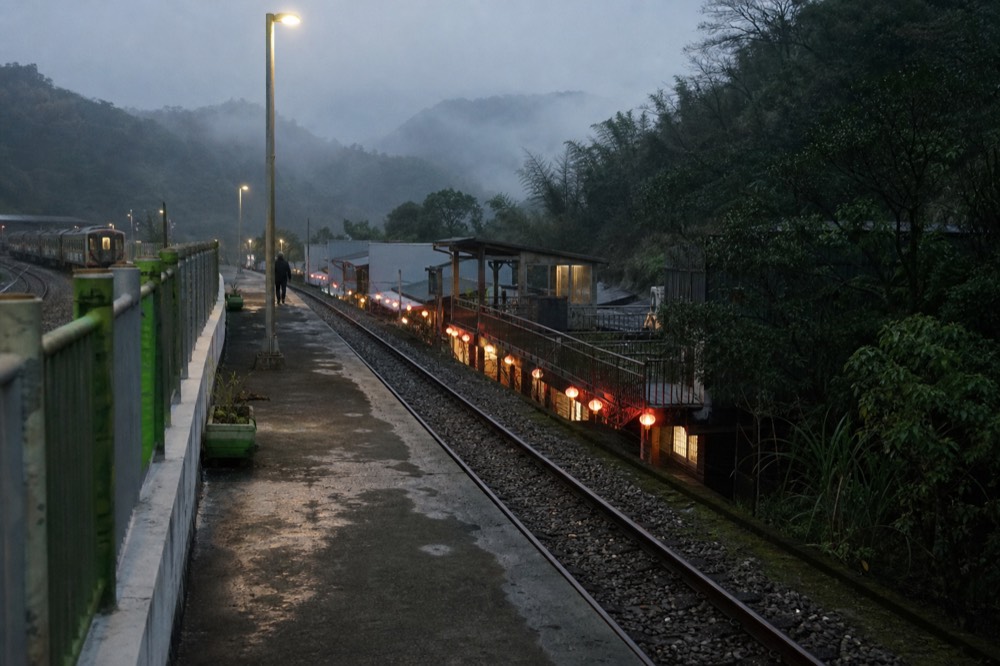
If you are ready to put yourself on that street, these are the three tours that get you there with the fewest moving parts:
The short answers below cover the burn-out itself, the law that confines release to one marked stretch of Pingxi, the statutory lantern specification, the seller-labelling rule that makes recovery traceable, and the honest position on recovery numbers. Each one restates only what the 2011 ordinance and the verified record support, with no unverified figures attached.
Common Questions About Sky Lanterns Over Shifen
What happens to sky lanterns when they burn out?
The flame dies when the fuel paste is spent, the hot air stops being produced, and the paper shell sinks back toward the hillside. A fallen lantern is usually a scorched husk with its bamboo ring and stiffeners intact, not ash, and it lands as litter inside the Pingxi valley, where the city's recovery programme collects it.
Is releasing a sky lantern legal in Taiwan?
Releasing one is banned everywhere in New Taipei City except a marked stretch of Pingxi District from the Shifen Visitor Center to Shigong Bridge, within 200 metres of the Keelung River along County Road 106, plus any zones the city announces. Elsewhere in the city, including Jiufen, release is illegal.
Can you release sky lanterns at night in Shifen?
No, not as a general rule. The ordinance forbids releases between 22:00 and 06:00, except at New Year or festivals the government announces. In practice the lantern traffic on Shifen Old Street thins out well before the curfew hour.
How big is a legal sky lantern?
The law specifies a base of 60 to 70 cm, a height of 130 to 140 cm, an outer circumference of 360 to 370 cm and a weight of not more than 300 g, with fuel of kerosene mixed with soybean oil or an equivalent. No firecrackers or fireworks may be attached.
Do shops have to label the lanterns they sell?
Yes. Every lantern must be labelled with the seller's name and address, and every shop must display the official release safety notice. The label is what lets recovered paper be traced back to the shop that sold it, which underpins the recovery programme.
How many lanterns are recovered each year?
No verified figure is published. New Taipei runs a recovery programme that pays in goods rather than cash, but the scale of releases and recoveries is not published in a form that can be checked against a primary source, and this site does not print unverified numbers.