Is Jiufen The Same As Shifen?
No. Jiufen is a hillside gold-mining town above Ruifang; Shifen is a river town on the Pingxi branch line where sky lanterns are legal. Here is how they differ and how they get sold as one day.
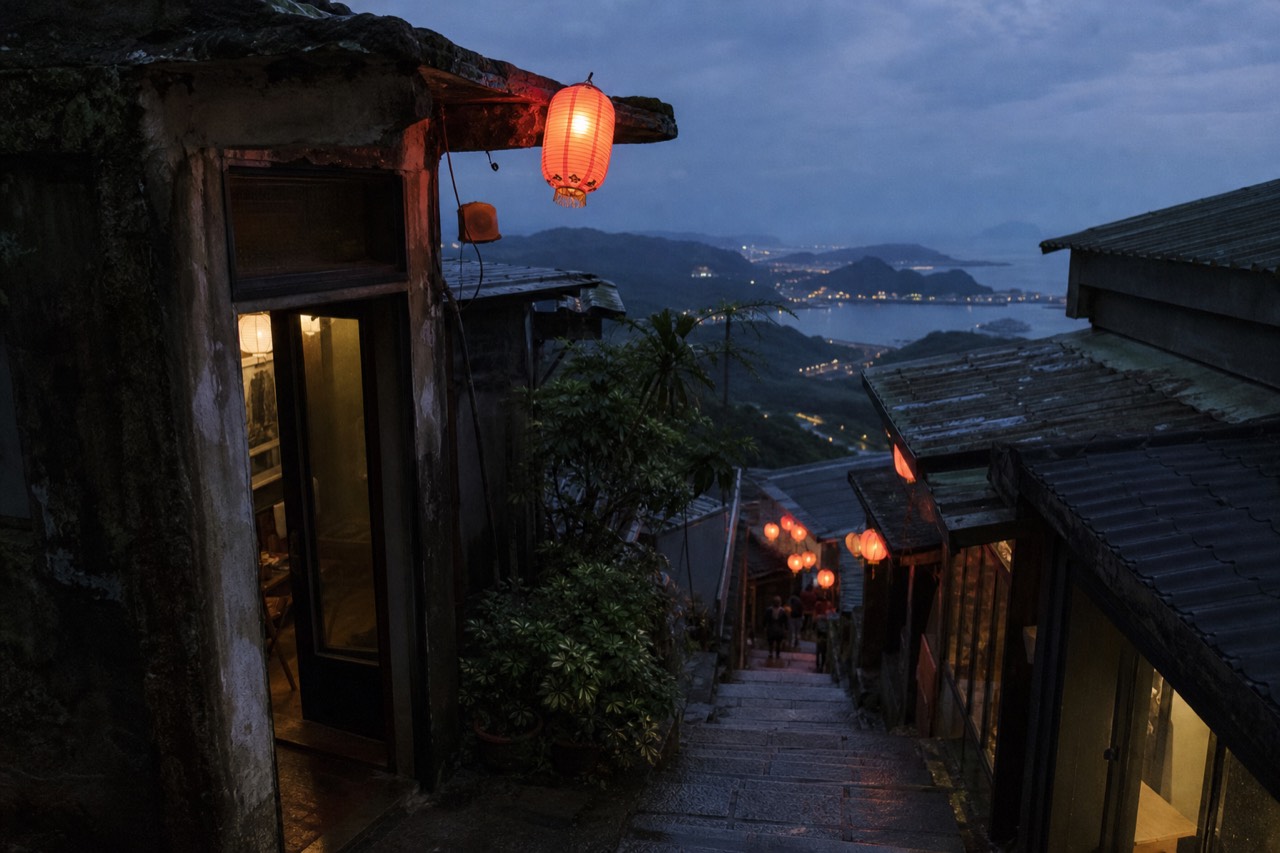
Is Jiufen The Same As Shifen?
No, Jiufen and Shifen are two different towns about a railway junction apart, in two different districts of New Taipei City. Jiufen is a hillside gold-mining town above Ruifang with teahouses and sea views. Shifen is a river town on the Pingxi branch line, in Pingxi District, where releasing a sky lantern is legal. They share a train station connection at Ruifang and almost nothing else.
The confusion is worth taking seriously rather than laughing off, because the two towns are routinely sold as one destination. Day tours from Taipei bundle them into a single itinerary, blog posts photograph them in the same gallery, and the names rhyme in a way that makes them easy to blur. A traveller who books a "Jiufen and Shifen" day trip can easily end up believing they visited one place with two names.
They didn't. Jiufen sits in Ruifang District, on a hillside facing the northeast coast. Its streets are stone staircases and a lantern-lit old lane built on a gold rush: the Taiwan Tourism Administration's own page records that in 1890 someone struck gold near Jiufen, that prospectors of 4,000 families followed, and that the village was once called little Shanghai. Shifen sits roughly half an hour away by branch-line train, in Pingxi District, strung along the Keelung River with a waterfall at one end and a railway running straight down the middle of its main street.
The practical difference is the one that catches people out. The lanterns you see in photographs come in two kinds, and the law treats them differently. A sky lantern, the kind released into the air, is banned everywhere in New Taipei City except one marked stretch of Pingxi around Shifen, under the city's sky lantern release management measures. Jiufen's red lanterns are strung up and stay put. If a lantern release is the point of your day, the town you need is Shifen, not Jiufen.
This article walks through where each town actually sits, what the Ruifang junction does, how the two places differ on the ground, which tours reach one or both, and where the Spirited Away story fits, if it fits at all. It is the kind of question Jiufen Tour exists to answer with verified numbers rather than folklore, and every timetable and fare below comes from official sources.
Where Are Jiufen And Shifen, Actually?
Jiufen is in Ruifang District, on the hillside above the town of Ruifang and the coast at Keelung. Shifen is in Pingxi District, on the Keelung River, on a dead-end branch railway that leaves the main line at Ruifang. The two towns sit in different districts, on different lines, and no train runs between them without a change at Ruifang. That junction is the only thing they share.
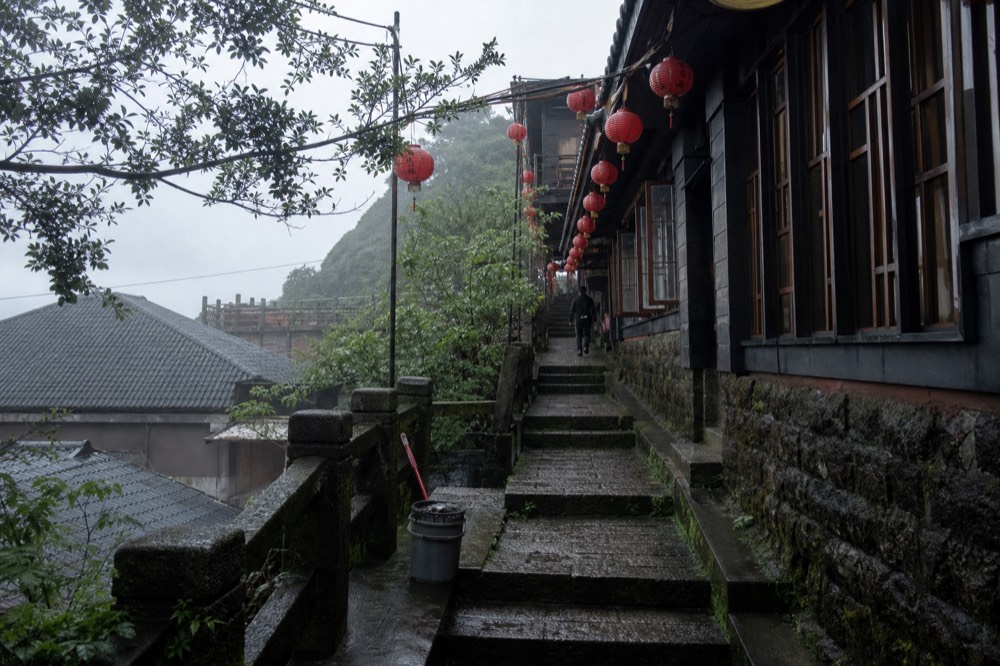
Start with Jiufen, because it is the better known of the two. It grew as a mining settlement on the slopes above Ruifang, and its layout still shows it. Jishan Street, the main old street, takes a name the city government translates as "the street that connects to the foot of Keelung Mountain". Shuqi Road is named "the road of many vertical steps", which is a fair description. Qingbian Road, the quiet flat lane parallel to the market street, is flat for a reason: it is the trackbed of a human-powered light railway laid in 1931, and its level roadbed survives.
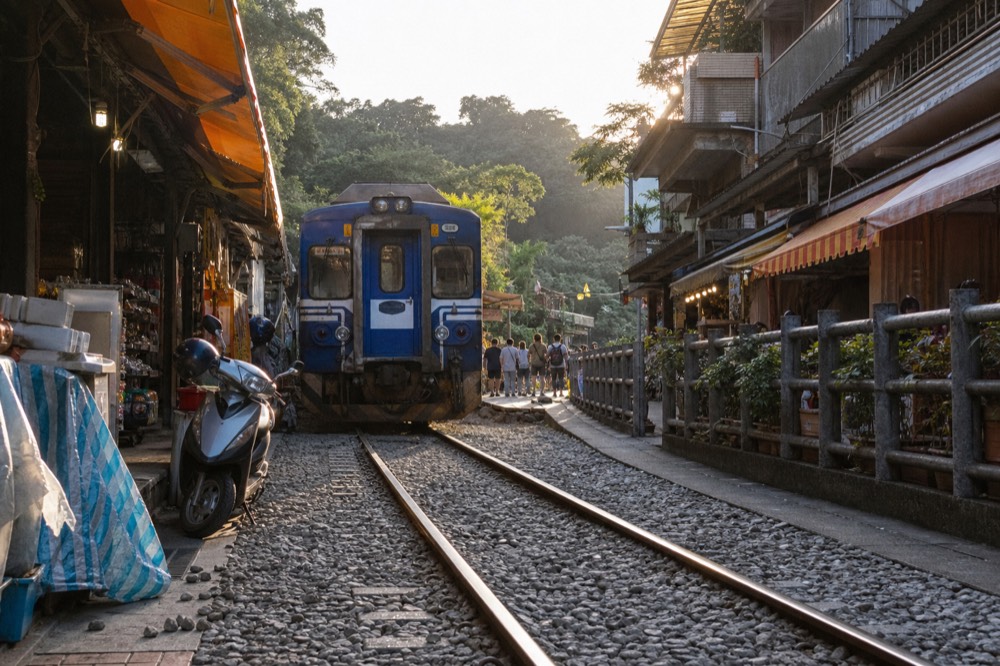
Shifen is a different geography entirely. It is a linear village along the Keelung River, and the Pingxi branch line runs down the middle of the street itself, so trains pass within arm's reach of the food stalls. The river gorge, the Shifen Waterfall at one end of town, and the railway-in-the-street setting are what people come for. It sits in Pingxi District, which is a fact that matters more than it sounds like it should, because three tour listings on this site name Pingxi in their titles and not one of their itineraries reaches Pingxi as a stop. What they reach is Shifen, which happens to sit inside Pingxi District.
The name confusion has its own history. Even the name "Jiufen" is widely misexplained: the familiar story says nine households shared supplies in nine portions, but New Taipei City's own Gold Museum release calls that a legend, and both the city and the Tourism Administration give the camphor-stove origin instead, ninety stoves with ten stoves to a unit, hence nine units. The English internet has the story backwards, and the same is true of the Jiufen-Shifen blur.
If you are planning the day yourself, the honest framing is this: these are two separate towns, each worth a half-day, joined by a transfer at Ruifang that is short but real. The guides on how to get from Taipei to Jiufen and Shifen Old Street and the sky lanterns cover each leg in detail.
What Connects Them: The Ruifang Junction
The link between the two towns is Ruifang Station, where the Pingxi branch line leaves the main coastal railway. From Taipei Main Station, 45 to 47 direct trains a day reach Ruifang in 32 to 68 minutes, from NT$73 per person. From Ruifang, 17 direct trains a day reach Shifen in 27 to 32 minutes for a flat NT$29. There is no direct train from Taipei to Shifen at all: zero services, you always change at Ruifang.
That last sentence is one of the most useful corrections this site can make, because a lot of English writing implies you can ride straight through to Shifen from Taipei. You cannot. Taiwan Railway's own booking system returns no direct services on that pairing. The journey is always two legs: Taipei to Ruifang on the main line, then Ruifang to Shifen on the Pingxi branch.
| Leg | Trains per day | Journey time | Fare |
|---|---|---|---|
| Taipei Main Station to Ruifang (Local / Fast Local) | 45 to 47 direct total | 32 to 68 min, median 46 | NT$73 |
| Taipei to Ruifang (Chu-Kuang) | within the same total | similar range | NT$87 |
| Taipei to Ruifang (Tze-Chiang / Puyuma) | within the same total | fastest found: 33 min | NT$114 |
| Ruifang to Shifen (Pingxi branch) | 17 direct | 27 to 32 min | NT$29 flat |
| Ruifang to Houtong | 44 services | 5 to 7 min | NT$22 |
| Taipei to Shifen direct | 0 | not applicable | not applicable |
The branch-line timetable has traps of its own. The 17 daily departures from Ruifang to Shifen run roughly hourly through the middle of the day, then thin out badly: there is a gap of 1 hour 39 minutes after the 16:54 departure, and another of 1 hour 44 minutes after the 19:22. Miss an afternoon train and you will feel it. And the schedule is identical on a Saturday as on a Monday, so the line gets no extra weekend capacity for the crowds that weekends bring.
There is one more wrinkle worth knowing before you plan a self-guided day. On weekends and public holidays between 08:00 and 20:00, Jiufen operates under a signed New Taipei City traffic control plan, in force since 1 January 2025, under which coaches must apply in advance and may not drive to the old street on their own, with roughly 20 coaches approved per half-day slot and applications refused entirely on holiday runs of three or more consecutive days. The plan restricts coaches, not private cars and not pedestrians, but it is a real argument for the train-and-bus route, and a real argument for a weekday.
What Is Different About The Two Towns?
Jiufen is a hillside mining town of staircases, teahouses and sea views, built on a gold rush and reached by bus or tour vehicle from Ruifang. Shifen is a river town on a dead-end branch line, where the street is the railway and the signature act is releasing a sky lantern into the air, legal only in that one marked stretch of Pingxi. The towns look different, feel different and reward different amounts of time.
The table below is the honest side-by-side, built only on verified facts.
| Jiufen | Shifen | |
|---|---|---|
| District | Ruifang District | Pingxi District |
| Setting | Hillside above the coast, sea views | River gorge on the Keelung River |
| Origin | Gold rush town; gold struck nearby in 1890 | Coal-mining village on the Pingxi line |
| Signature street | Jishan Street, "the street that connects to the foot of Keelung Mountain" | Shifen Old Street, with the railway running down its middle |
| Lanterns | Red lanterns strung up as decoration | Sky lanterns released into the air, legal only in this stretch of Pingxi |
| Sky lantern release | Not legal here | Legal in the marked zone from Shifen Visitor Center to Shigong Bridge |
| Access from Taipei | Train to Ruifang then bus, or a tour vehicle | Train to Ruifang, change to the Pingxi branch, NT$29 |
| Other draws | Teahouses, Qingbian Road flat lane, night views | Shifen Waterfall, the train-in-the-street setting |
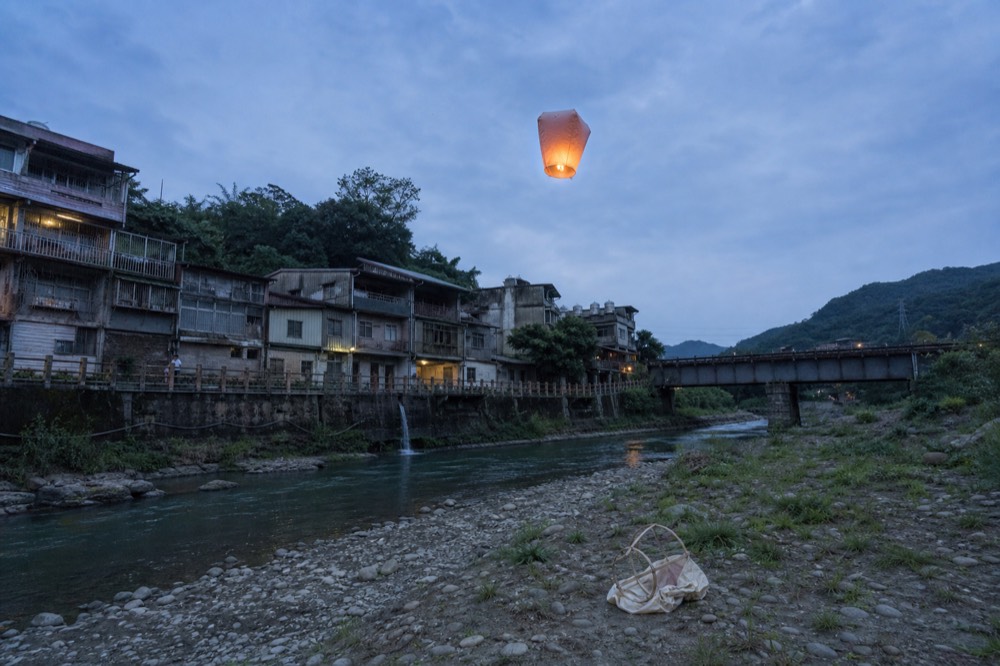
The lantern distinction deserves its own paragraph, because it is the single most common mix-up. Jiufen's red lanterns are street decoration, strung across lanes and left in place. Shifen's sky lanterns are lit and released, and the law is specific about where that may happen: the release management measures ban it everywhere in New Taipei City except the stretch from the Shifen Visitor Center to Shigong Bridge within 200 m of the Keelung River, with no releases between 22:00 and 06:00, and every lantern legally required to be labelled with the seller's name and address. No official lantern price is published, so check the shop boards in Shifen rather than any number you read online.
The towns also differ in what a visit costs you in effort. Jiufen rewards wandering: three parallel routes down the hill, a flat lane that used to be a railway, teahouses with veranda seats over the sea. Shifen rewards a plan: the branch line's afternoon gaps mean you want to know your return train before you let the evening drift. The site's guide to doing Jiufen and Shifen in one day works through the sequencing question, including which town to do first.
Which Tours Reach One Town, The Other, Or Both?
Of the 35 bookable products on this site, most day tours reach both Jiufen Old Street and Shifen, but six reach Jiufen without reaching Shifen, and one reaches Jiufen and nothing else. A handful also skip Jiufen entirely. Reading the itinerary, not the title, is the reliable way to tell, because two listings have titles that outrun what they actually visit.
The roster arithmetic is worth seeing laid out, because it answers the question in booking terms rather than geography terms.
| Product | Reaches Jiufen | Reaches Shifen | Notes |
|---|---|---|---|
| Jiufen & Shifen The Taiwan Charm Day Tour | Yes | Yes | Golden Waterfall, Yin Yang Sea, Shifen Old Street, Jiufen Old Street; from $168 per person |
| Jiufen and Shifen Half Day Tour | Yes | Yes | 5 hours, the shortest day on the site; from $68 per person |
| Yehliu, Jiufen, Shifen & Golden Waterfall Day Tour | Yes | Yes | 4.9 across 47,355 reviews; from $20.29 per person |
| Jiufen In-depth Half-Day Tour | Yes | No | Jiufen Old Street only, the one product that goes nowhere else; from $26.55 per person |
| Houtong Cat Village & Jiufen Food and Tea Tour | Yes | No | Houtong and Jiufen only; from $25.25 per person |
| Yehliu, Jiufen, Shifen & Jumping Stone Coast tour | Yes | No | Title names Shifen; the itinerary does not go there |
| Jiufen A-Mei Teahouse, Heping & Keelung tour | Yes | No | Often indexed as a Yehliu-Shifen-Jiufen tour; reaches neither Yehliu nor Shifen |
That last row is the cautionary tale. One listing is widely indexed as a "Yehliu, Shifen, Jiufen" tour, and its own itinerary reaches none of Yehliu or Shifen: it goes to Jiufen Old Street, Heping Island and Keelung Miaokou Night Market. Another's official title names Shifen while its package contents exclude it. The lesson generalises: before booking anything on this route, read the stops list on the live listing, not the headline.
The Jiufen & Shifen Taiwan Charm Day Tour is the natural pick if you want both towns with the driving handled, and it is the product this article is built around: eight hours, Golden Waterfall and Yin Yang Sea before Shifen Old Street, then Jiufen, with food or refreshments included and hotel pickup, rated 4.9 across 39 reviews, from $168 per person.
For a tighter budget or a shorter day, the half-day version covers Shifen Old Street, Golden Waterfall, Yin Yang Sea and Jiufen Old Street in five hours, from $68 per person, though it has no pickup and no meal. And if Yehliu's rock formations are also on your list, the big four-stop day tour that opened this article is the strongest proof asset on the whole site.
If your priority is the cheapest way to add a third town, the Yehliu, Shifen, Houtong & Jiufen One Day Tour threads Houtong Cat Village into the same day for from $35 per person, rated 5.0 across a small base of 17 reviews, so treat that rating as a smaller-volume signal rather than a settled one.
Does The Spirited Away Story Belong To Either Town?
No, and it belongs to neither. Studio Ghibli producer Toshio Suzuki denied on the record on 19 September 2023 that Jiufen had anything to do with Spirited Away, saying neither he nor Miyazaki had ever been to Jiufen, and attributing the moment of resemblance Miyazaki described to an alley in Seoul. The resemblance visitors see at Jiufen is real; the causal claim is false.
The denial was given to Taiwanese media in Tokyo during promotion for The Boy and the Heron, and three outlets published the same quotes the same day. FTNN's own headline framed the story as ending a 22-year misunderstanding. Suzuki added that the rumour does not trouble him, since it means people care about the work. Mirror Media's report named Dōgo Onsen Honkan in Matsuyama as a real reference location for the film, which is not the same as Ghibli confirming it.
Why this matters for the Jiufen-versus-Shifen question is that the Ghibli association gets attached to Jiufen specifically, and sometimes sloppily spread across the whole northeast circuit. It is not a reason to pick either town. What is a reason is the thing itself: Jiufen's lantern-lit lanes and staircases at dusk, which you can read more about in Jiufen at night, and Shifen's lantern release over the river, which the law permits nowhere else in the city. Choose on those grounds, not on a film connection that the studio itself has denied.
The site's longer treatment of the film claim, including the sourced quotes, is in Jiufen and Spirited Away. The short version for this article: enjoy the resemblance, drop the origin story, and know which town you are standing in when you feel it. More on Jiufen itself, including the camphor-stove origin of its name, is on the Tourism Administration's own Jiufen page, and the ETtoday interview carries Suzuki's denial in his own words.
These are the questions travellers ask most often when they are trying to work out whether Jiufen and Shifen are one place or two, and each answer below states the verified position plainly: two towns, two districts, one railway junction at Ruifang, and a lantern law that applies to only one of them.
Common Questions About Jiufen And Shifen
Is Jiufen The Same As Shifen?
No. Jiufen is a hillside gold-mining town in Ruifang District; Shifen is a river town in Pingxi District on the Pingxi branch line. They are connected only by a change of trains at Ruifang Station, and they look, feel and function differently.
How far apart are Jiufen and Shifen?
By rail, Shifen is 27 to 32 minutes from Ruifang on the Pingxi branch line, flat fare NT$29, with 17 direct trains a day. Jiufen sits above Ruifang town, reached by bus or tour vehicle from the station. No bus or train figure between Jiufen itself and Shifen is published, so plan through Ruifang.
Can you do Jiufen and Shifen in one day?
Yes, and many tours do exactly that. Self-guided, you would train to Ruifang, ride the branch line to Shifen, return to Ruifang, then bus up to Jiufen. Watch the branch line's afternoon gaps: after the 16:54 departure from Ruifang the next train is 1 hour 39 minutes later.
Which town has the sky lanterns?
Shifen. Releasing a sky lantern is banned everywhere in New Taipei City except the marked stretch of Pingxi from the Shifen Visitor Center to Shigong Bridge. Jiufen's red lanterns are strung-up decoration, not released.
Is there a direct train from Taipei to Shifen?
No. Taiwan Railway's booking system returns zero direct services between Taipei Main Station and Shifen. You take one of the 45 to 47 daily direct trains to Ruifang, then change to the Pingxi branch line.
Is Jiufen the Spirited Away town?
No. Studio Ghibli producer Toshio Suzuki denied the connection on the record in September 2023, saying neither he nor Miyazaki has ever been to Jiufen, and that the resemblance Miyazaki noticed came from an alley in Seoul. The visual resemblance visitors report is real; the inspiration claim is not.