What Is Shifen Famous For?
Shifen is famous for two things: Taiwan's largest curtain-type waterfall and the only stretch of New Taipei City where releasing a sky lantern is legal. Here is what the law actually says.
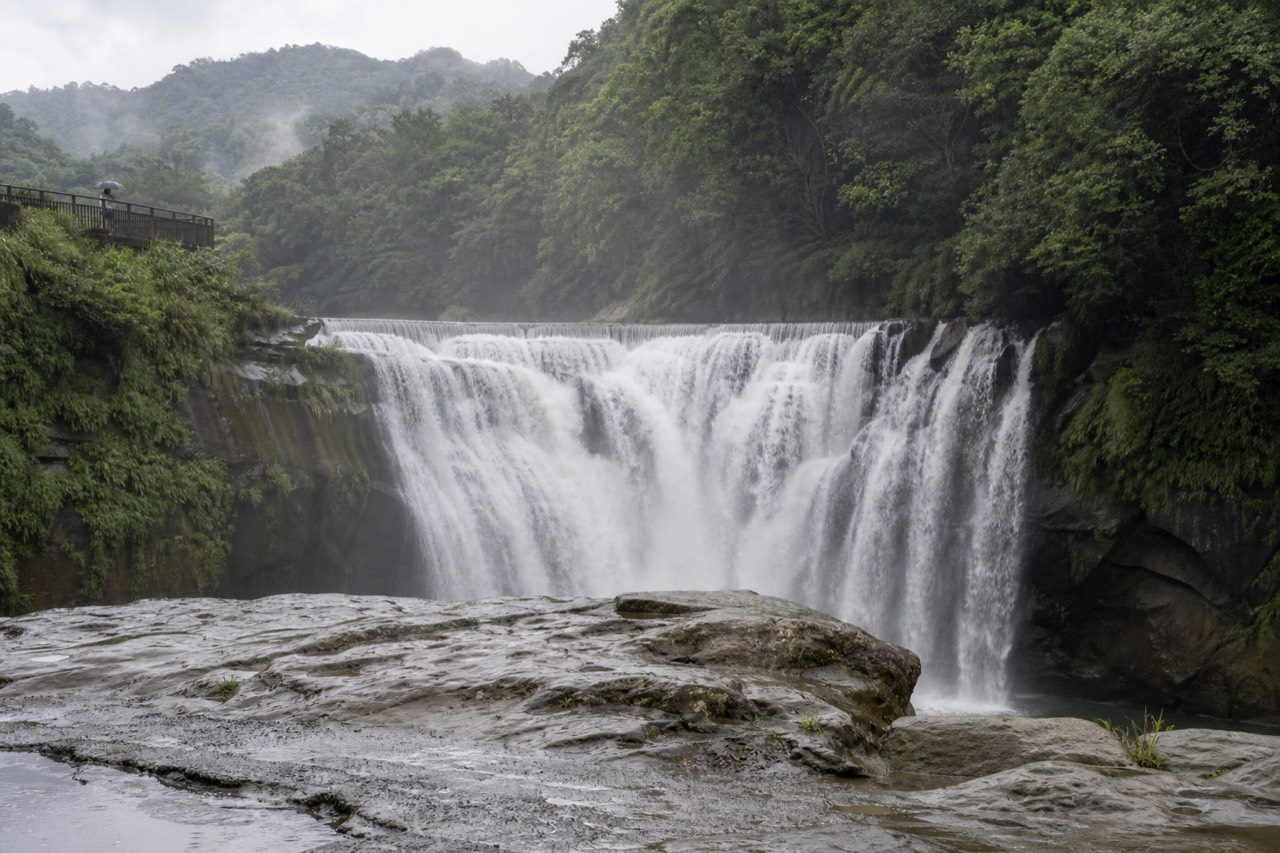
Shifen gets called a lot of things in English travel writing: a lantern village, a waterfall town, a movie set, a day trip from Taipei. Two of those hold up. The town in Pingxi District, about an hour and a half out of Taipei by rail, is famous for a waterfall and for a fire regulation, and the regulation is arguably the more interesting half of the pair, because it is the reason the lanterns exist here and nowhere else nearby.
What Is Shifen Famous For?
Shifen is famous for two things above all else: Shifen Waterfall, the largest curtain-type waterfall in Taiwan, a broad sheet of water across the rock face nicknamed Taiwan's Niagara, and sky lanterns, which may be legally released in exactly one marked stretch of the surrounding district, from the Shifen Visitor Center to Shigong Bridge within 200 metres of the Keelung River along County Road 106, and nowhere else in New Taipei City. Everything else visitors associate with the town, the old street, the railway running down the middle of it, the cats and the cake shops, sits downstream of those two anchors.
The lantern half deserves the emphasis most English pages never give it. Releasing a sky lantern is banned across the whole of New Taipei City except that one stretch of Pingxi, under the New Taipei City Sky Lantern Release Management Measures promulgated in 2011 under the Fire Services Act. The permitted area is marked on the ground by government notice boards. That is why Shifen, and only Shifen among the towns a visitor can reach from Taipei, has lantern shops lining a working railway: the law carved out this riverbank, and the economy followed the law.
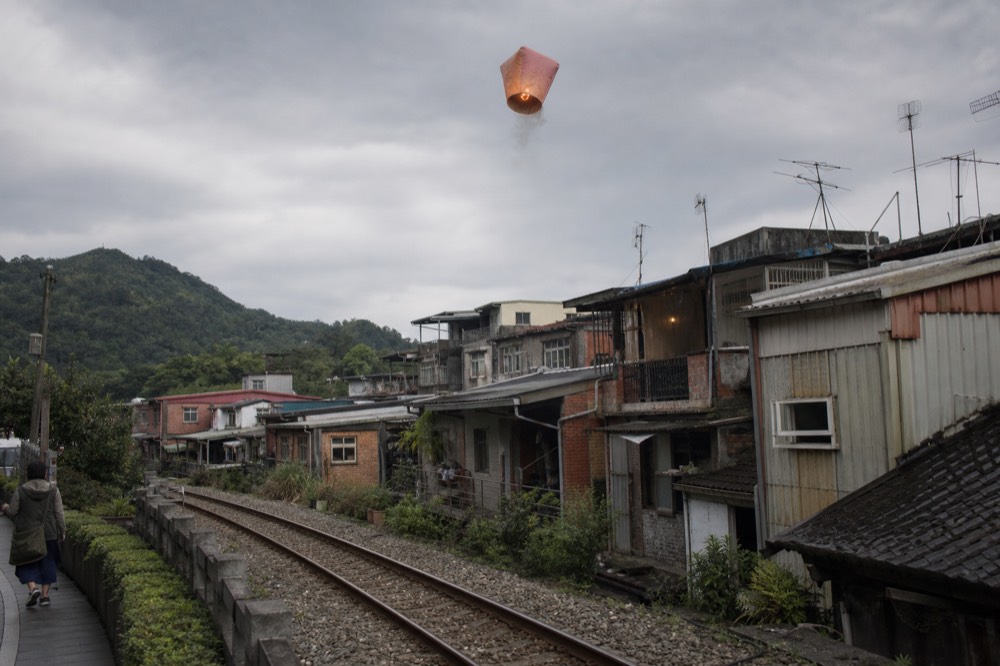
The waterfall half needs less explanation but more respect than it usually gets. Shifen Waterfall is a curtain fall, a wide sheet of water dropping across a broad rock face rather than plunging down a narrow slot, and the Taiwan Tourism Administration calls it the largest curtain-type waterfall in Taiwan. Visitors reach it from the old street along the river; the fall sits upstream of the town, and the Keelung River valley that holds both is the same valley that defines the lantern zone.
Both halves sit inside a single working day from Taipei, which is why the town has become one of the most visited corners of the northeast. A reader planning the trip can compare the formats on the site: the private half-day that reaches the lantern stretch, the full-day circuit that adds Yehliu and Jiufen with a lantern release built in, and the join tour that covers the village and the town in one vehicle.
For context on the wider area, the site's guide to Shifen Old Street and the lanterns covers the street itself in detail, and the Shifen Waterfall guide does the same for the fall.
Why Is Shifen Waterfall Famous?
Shifen Waterfall is famous because the Taiwan Tourism Administration calls it Taiwan's largest curtain-type waterfall: a broad, unbroken sheet of water spreading across the whole rock face rather than funnelling through a narrow gorge, which gives it the layered, veil-like appearance visitors photograph. It sits on the Keelung River a short way upstream of the old street, inside the same valley that defines the town, and that curtain form, with a drop the New Taipei City Government gives as 20 metres, is the fact that puts it in every Taiwanese list of major falls.
A curtain fall is a specific thing, not a poetic label. Where a plunge fall like the famous tall drops of Hualien punches through a notch, a curtain fall spreads across a horizontal lip of resistant rock, so the water arrives as one wide front. Shifen's rock geometry gives it that front, and the river's volume keeps the sheet unbroken across the seasons, which is why the fall reads as a wall of water rather than a ribbon.
The setting does half the work. The fall is hemmed by forested slopes on both sides, the Keelung River continues downstream through the town, and the walk from the street to the viewing areas follows the riverbank. On the many wet days this coast records, the extra water swells the curtain and the mist off it drifts back into the trees; the best time to visit the area matters more here than at most Taiwanese sights, because the fall is genuinely a different thing in the northeast monsoon months than in the dry summer.
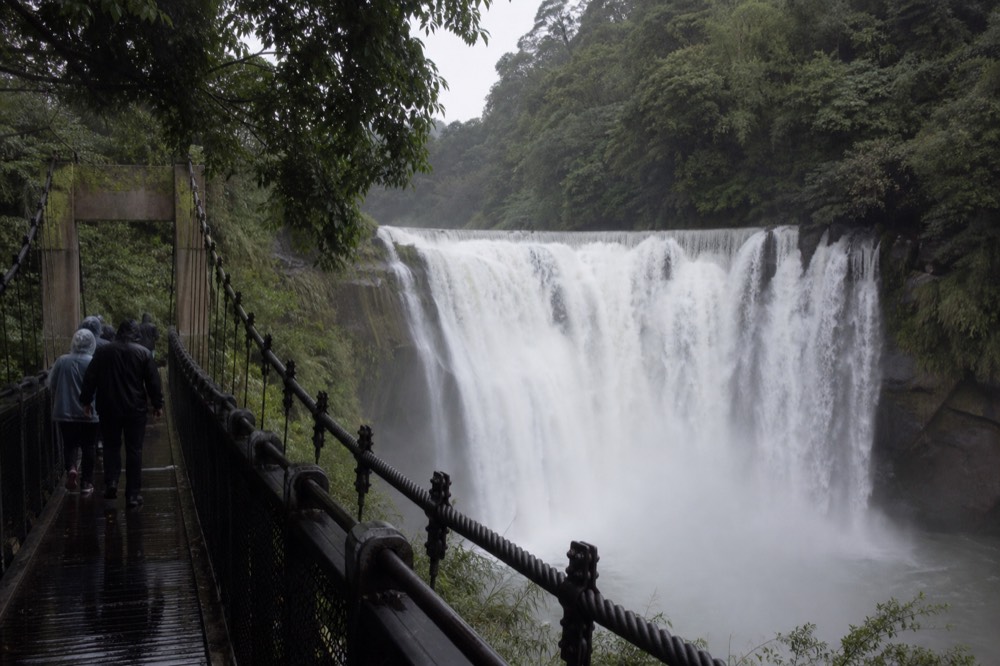
What the fall is not is a swimming hole or a scramble. The viewing areas are the visit: stand, watch, photograph, move on. Visitors who pair the fall with the lantern stretch in one afternoon get the town's two famous things in the order most people do them, waterfall first while the legs are fresh, lanterns after, when the light is going.
What Do The Different Colors Of Shifen Lanterns Symbolize?
The colours of Shifen sky lanterns carry folk associations rather than any official meaning: shops traditionally tie red to luck and celebration, yellow to money, and other colours to hopes like health, study or career, and the shopkeeper writes the wish on the lantern before it is lit. There is no canonical list, no authority behind it, and no shop that will tell you a colour is wrong. The colour is a mood; the writing on the paper is the actual wish.
The honest way to read the colour question is as tradition, not regulation. The regulation, which does exist and is enforced, says nothing about colour at all. It cares about size, weight, fuel, timing and location. The colour palette is what the shops offer and what visitors have made of it: the common associations repeated at counters and in travel writing link red with good fortune and celebration, yellow with wealth, and the wider palette with health, peace, growth and success in study or work. Families often pick one lantern per wish, which is how a single release becomes a small ceremony.
| Colour | Commonly said to symbolise |
|---|---|
| Red | Luck, celebration, the default festive choice |
| Yellow | Money and prosperity |
| White | Health and peace |
| Green | Growth and new beginnings |
| Blue | Career and steady progress |
| Multi-colour | A whole set of wishes at once, popular with families |
Treat that table as what the counter tells you, not what a statute says. The one thing that is statutory, and that no English competitor carries, is that every lantern sold must be labelled with the seller's name and address, and that shops must display the release safety notice. The lantern you buy in Shifen is a legally traceable object, which is a large part of why the release zone stays permitted.
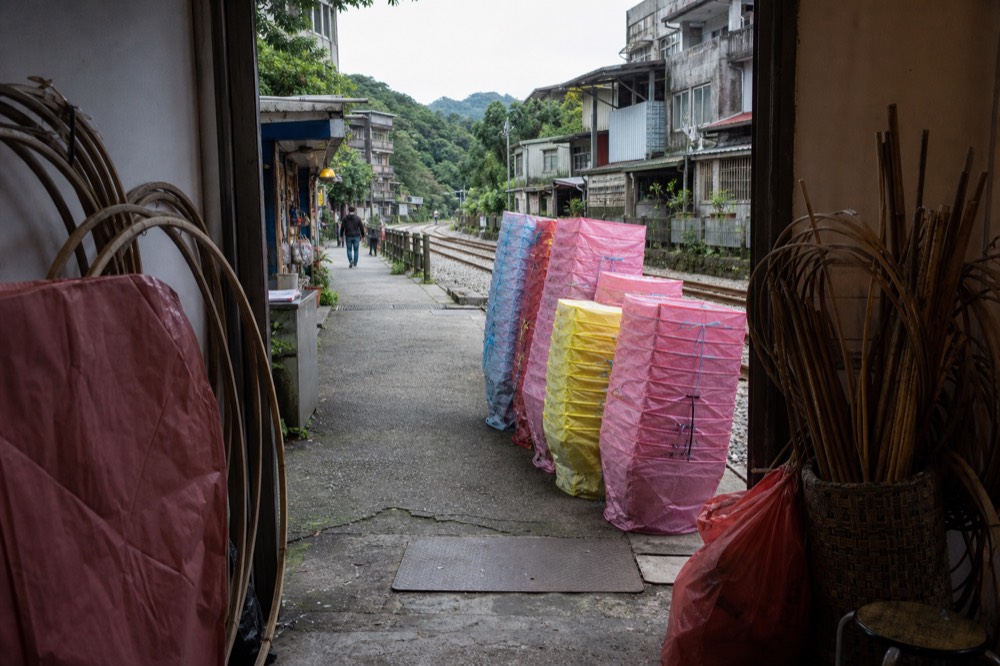
If the lantern half of Shifen is the reason for the trip, the private half-day tour that reaches the lantern stretch, the waterfall and the coast sights in one loop is the format that fits it, and free cancellation is confirmed on its listing.
Where Can You Legally Release A Sky Lantern In Shifen?
Releasing a sky lantern is banned everywhere in New Taipei City except one marked stretch of Pingxi: from the Shifen Visitor Center to Shigong Bridge, within 200 metres of the Keelung River along County Road 106, plus any area the city separately announces. Release sites must be clear of flammable material and at least 100 metres from any petrol station, gas station, tank farm, magazine or chemical plant. The permitted area is marked on the ground by government notice boards, under the New Taipei City Sky Lantern Release Management Measures.
That single carve-out is the entire legal foundation of the lantern economy. It is why a visitor can release a lantern in Shifen, cannot legally release one in Jiufen, in Keelung, in Yehliu or anywhere else in the city, and why the shops cluster where they do. The boards on the ground mark the boundary, and the shops sit inside it.
The same law sets the rest of the frame, and it is worth knowing before you light anything:
| Rule | What the law says |
|---|---|
| Where | Only the marked Pingxi stretch: Shifen Visitor Center to Shigong Bridge, within 200 m of the Keelung River along County Road 106 |
| When | No releases between 22:00 and 06:00, except at New Year or announced festivals |
| Who | Anyone under 14, and any person with a disability, must be accompanied |
| Size | Base 60 to 70 cm, height 130 to 140 cm, outer circumference 360 to 370 cm |
| Weight and fuel | Not more than 300 g; kerosene and soybean oil fuel |
| Attachments | No firecrackers or fireworks may be attached |
| Large events | 100 or more lanterns at once requires an application to the Fire Bureau five days ahead |
| Labelling | Every lantern must carry the seller's name and address; shops must display the safety notice |
The statutory text is short and readable, and it is a better preparation for the visit than any blog post, because it tells you exactly what the shop must provide and what you may not do. The under-14 accompaniment rule and the night ban are the two that catch families out: a dusk release is fine, a late one is not.
How Do You Get To Shifen From Taipei?
There is no direct train from Taipei to Shifen. You take the main line from Taipei Main Station to Ruifang, 45 to 47 direct trains a day and a journey of 32 to 68 minutes, then change onto the Pingxi branch line, which runs 17 direct trains a day from Ruifang to Shifen at a flat NT$29 fare, taking 27 to 32 minutes. English blogs routinely imply a through train exists; the live booking system returns zero direct services.
The main-line leg is the easy one. The local train costs NT$73 and the fastest express NT$114, and the express saves only about 13 minutes over the median local, so the local is the sensible default on this route. Ruifang is the junction for the whole area: the same station serves Houtong, 44 services and five to seven minutes away at NT$22, and Jingtong at the end of the branch, 16 services at NT$44.
The branch leg is where planning matters, because the timetable is thin and unevenly spaced. Departures from Ruifang to Shifen run 05:07, 06:26, 07:12, 07:55, 09:04, 09:57, 10:55, 11:55, 13:00, 14:00, 15:00, 15:59, 16:54, 18:33, 19:22, 21:06 and 22:20. Roughly hourly through the middle of the day, then gaps: one hour 39 minutes after the 16:54, and one hour 44 minutes after the 19:22. Miss the 16:54 and the lantern release waits until evening.
| Leg | Trains a day | Fare | Journey time |
|---|---|---|---|
| Taipei Main Station to Ruifang (local / fast local) | 45 to 47 direct total | NT$73 | 32 to 68 minutes, median 46 |
| Taipei Main Station to Ruifang (express classes) | included above | NT$114 | fastest found: 33 minutes |
| Ruifang to Shifen (Pingxi branch) | 17 | NT$29 flat | 27 to 32 minutes |
| Ruifang to Houtong | 44 | NT$22 | 5 to 7 minutes |
| Ruifang to Jingtong | 16 | NT$44 | 37 to 51 minutes |
The branch runs the same 17 trains on a Saturday as on a Monday, so there is no weekend bonus capacity to plan around. The Taipei to Jiufen guide covers the main-line leg and the bus alternatives in full, including the holiday traffic control that makes rail the reliable choice on weekends.
Can You See Shifen And Jiufen On The Same Day?
Yes, and most visitors do: Shifen and Jiufen sit on the same north-coast circuit out of Taipei, and the pairing works because the Pingxi branch line meets the main line at Ruifang, the same junction that serves the bus and shuttle connections up to Jiufen. The order matters less than the timing, but the crowds differ sharply between the two, and the lantern law gives Shifen a fixed evening rhythm that Jiufen does not have.
The question of which to do first has a real answer on this site, argued in the day-order comparison: the short version is that Shifen's lanterns reward the later hours while Jiufen's lanes empty after the day-trippers leave, so the sequencing depends on whether you are staying for the evening. The one-day itinerary guide lays out the full circuit.
Doing it independently by rail is entirely feasible with the timetable above: Taipei to Ruifang, branch to Shifen, back to Ruifang, then up to Jiufen, in either order. The trade-off is luggage, transfers and the branch-line gaps. Doing it as a tour trades that friction for a fixed itinerary, and there is a genuine range of formats on the site, from a full-day coach circuit that includes a lantern release in the price, to a join tour that covers the village and the town in one vehicle.
The private half-day is the densest option of all: six real stops in six hours, taking in Shifen Old Street, Shifen Waterfall, the Yin Yang Sea, the Jinguashi Thirteen-Level Ruins, the Golden Waterfall and Jiufen Old Street, with hotel pickup and free cancellation confirmed.
For visitors who want the lantern release as part of a bigger day rather than the point of a short one, the join-tour format runs a seven-hour loop covering Shifen Old Street, Shifen Waterfall and Jiufen Old Street with pickup and a guide, and it suits travellers who would rather not watch the branch-line clock.
What Else Is Shifen Known For?
Beyond the waterfall and the lanterns, Shifen is known for its old street built along a working railway line, where trains still push through the middle of the shopping lane and shopfronts sit a pace from the rails, and for the Pingxi branch line itself, a former coal-hauling railway that is now one of the most ridden heritage lines in Taiwan. The street-and-track arrangement is the third famous thing, and it is the one visitors remember in photographs even when they came for the fire.
The branch line's history is coal. The Pingxi valley was a coalfield, and the railway was built to move coal down to Ruifang; the towns along it, Shifen, Pingxi and Jingtong, grew as mining settlements and shrank when the mines closed. The line survived as a passenger branch, and the lantern tradition grew up along it in the mining era, when released lanterns signalled to families that the men underground were safe. That origin story is repeated everywhere in the valley's own visitor material, and it is the reason the lantern and the railway are inseparable here.
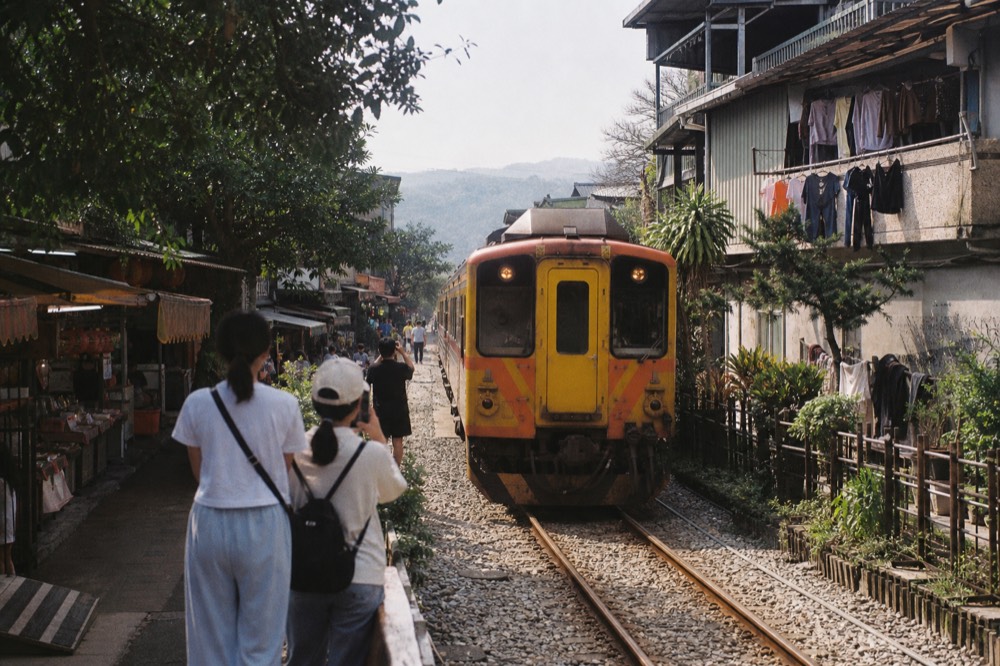
The practical upshot for a visitor is that Shifen delivers three experiences in a very small space: the fall upstream, the rails and shops in the middle, and the lantern release zone along the river. A trip built around any one of them tends to collect the other two by accident, which is the quiet reason the town holds a full afternoon so well, and why Jiufen Tour files it as the standard second stop on the northeast circuit after Jiufen itself.
Whether Shifen alone justifies the journey, or only works paired with Jiufen, is its own question, and the site answers it directly in is Shifen the same as Jiufen and in the free things to do guide for the wider area.
For travellers weighing the formats side by side, these are the three ways the site reaches Shifen: the private half-day, the full-day lantern circuit, and the join tour.
Shifen's fame rests on a waterfall and a legal carve-out: Taiwan's largest curtain-type waterfall, and the only riverside stretch in New Taipei City where a sky lantern may be released, marked from the Shifen Visitor Center to Shigong Bridge. The questions below cover the fall, the colours, the law, the rail route and the Jiufen pairing, with the statutory rules stated plainly and the folk traditions labelled as what they are.
Common Questions About Shifen
What Is Shifen Famous For?
Two things: Shifen Waterfall, Taiwan's largest curtain-type waterfall, and sky lanterns, legal to release in exactly one marked stretch around Shifen itself, from the Shifen Visitor Center to Shigong Bridge within 200 metres of the Keelung River along County Road 106, and nowhere else in New Taipei City.
Why is shifen waterfall famous?
Because it is Taiwan's largest curtain-type waterfall, as the Taiwan Tourism Administration describes it: the water spreads across the whole rock face as one broad sheet rather than plunging through a narrow notch, giving it the layered, veil-like appearance visitors photograph.
What do the different colors of Shifen lanterns symbolize?
Folk associations, not official meanings. Shops commonly tie red to luck and celebration, yellow to money, and other colours to hopes like health, growth or career, and the wish itself is written on the paper. The law says nothing about colour; it regulates size, weight, fuel, timing and location.
Can you release a sky lantern anywhere else in Taiwan?
Not in New Taipei City. Release is banned city-wide except the marked Pingxi stretch around Shifen, plus any area the city separately announces. No releases are permitted between 22:00 and 06:00, and anyone under 14 must be accompanied.
Is there a direct train from Taipei to Shifen?
No. Every itinerary changes at Ruifang. The main line runs 45 to 47 direct trains a day from Taipei Main Station to Ruifang, and the Pingxi branch then runs 17 direct trains a day to Shifen at a flat NT$29 fare, taking 27 to 32 minutes.
Can you visit Shifen and Jiufen on the same day?
Yes, and most visitors do. Both sit on the same northeast circuit, joined at Ruifang. The sequencing question, which one first, depends on whether you stay for Shifen's evening lanterns or Jiufen's after-dark lanes, and the site's day-order comparison works through it.