What Is The Most Scenic Train Ride In Taiwan?
The Pingxi branch line from Ruifang to Shifen and Jingtong is Taiwan's most scenic train ride, and this page carries its full verified timetable, fares and gaps.
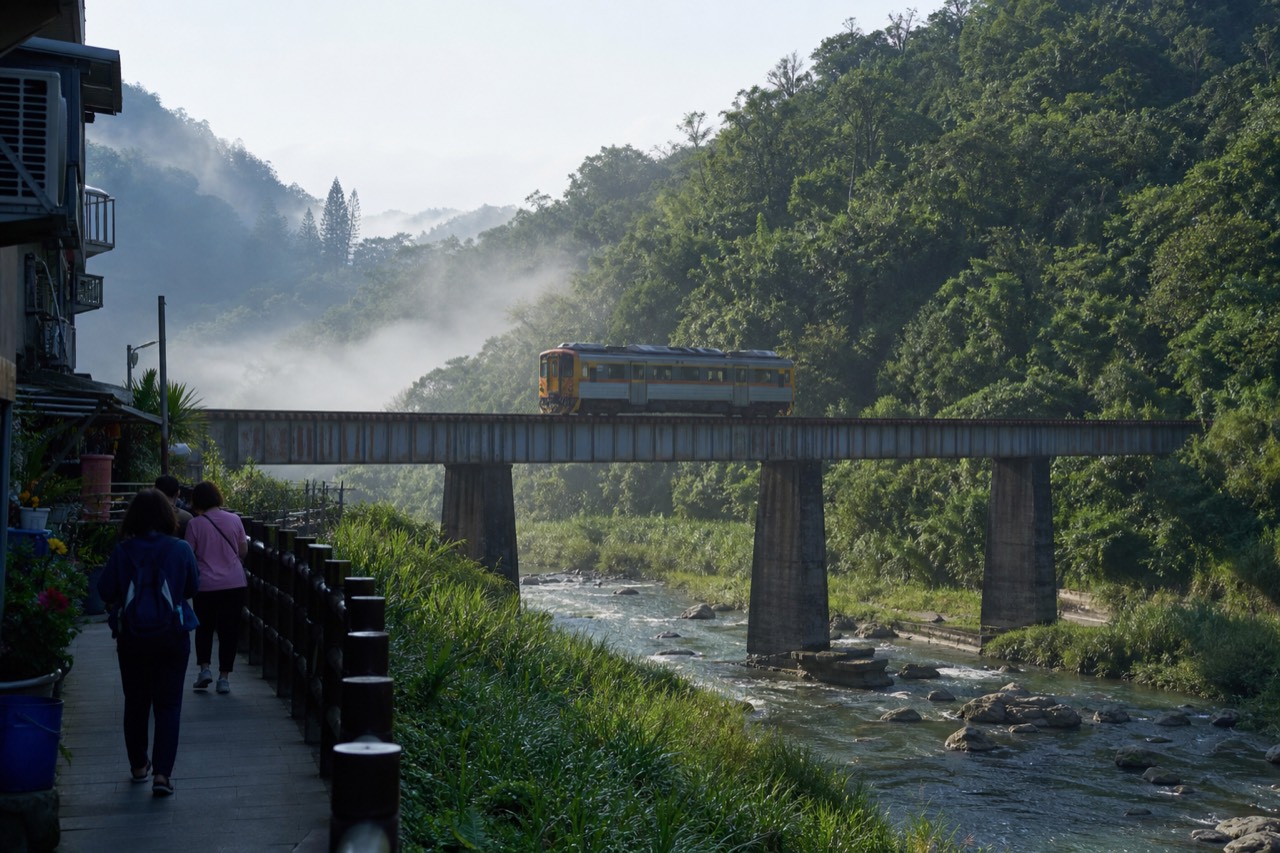
What Is The Most Scenic Train Ride In Taiwan?
The most scenic train ride in Taiwan is the Pingxi branch line, a single-track railway that climbs from Ruifang up the Keelung River valley through Shifen to Jingtong. It runs 17 direct trains a day from Ruifang to Shifen, takes 27 to 32 minutes, costs a flat NT$29, and passes waterfalls, cliff walls and lantern-lit old streets that no other line in the country matches. It is a branch line through river towns rather than a coastal spectacle, and it is honest to say so, but no other Taiwanese railway delivers so much scenery per minute at so low a fare.
The branch's claim rests on density, not grandeur. In under half an hour the train follows the Keelung River through a narrow gorge, stops at a town where sky lanterns rise off the tracks themselves, and ends at Jingtong, a former coal village hemmed in by walls of green. The line was built to move coal, and the coal villages it served are now the destination. The Taiwan Tourism Administration's own English page for the wider Ruifang area describes this corner of New Taipei as mountain country facing the sea, and the branch line is the one public vehicle that travels through the middle of it.
There is a catch worth stating at the top, because most English pages skip it: there is no direct train from Taipei to any of this. Taipei Main Station to Shifen returns zero direct services in the Taiwan Railway Corporation's own booking system. Every rider changes at Ruifang, on the main eastern line, and the branch timetable is thin enough that the change matters. This page carries the full verified branch timetable, the fares, the gaps, and the honest case for when a road tour beats the rails. The same valley is the beating heart of everything Jiufen Tour covers, from the old street on the hillside to the lantern town in the gorge below it.
Why The Pingxi Branch Line Earns The Title
The branch line earns the title on three verified facts: 17 direct trains a day from Ruifang to Shifen at a flat NT$29, a 27 to 32 minute run through a river gorge with waterfall views from the window, and a terminus at Jingtong that keeps the atmosphere of a working coal railway. The same 17 trains run on a Saturday as on a Monday, which tells you the line carries locals and sightseers alike rather than being a tourist shuttle bolted onto a freight schedule.
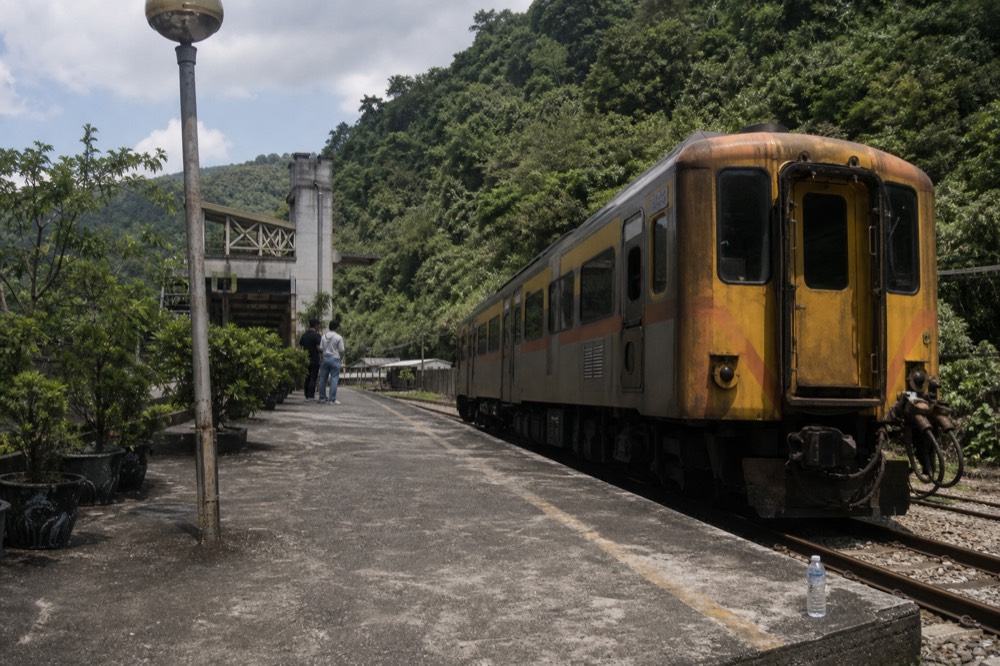
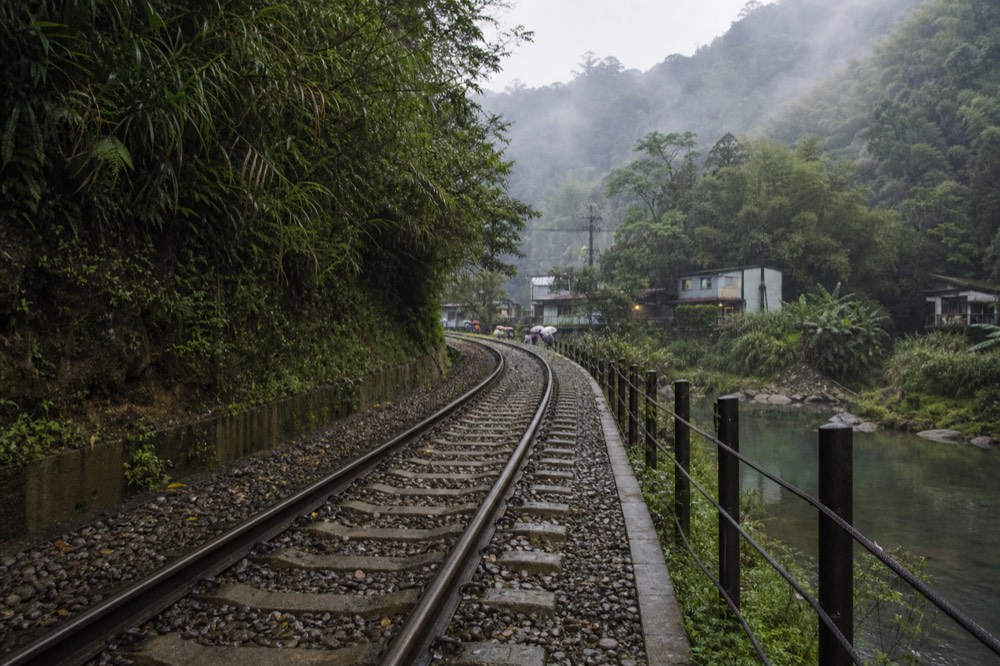
The scenery is river scenery. The branch follows the upper Keelung River from Ruifang eastward, and the valley closes in quickly: the tracks run beside the water, past the Shifen Visitor Center, under cliff faces, and across the river more than once before the end of the line. Shifen Old Street is the famous stop, where the railway runs straight down the middle of the village street and lantern shops open onto the tracks themselves. Beyond it the line climbs to Wanggu, Lingjiao, Pingxi and finally Jingtong, each a small plateau village where the coal industry left its buildings behind.
What makes it "most scenic" rather than merely pleasant is that the views are continuous. On the main lines, scenery comes in bursts between tunnels and suburbs. On the branch, there is almost nothing but valley for the whole ride, because the line was laid along the one flat corridor the river carved. The trade-off is speed and frequency: this is a slow, small railway, and the timetable has real holes in it. Ride it as the destination, not as transport, and it is the best train day in Taiwan.
| Departure from Ruifang | Notes |
|---|---|
| 05:07 | first service of the day, arriving Shifen 05:34 |
| 06:26 | |
| 07:12 | |
| 07:55 | |
| 09:04 | |
| 09:57 | |
| 10:55 | |
| 11:55 | |
| 13:00 | |
| 14:00 | |
| 15:00 | |
| 15:59 | |
| 16:54 | last afternoon service |
| 18:33 | after a 1h39m gap |
| 19:22 | |
| 21:06 | after a 1h44m gap |
| 22:20 | last service of the day, arriving Shifen 22:47 |
Those two gaps are the branch line's sharpest teeth. Miss the 16:54 and your next train leaves Ruifang at 18:33, and the gap after 19:22 runs to 21:06. Through the middle of the day the service is roughly hourly, which is comfortable, but the evening thins out fast. Plan the return leg before you leave Ruifang, not after.
If your day is tight, or the timetable gaps land badly against your arrival at Ruifang, a road tour removes the scheduling risk entirely.
How To Actually Get There From Taipei
There is no direct train from Taipei to Shifen, Pingxi or Jingtong: zero services, verified against the Taiwan Railway Corporation's own booking system. You ride the main line from Taipei Main Station to Ruifang, 32 to 68 minutes depending on the train, then change to the branch. The main-line fare is NT$73 on a Local or Fast Local, NT$87 on a Chu-Kuang, NT$114 on a Tze-Chiang or Puyuma.
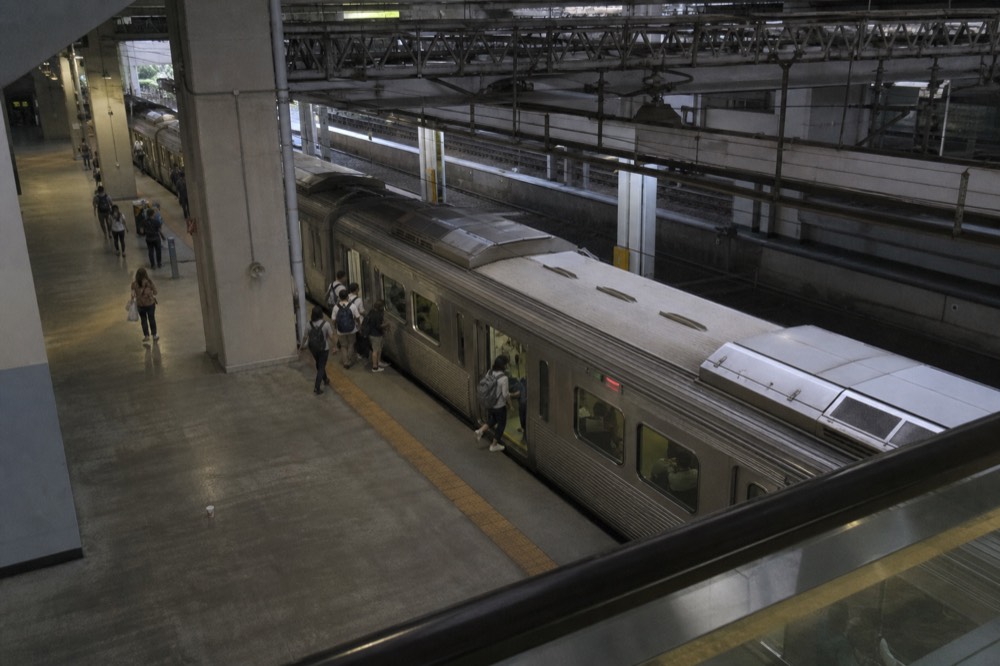
The main-line leg is frequent and forgiving. Taipei Main Station to Ruifang has 45 to 47 direct trains a day, with a median journey of 46 minutes. The first Monday train leaves at 05:26 and the last at 23:04. The fastest service found in the timetable data is a Puyuma that covers the distance in 33 minutes; the slowest, a Local, takes 68. That spread is the whole argument for taking the Local: the express saves about 13 minutes over the median local and costs NT$41 more per person. On this route the slow train is the sensible default, and the slow train is also where the north coast starts showing through the windows.
| Train class | Taipei to Ruifang fare | Concession fare | Typical journey |
|---|---|---|---|
| Local / Fast Local | NT$73 | NT$37 | 46 to 68 min |
| Chu-Kuang | NT$87 | NT$44 | around 45 min |
| Tze-Chiang / Puyuma | NT$114 | NT$57 | 32 to 43 min |
The change at Ruifang is short and signed, but it is a real connection, and the branch does not wait. If your main-line train is delayed past a branch departure, you sit for the gap. The safest pattern is to arrive at Ruifang at least ten minutes before a listed branch departure, and to have the next departure after that in your head as the fallback. Our Taipei to Jiufen transport guide covers the Ruifang interchange and the bus options in detail, including the routes that serve the mining towns when the timetable defeats you.
One more honest note: the branch line's towns are also reachable by road, and for travellers starting from Taipei without rail confidence, a guided day tour that reaches Shifen, Houtong and Jiufen by coach covers the same geography without a single timetable to read. The trade is that you see the valley from a road, not from the tracks.
The Stations Along The Branch
From Ruifang, the branch calls at Sandiaoling, Dahua, Shifen, Wanggu, Lingjiao, Pingxi and Jingtong, in that order, with internal fares of NT$22 between most adjacent pairs and NT$29 from Sandiaoling to the far end. Houtong, the cat village, sits on the main line before Ruifang, reachable in 5 to 7 minutes from Ruifang for NT$22 on 44 services a day, so it is not on the branch but pairs naturally with it.
Shifen is the headline stop, and it earns it: the old street runs along the railway itself, shops sell sky lanterns that are released from the track bed, and Shifen Waterfall, the widest in the area, sits a walk upstream. The lantern practice is not a free-for-all. Under New Taipei City's sky lantern release regulations, releasing a lantern is banned everywhere in the city except a marked stretch of Pingxi District around the Shifen Visitor Center, and shops must label every lantern with the seller's name and address. The regulated zone is the very corridor the train runs through, which is part of why the stop feels so staged and so singular at once.
Beyond Shifen the crowds thin fast. Pingxi village is a quieter lantern street in its own right, and Jingtong, the terminus, is a plateau-end village where the coal railway's buildings still stand around a small station yard. Riding to the end costs NT$44 from Ruifang and takes 37 to 51 minutes across 16 daily services. Most day-trippers ride only to Shifen and back; the last two stations are where the branch line feels most like itself.
| Leg | Daily direct trains | Fare | Journey time |
|---|---|---|---|
| Ruifang to Shifen | 17 | NT$29 flat | 27 to 32 min |
| Ruifang to Jingtong | 16 | NT$44 | 37 to 51 min |
| Ruifang to Houtong (main line) | 44 | NT$22 | 5 to 7 min |
| Taipei to Ruifang (main line) | 45 to 47 | NT$73 to NT$114 | 32 to 68 min |
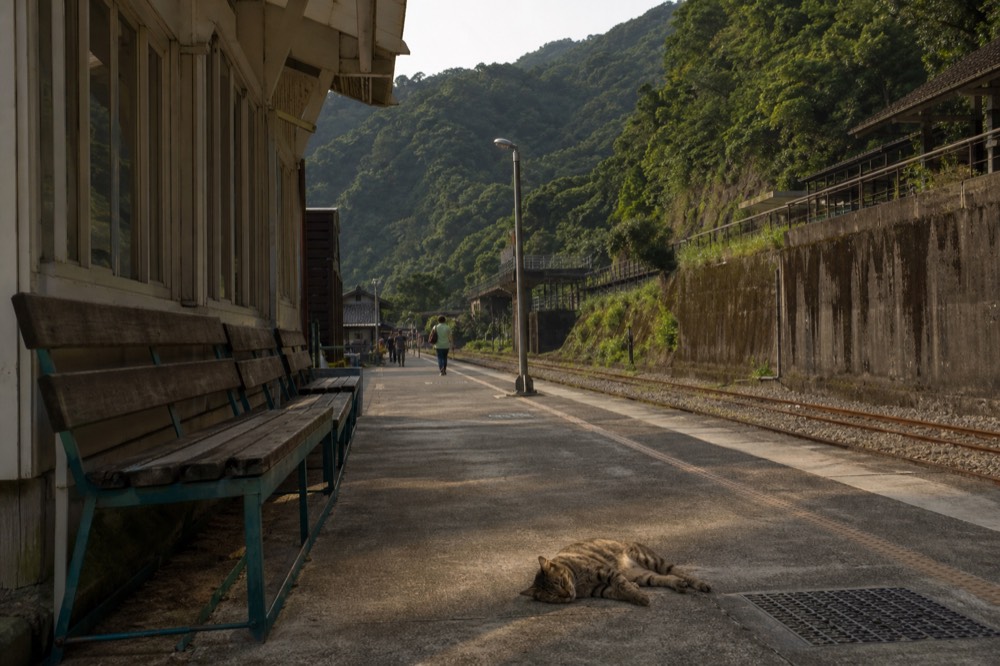
Houtong deserves its line in the plan. It is a former mining village on the main line, five to seven minutes before Ruifang, that remade itself around its resident cat population. Because it sits on 44 daily services, you can slot it in before or after the branch ride with almost no scheduling cost, and the contrast between the cat village and the lantern town is a good day's shape. Travellers who want both plus Jiufen without any timetable work at all often do better with a private driver, and the Jiufen, Shifen and Houtong Cat Village Private Tour exists exactly for that itinerary.
What The Ride Is Not: An Honest Assessment
The Pingxi branch line is not a coastal spectacle, not a mountain railway in the alpine sense, and not a smooth modern ride: it is a small, slow valley line with short trains, no reserved seating and timetable gaps of well over an hour in the late afternoon and evening. Anyone sold a picture of a sleek express hugging the Pacific will be disappointed. The line's beauty is intimate: river, cliffs, tunnels and village streets, seen at the pace of a railway built for coal.
It is also, on weekends, a busy little railway. The identical 17 services on a Saturday and a Monday mean no extra capacity arrives with the weekend crowds, and the middle-of-day trains fill up with visitors doing exactly what this page describes. The morning departures before 09:00 and the early afternoon ones are the calmest rides. Standing is normal at peak times, and there is no luggage space to speak of; this is a day-trip line, not a touring line.
The comparison with Taiwan's other famous scenic rides is worth making plainly. The Jiji line in central Taiwan runs through longer rural stretches between small towns; the Alishan forest railway climbs through cypress forest to a mountain resort; the eastern express lines open onto the Pacific for stretches between tunnels. Each has a claim. The Pingxi branch's claim is concentration: nowhere else does a 27-minute, NT$29 ride deliver a waterfall gorge, a lantern railway street and a coal-town terminus in one ticket.
When To Ride, And What The Weather Does To The Valley
The best months for the branch line are July and August, which inverts the usual advice to avoid Taiwan in summer: the nearest weather station to the valley, Keelung, records July as its driest month at 119.5 mm of rain across 8.5 rain days, against November's 396.9 mm. There is no weather station at Jiufen or in the Pingxi valley itself, so the honest citation is Keelung, about 12 km away on the same windward north coast, and its 30-year normals.
The pattern matters more than any single month. September through February takes 2,198.8 mm of rain at Keelung, 61% of the year's total in six months, and it falls as the drizzle and fog the northeast monsoon is known for rather than as tropical downpours. The valley in fog is genuinely atmospheric, lanterns and all, but it hides the cliffs that make the ride scenic. December averages just 48.5 sunshine hours across the whole month, about 1.6 hours a day. If bright views are the point of the trip, aim for July or August, or April as the next-best month, and treat a winter ride as a mood piece.
Timing within the day matters almost as much as the season. The 09:04 from Ruifang reaches Shifen before the coach crowds arrive, and the branch's own capacity limits mean the midday trains are the fullest. Going early also protects you against the 16:54 gap: an arrival back at Ruifang in mid-afternoon leaves room for error, while a return timed against the 18:33 leaves none. The best time to visit Jiufen guide unpacks the seasonal arithmetic in full.
One structural fact shapes weekend timing more than any weather table. Under the New Taipei City holiday traffic control plan in force since 1 January 2025, coach access to the Jiufen area is rationed on weekends and holidays between 08:00 and 20:00, with roughly 20 coaches approved per half-day slot and applications refused entirely on holiday runs of three or more consecutive days, per the signed government notice. The train is untouched by any of this, which is a quiet argument for the rails on exactly the days most people go by road.
If You Would Rather Not Wrestle The Timetable
A road tour is the better choice when your time in Taiwan is short, your party is four or more, or the branch timetable's gaps collide with your arrival: the same towns, Shifen, Houtong and Jiufen, are all reachable by coach and private car, and the site's roster includes guided days that cover the full valley from Taipei without a single connection to plan. No bookable product on this site is a train ride, and it would be dishonest to imply otherwise; the tours reach the same geography by road, with a guide and a schedule instead of a timetable and a platform.
The arithmetic is straightforward. A couple riding the rails pays NT$73 each to Ruifang, NT$29 each to Shifen, and the same back: a cheap day with total freedom and total exposure to the gaps. A family or small group in a private car pays more per head and buys certainty, door-to-door timing and, on the private options, the freedom to stop at Golden Waterfall or the Yin Yang Sea, which sit between the towns and off the branch line entirely. Cruise passengers docking at Keelung have their own shore-excursion versions of the same circuit.
For travellers who want the rail experience but not the rail logistics, a workable hybrid exists: take a guided day tour that reaches Shifen by road, and ride just one leg of the branch, Shifen to Jingtong and back, as a scenic out-and-back rather than as transport. The NT$29 fare makes the experiment almost free, and the short hop beyond Shifen is the least crowded and most atmospheric stretch of the line.
However you assemble the day, the valley is the point. The branch line was built for coal and survived into the era when its villages became destinations, which is why it still runs down the middle of a street and past a waterfall. That survival is what makes it, for the money and the minutes, the most scenic train ride in Taiwan.
The Pingxi branch line answers most of the questions travellers ask about scenic rail in Taiwan: it is the line with the strongest scenery-per-minute claim, it costs NT$29 flat from Ruifang to Shifen, it runs 17 direct trains a day with no weekend boost, and it can only be reached by changing at Ruifang because no direct train from Taipei exists. The questions below cover the fares, the frequency, the seasonality and how to fold the line into a day that also takes in Jiufen.
Common Questions About Scenic Train Rides In Taiwan
What Is The Most Scenic Train Ride In Taiwan?
The Pingxi branch line from Ruifang to Shifen and Jingtong. It runs 17 direct trains a day from Ruifang to Shifen at a flat NT$29 fare, covers the 27 to 32 minute run through a river gorge with waterfall and cliff views, and terminates at a preserved coal village. It is a small valley railway rather than a coastal express, but no other Taiwanese line packs as much scenery into the ride.
Is there a direct train from Taipei to Shifen?
No. Taipei Main Station to Shifen returns zero direct services in the Taiwan Railway Corporation's booking system. Every journey takes a main-line train from Taipei to Ruifang, 32 to 68 minutes, and changes there to the Pingxi branch line.
How much does the Pingxi branch line cost?
NT$29 flat from Ruifang to Shifen. Ruifang to Jingtong, the end of the branch, is NT$44. The main-line leg from Taipei to Ruifang costs NT$73 on a Local or Fast Local, NT$87 on a Chu-Kuang and NT$114 on a Tze-Chiang or Puyuma.
How often does the Pingxi line run?
Seventeen direct trains a day from Ruifang to Shifen, roughly hourly through the middle of the day, and the identical 17 run on a Saturday as on a Monday. The gaps to plan around are 1h39m after the 16:54 departure and 1h44m after the 19:22; the last service leaves Ruifang at 22:20 and arrives Shifen at 22:47.
Can you do Jiufen and the Pingxi line on the same day?
Yes, and many people do. Jiufen sits above Ruifang on the hillside, reached by bus or tour from the Ruifang area, while the branch line runs the other direction up the river valley. The constraint is the branch timetable: build the day around a specific Shifen departure and its return, and treat Jiufen as the flexible half of the day.
When is the best time of year to ride the branch line?
July and August. The nearest weather station to the valley, Keelung, records July as its driest month at 119.5 mm of rain over 8.5 rain days, and August next at 211.4 mm, while November is the wettest at 396.9 mm. This inverts the usual advice to avoid Taiwan in summer, for this corner of the island at least.