What Is The Most Beautiful Town In Taiwan?
An honest case for Jiufen as Taiwan's most beautiful town, built on verified facts: the camphor-stove name, the 1890 gold rush, the rain that makes the fog, and where Jiufen honestly loses.
What Is The Most Beautiful Town In Taiwan?
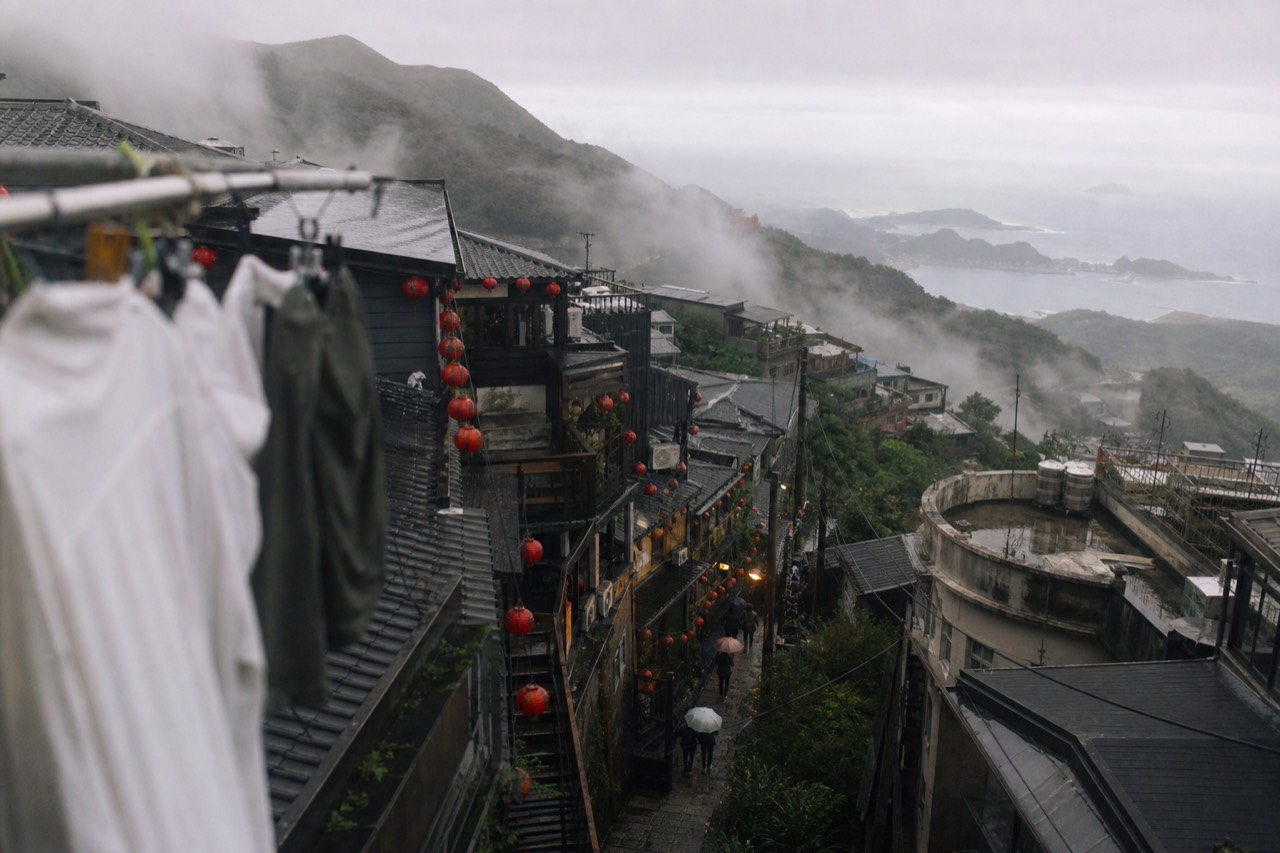
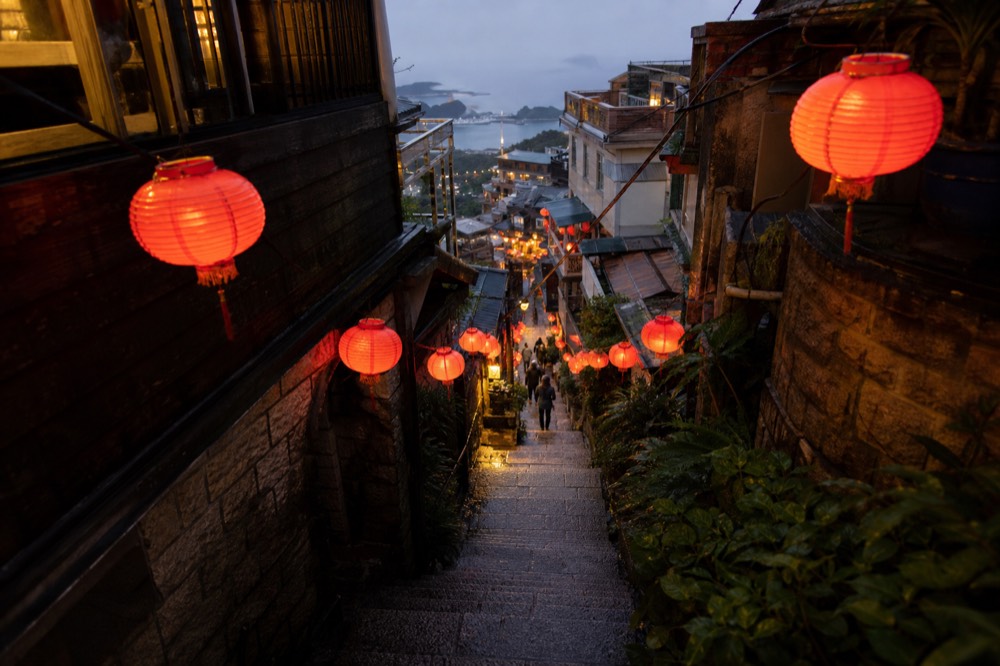
The most honest answer is Jiufen, the former gold town above the northeast coast in Ruifang District, New Taipei City: a stack of lantern-lit lanes and teahouses built into a steep hillside facing the sea, wrapped in fog on more than half of all days. Its nearest rival is Jinguashi, the quieter mining village over the ridge, and the coast road between them is the most beautiful stretch of scenery in the country.
That is a claim worth arguing rather than asserting. Jiufen's beauty is not a marketing invention, it is geography plus decay: a boomtown of the 1890s that went bust, was left to crumble on its hillside, and was rediscovered slowly after 1989, when Hou Hsiao-hsien's film A City of Sadness was shot among its buildings and is widely credited with reviving the town. The lanes kept their shape because nobody could afford to flatten them. The teahouses kept their timber fronts because nobody rebuilt in concrete until it was too late to matter.
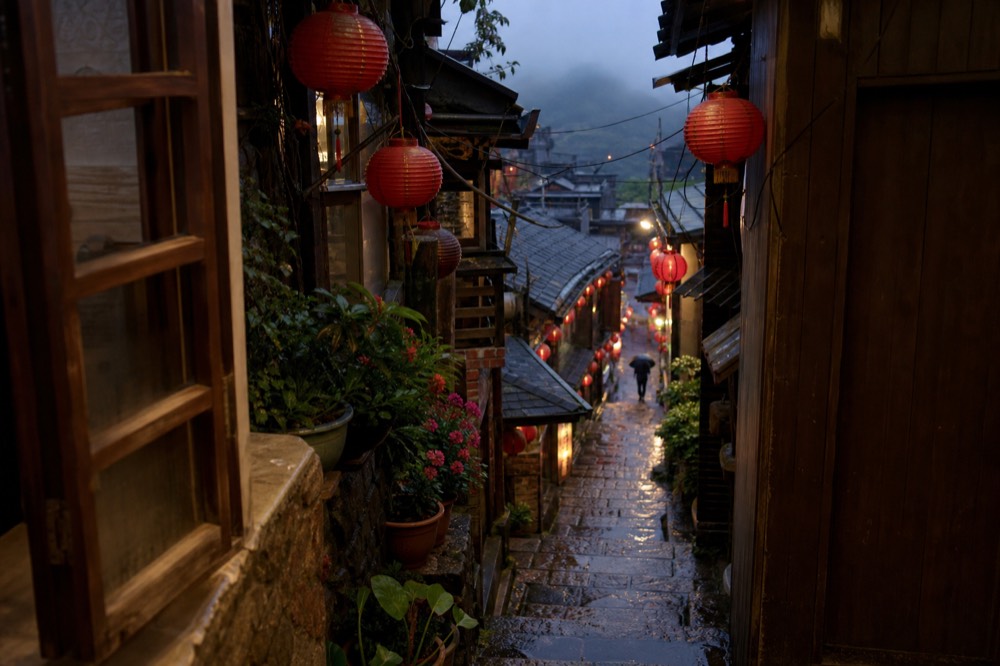
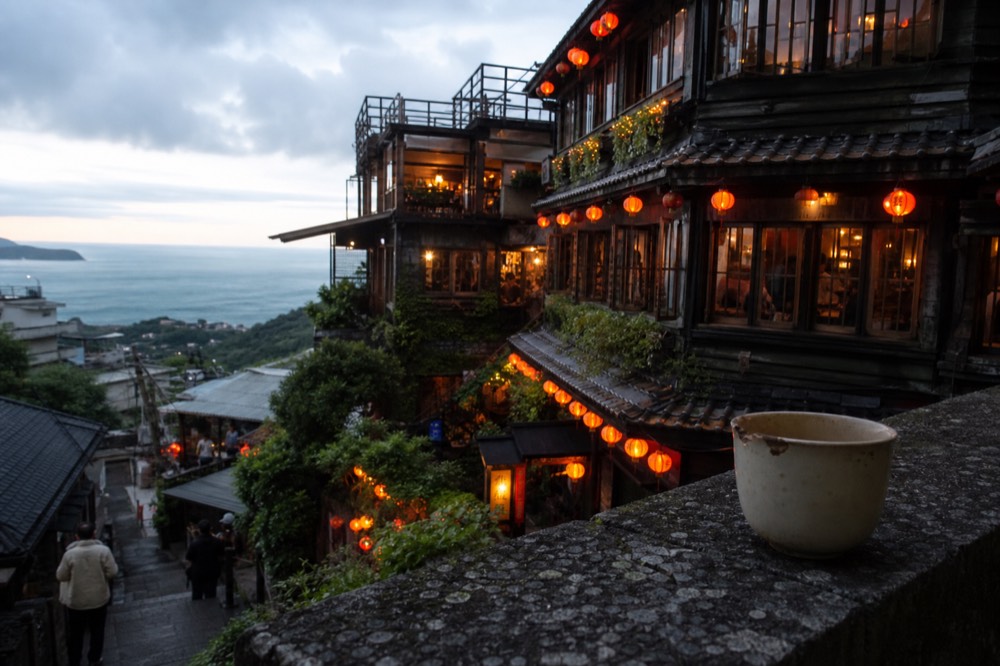
The setting does the rest. Jiufen sits on a slope above the coast, next to the mountain and facing the sea, as the Taiwan Tourism Administration's own page for the town puts it. On a clear evening you look down past the rooftops to the water; on a foggy one, which is more than half the year, the lanterns and the mist do the work together. The fog is not luck either. The nearest weather station, at Keelung about 12 km away on the same windward coast, records 3,589.7 mm of rain a year against Taipei's 2,329.5 mm, and rain on 193.6 days a year. That is what produces the drifting fog the town is photographed in. For a closer look at the streets themselves, the Jiufen Old Street guide walks the three lanes in detail.
If you want to judge for yourself in one day, these three tours cover the town and the coast around it from three different angles.
What Is The Prettiest Town In Taiwan?
Jiufen is the prettiest town in Taiwan for pure streetscape: no other town in the country packs lantern-lit steps, timber teahouses and a sea view into one walkable hillside. Houtong is prettier for cat lovers, Jinguashi is prettier for heritage and quiet, and Shifen is prettier for the river and the lanterns, but each of those wins on a single feature where Jiufen wins on the whole composition.
Prettiness is narrower than beauty, and it is worth separating the two. A pretty town is one you photograph on foot within an hour. By that test Jiufen's old core is almost unbeatable: Jishan Street, whose name means the street that connects to the foot of Keelung Mountain, runs the spine of the town, while Shuqi Road, the road of many vertical steps, cuts down the slope between teahouses, and Qingbian Road runs flat and quiet along the old railway trackbed. Three lanes, three completely different walks, all within a few minutes of each other.
The rivals deserve their due. Jinguashi, over the ridge, has the Gold Museum, the remains of a mining settlement that is calmer than Jiufen on any given day, and the Jinguashi name itself comes from a pumpkin-shaped summit crag that miners later removed. Shifen, down in the Pingxi valley, has a working railway running straight through the old street and a waterfall you can walk to. Houtong has the cat village. Each is a single strong note; Jiufen is the chord.
One warning for the weekend visitor: on weekends and public holidays between 08:00 and 20:00, Jiufen operates under a signed New Taipei City traffic control plan in force since 1 January 2025, under which coaches must apply in advance to the police, roughly 20 are approved per half-day slot, and applications are refused entirely during holiday runs of three or more consecutive days. The plan restricts coaches, never pedestrians or private cars, but it means the town is at its calmest on a weekday. If a private day with the whole coast sounds better than a coach circuit, this is the format.
Which Part Of Taiwan Is Most Beautiful?
The northeast corner, from Yehliu Geopark through Jiufen and Jinguashi to the Pingxi valley, is the most beautiful part of Taiwan, and it is not close: it combines a sculpted rock coast, a gold-rush hillside, a waterfall valley and a working branch-line railway within about an hour of Taipei. The east coast around Hualien is more dramatic, but it is scenery you drive past, not towns you walk into.
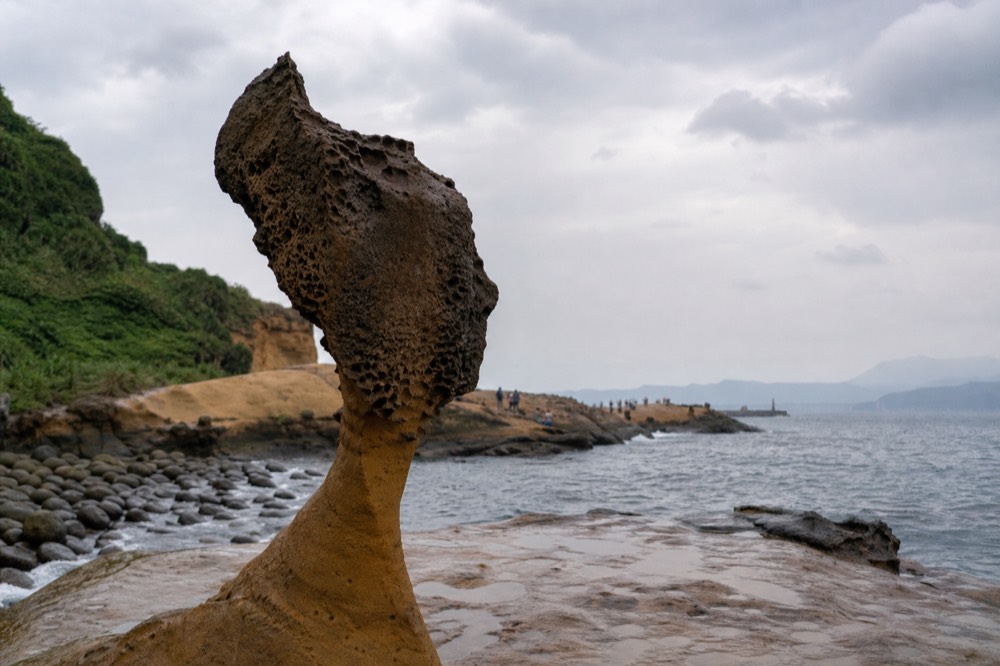
The northeast wins on density. Yehliu Geopark, on a headland west of Jiufen, holds the Queen's Head, a sandstone formation whose neck has been measured by the scenic area administration at 116.59 cm as of October 2024, down from about 220 cm in 1994, a loss of about 1 cm a year to erosion. Asked how much longer the rock can last, the administration's own official said even specialists find it hard to forecast, which is the honest answer and a good reason not to wait decades. Adult admission is NT$120, and the park is open 08:00 to 17:00, extended to 18:00 in summer, with last entry at the closing hour itself.
Inland from the coast the geology changes character rather than quality. The Golden Waterfall stains orange with iron from the old mine workings, visitors should not enter the water, and the Yin Yang Sea below it shows a two-tone colour at the river mouth. The Pingxi branch line then threads a valley of old coal towns, ending at Jingtong. You reach it by changing at Ruifang, because there is no direct train from Taipei to Shifen; the branch runs 17 direct trains a day from Ruifang at a flat NT$29, and it runs the identical 17 on a Saturday as on a Monday, so the valley gets no extra weekend capacity.
The weather is part of the beauty and worth understanding before you go. There is no weather station at Jiufen itself; the correct reference is Keelung, about 12 km away on the same windward coast, and its 30-year normals are published by the Central Weather Administration. The table below shows the pattern month by month, and the best time to visit Jiufen works through what each season means for the visit itself.
| Month | Rainfall (mm) | Rain days | Sunshine (hours) |
|---|---|---|---|
| January | 327.8 | 19.6 | 52.6 |
| February | 349.8 | 17.9 | 57.9 |
| March | 274.4 | 18.7 | 80.6 |
| April | 211.1 | 16.0 | 91.2 |
| May | 284.1 | 16.1 | 111.9 |
| June | 290.4 | 14.8 | 138.4 |
| July | 119.5 | 8.5 | 229.2 |
| August | 211.4 | 11.6 | 208.2 |
| September | 390.1 | 15.2 | 147.4 |
| October | 377.6 | 17.1 | 85.7 |
| November | 396.9 | 18.6 | 65.3 |
| December | 356.6 | 19.5 | 48.5 |
The driest month is July, at 119.5 mm of rain across 8.5 rain days, which quietly inverts the usual advice to avoid Taiwan in summer. The wettest is November at 396.9 mm, and September through February carries 61% of the year's rain. December manages just 48.5 sunshine hours in the whole month, about 1.6 hours a day. The fog that makes the photographs is the northeast monsoon at work.
Why Jiufen Looks The Way It Does
Jiufen looks the way it does because it was a gold town, not a tourist town: someone struck gold near Jiufen in 1890, the village drew prospectors of 4,000 families, and it was called little Shanghai, a boomtown whose buildings were thrown up fast on a steep hillside and then largely abandoned when the ore ran out. What tourists photograph now is a preserved accident of boom and bust.
The town's own name is older than the gold and is routinely misexplained. The familiar story says nine households lived here and supplies landed from the coast had to be divided into nine portions, hence Jiufen, "nine portions". New Taipei City's own Gold Museum, in a release of 6 January 2016, calls that story a legend and gives the scholarly version: before the gold boom the area lived by harvesting and boiling camphor, there were 90 camphor stoves here, and ten stoves made one "fen", so there were nine fen in all, which the city says should be the more correct origin of the name. The Taiwan Tourism Administration's English page for Jiufen gives the same camphor account and does not mention nine families at all. The English internet has this almost exactly backwards.
The mining past is still legible under the souvenir stalls. The Jiufen mine had ten numbered tunnels running down the hill, and only Nos. 5, 8 and 10 still have intact portal exteriors; the bus stops along the road still carry the old pit names. Qingbian Road, the flat lane parallel to the main street, is flat because it is the trackbed of a human-powered light railway laid in 1931 to move people and supplies up from Ruifang, which is why one lane in this vertical town runs level while the others are stairs. Over the ridge, the Gold Museum at Jinguashi charges NT$80 admission, takes cash, EasyCard and O'Pay, and is closed the first Monday of every month, a detail worth checking before you plan a Monday.
The revival came late and is credited, not documented. A City of Sadness, which won the Golden Lion at Venice in 1989, was filmed around the town and is widely credited with reviving it; the honest phrasing stops there. The teahouses followed the film, and the visitors followed the teahouses.
Where Jiufen Honestly Loses
Jiufen loses on weather, on weekend crowds and on access: it rains on more than half of all days, the heaviest crowding runs through weekend daylight hours, and on weekends and holidays coach access is rationed by a signed traffic control plan. It also loses to quieter rivals if what you want is solitude, because a town that draws millions to its scenic area is never going to be empty.
A page that only praises converts worse than one that tells the truth, so here is the truth in a table.
| Category | Winner | Why |
|---|---|---|
| Pure streetscape | Jiufen | Lantern-lit steps, timber teahouses and a sea view in one compact hillside |
| Quiet and space | Jinguashi | Same mining heritage, a fraction of the footfall, museum grounds to wander |
| River and waterfall | Shifen | A railway through the old street, a walkable waterfall, legal sky lanterns |
| Animals | Houtong | The cat village, reached from Ruifang in 5 to 7 minutes by train |
| Dry weather | Almost anywhere else | Keelung's station records 3,589.7 mm of rain a year on 193.6 rain days |
| Rock formations | Yehliu | The Queen's Head and the hoodoo fields, NT$120 adult admission |
The rain deserves emphasis because it shapes every visit. There is no weather station at Jiufen itself, so the honest citation is Keelung, about 12 km away on the same windward coast, and its numbers are striking: November alone averages 396.9 mm, December sees about 1.6 hours of sunshine a day, and the driest month of the year is July. If your trip is fixed to a northern-hemisphere winter holiday, you will meet the fog and the drizzle, and you should plan for it rather than around it. The town in mist is arguably more beautiful, but it is also wetter and colder than almost anywhere else in Taiwan at the same latitude.
Crowding is the other cost of fame. The Ruifang scenic area that contains Jiufen Old Street recorded 3,769,615 visitors in January and February 2026 alone, third in New Taipei City behind only the big metropolitan park at Xinzhuang. Those numbers are counted for the scenic area, never for the street itself, but they explain the queue for a taro ball. The pattern visitors report, and no official source states shop hours, is that the street is calm before about 09:00 and after about 19:00, with the heaviest crowding through the weekend afternoon. A weekday arrival, or an evening one, changes the experience completely.
The Spirited Away Question, Answered Honestly
No, Jiufen was not the model for Spirited Away, and Studio Ghibli has said so on the record: producer Toshio Suzuki, asked by Taiwanese media in Tokyo on 19 September 2023, replied that it is not true and that neither he nor Miyazaki has ever been to Jiufen, attributing the moment of resemblance to an alley in Seoul. The resemblance a visitor sees is still real and still worth seeing; only the causal claim is false.
This matters for the beauty argument because the film is the single biggest reason the town is on the international map. Three Taiwanese outlets, ETtoday, Mirror Media and FTNN, published the denial on 19 and 20 September 2023, and FTNN's own headline framed it as ending a 22-year misunderstanding. Suzuki added that the rumour does not trouble him, since it means people care about the work. Mirror Media's report names Dōgo Onsen Honkan in Matsuyama as a real reference location for the film, which is reporting, not a Ghibli confirmation. What this site will not do is call any teahouse here "the Spirited Away teahouse"; A-Mei Tea House markets on the association, and marketing is not provenance. The Jiufen and Spirited Away guide carries the full story with the sources.
The honest version of the claim is the interesting one. A hillside town of red lanterns, stacked wooden buildings and steam does look like the film's bathhouse world, and that resemblance is genuine. Go for the resemblance, stay for the tea, and leave the origin story out of it. A-Mei, the one teahouse in Jiufen whose prices are verified from its own menu, is open 09:00 to 21:30 every day, charges a tea water fee of NT$100 per person, and its cheapest pot of leaves is NT$500, so two people sharing the cheapest pot pay NT$700 before any food. That is the real floor of a teahouse stop, and it is arithmetic on the venue's own menu.
How To See The Best Of It In One Day
The most efficient way to see the northeast's beautiful towns is a day tour from Taipei that strings Yehliu, Jiufen and Shifen together, because the three sit on one loop and the rail alternative requires a change at Ruifang; the strongest-documented option on this site is the Yehliu, Jiufen, Shifen and Golden Waterfall day tour, rated 4.9 across 47,355 reviews, from $20.29 per person, with hotel pickup and a guide.
The coach circuit suits most first-time visitors: one booking, one pickup, three towns, and a driver who knows the traffic control plan. The private format suits families and photographers, because the schedule bends around the light and the weather rather than the other way round.
The private option is the best-proofed private product on this site: an 8-hour full-day tour from Taipei with hotel pickup, refreshments included, free cancellation confirmed, from $120 per person, rated 4.9 across 876 reviews, covering Yehliu Geopark, Jiufen Old Street, Shifen Waterfall and Shifen Old Street. For a group that wants the coast at their own pace, it is the format that answers the question of this article directly: you can be on the Jiufen hillside at dusk and at the Shifen tracks an hour later, or the reverse, depending on where the clouds are.
If you only care about the town itself, the Jiufen In-depth Half-Day Tour is the only product on this site that goes to Jiufen and nowhere else, from $26.55 per person, rated 4.9 across 267 reviews, departing from Taipei Main Station in the morning or afternoon with free cancellation confirmed. Half a day is enough for the three lanes and a teahouse stop if the coast is not on your list.
For the rail-inclined, the numbers are friendly. Taipei Main Station to Ruifang has 45 to 47 direct trains a day, 32 to 68 minutes, with the local fare at NT$73 and the fastest express at NT$114; the express saves about 13 minutes over the median local for NT$41 more, so the local is the sensible default. From Ruifang the Pingxi branch runs to Shifen at a flat NT$29, and Houtong is 5 to 7 minutes at NT$22. There is no direct train from Taipei to Shifen; you change at Ruifang, a fact most English guides blur.
| Rail leg | Trains per day | Journey time | Fare |
|---|---|---|---|
| Taipei Main Station to Ruifang (Local / Fast Local) | 45 to 47 direct total | 32 to 68 min, median 46 | NT$73 |
| Taipei Main Station to Ruifang (Tze-Chiang / Puyuma) | within the same total | fastest 33 min | NT$114 |
| Ruifang to Shifen (Pingxi branch) | 17, same on weekends | 27 to 32 min | NT$29 flat |
| Ruifang to Houtong | 44 | 5 to 7 min | NT$22 |
| Ruifang to Jingtong (branch end) | 16 | 37 to 51 min | NT$44 |
The Verdict, And The Runners-Up
The verdict: Jiufen is the most beautiful town in Taiwan as a complete composition, hillside, lanes, lanterns, teahouses and sea, and it earns the title on documented facts rather than slogans. Jinguashi is the connoisseur's alternative, Shifen is the most beautiful valley town, and the northeast coast as a whole is the most beautiful part of the island. Go on a weekday, go in July if you can, and go expecting rain.
If beauty is the whole of a place, geology, history, streetscape and weather together, then the northeast corner wins the region and Jiufen wins the town. The case rests on things you can check: a name from 90 camphor stoves, a gold strike in 1890 that drew 4,000 families and a nickname, little Shanghai, a fog fed by 3,589.7 mm of annual rain at the nearest station, and a signed traffic plan that tells you exactly which days the town will be busiest. Very few "most beautiful" claims anywhere come with that much paperwork. This is the argument Jiufen Tour makes across every page of the site, and it is the reason the town anchors the whole northeast coast circuit.
The runners-up are not consolations. Houtong for the cats, Jinguashi for the quiet and the Gold Museum, Shifen for the railway and the lanterns, which are legal only in one marked stretch of Pingxi under a 2011 city measure, banned everywhere else in New Taipei City. Whichever you choose, the same advice holds: arrive by train through Ruifang on a weekday, carry a rain layer, and be on the hillside as the lanterns come on, which follows sunset rather than any published hour.
These three are the formats that cover the case for and against, from the full coast loop to the town on its own.
The short answers below cover the question this page is built on, plus the prettiest-town and most-beautiful-region variants, the Spirited Away rumour that brings so many visitors here, and the weather timing that decides whether you meet the town in fog or in sun. Each answer stands on the verified figures used throughout this article, from the camphor-stove origin of the name to the 3,589.7 mm of annual rain at the Keelung station.
Common Questions About The Most Beautiful Town In Taiwan
What Is The Most Beautiful Town In Taiwan?
Jiufen, the former gold town above the northeast coast in Ruifang District, New Taipei City. It combines lantern-lit stepped lanes, timber teahouses and a sea view on one hillside, wrapped in fog on more than half of all days. Jinguashi, over the ridge, is the quieter runner-up.
What is the prettiest town in Taiwan?
Jiufen, for pure streetscape: Jishan Street, the vertical steps of Shuqi Road and the flat old railway trackbed of Qingbian Road give three different photogenic walks within minutes of each other. Shifen and Houtong each win on a single feature, but not on the whole composition.
Which part of taiwan is most beautiful?
The northeast corner: Yehliu Geopark on the coast, Jiufen and Jinguashi on the hillside, and the Pingxi valley inland, all within about an hour of Taipei. The east coast near Hualien is more dramatic but is scenery you drive past rather than towns you walk into.
Was Jiufen the inspiration for Spirited Away?
No. Studio Ghibli producer Toshio Suzuki denied it on the record on 19 September 2023, saying neither he nor Miyazaki has ever been to Jiufen and attributing the moment of resemblance to an alley in Seoul. The visual resemblance is real and worth seeing; the causal claim is false.
When should I visit Jiufen for the best weather?
July is the driest month at the nearest weather station, Keelung, with 119.5 mm of rain across 8.5 rain days, followed by August. November is the wettest at 396.9 mm. Whenever you go, arrive on a weekday if you can, and carry a rain layer.