What Is The Best Month To Go To Taiwan?
The best month for Taiwan depends on which coast you mean. On the northeast, July is the driest month and November the wettest, which inverts the usual advice. The full month-by-month breakdown, built on official climate data.
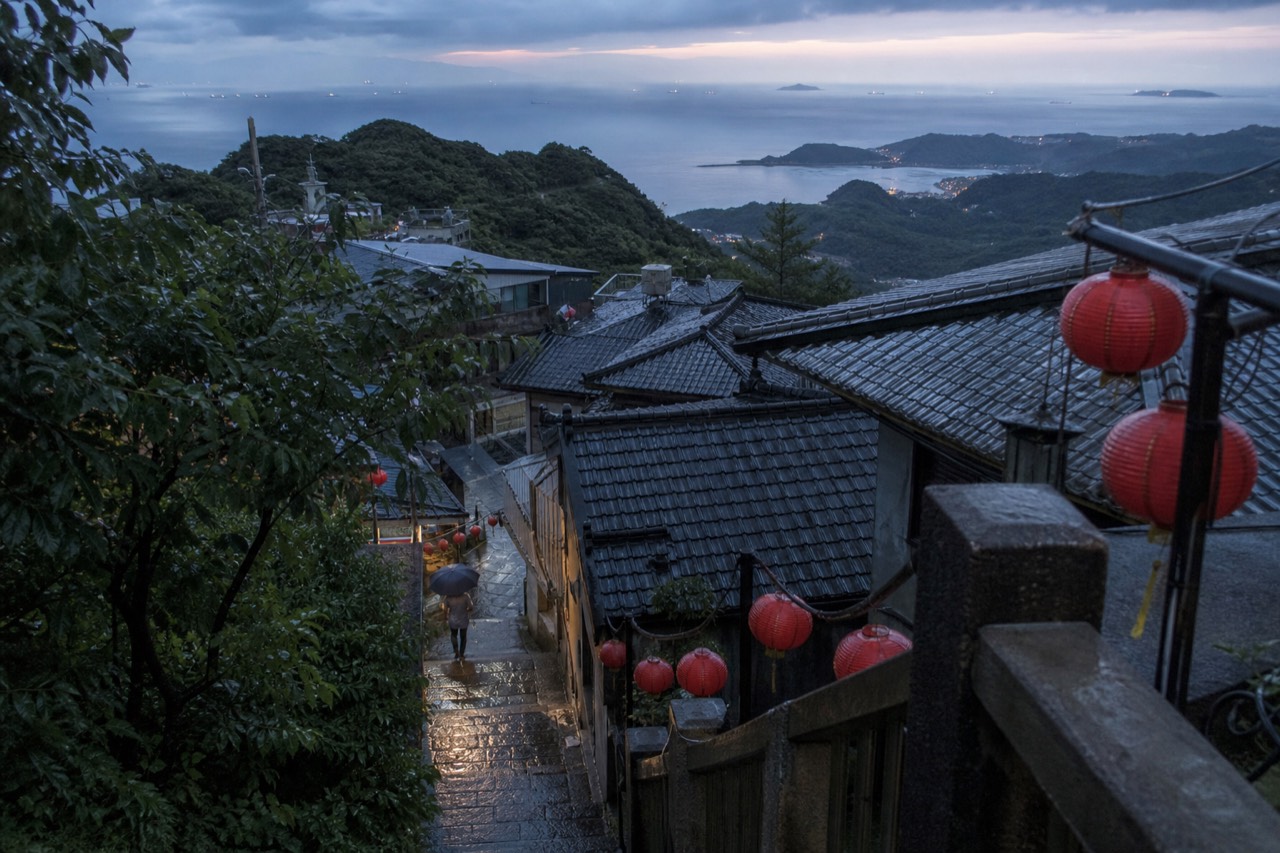
What Is The Best Month To Go To Taiwan?
For Taiwan as a whole, the conventional answer is late autumn through spring, and it is not wrong. For the northeast coast specifically, where Jiufen, Shifen and Yehliu sit, the honest answer is July, followed by August and April. That is the opposite of the standard advice, and it is what the official 30-year climate record for this coast actually shows.
The catch is that Taiwan is not one climate. The island is long, with a mountain spine down the middle, and the southwest around Tainan and Kaohsiung has a genuinely different rain pattern from the northeast corner where most first-time visitors actually go. A single national answer papers over that difference, and on the northeast it points people at the wrong months.
Here is the short version. The nearest official weather station to Jiufen is Keelung, about 12 km away on the same windward coast, because there is no station at Jiufen itself. Keelung's 30-year normals, published by the Central Weather Administration for the period 1991 to 2020, show July as the driest month: 119.5 mm of rain across 8.5 rain days. November is the wettest, at 396.9 mm. The months most English guides recommend for Taiwan, October and November, are close to the worst possible choice for this particular coast.
If your trip is built around Jiufen, Shifen and the north, that single fact should reorganise your calendar. The rest of this article walks through the full monthly series, the sunshine numbers that matter as much as the rain, and what each month actually feels like on the ground, including the one month the data says to skip.
Why The Northeast Coast Disagrees With The National Answer
The northeast coast takes 61 percent of its entire year's rain between September and February, a total of 2,198.8 mm across those six months, because the northeast monsoon drives weather here for half the year. The national best-month advice is calibrated to the whole island, so it lands badly on the one coast that has an inverted pattern. Blame geography, not the guidebooks.
The mechanism is simple. From late summer into winter, prevailing winds swing round to the northeast and pick up moisture off the ocean before slamming into the first land they meet, which is exactly this coast. The southwest sits in the mountains' rain shadow during those months and stays comparatively dry. In summer the pattern reverses, and the northeast coast, no longer facing into the wind, gets its calmest, driest, sunniest stretch of the year.
The numbers come from the Central Weather Administration's 30-year climate normals, which you can read directly on the CWA statistics page. They are measured at Keelung station 466940, and the honest way to cite them is exactly that: Keelung, about 12 km from Jiufen on the same windward shore, standing in for a town that has no station of its own. Jiufen sits higher and further inland, so the pattern almost certainly holds and may run wetter, but no measured Jiufen figure exists and none should be printed.
Here is the full monthly series, straight from that record:
| Month | Rainfall (mm) | Rain days | Sunshine (hours) | Mean temp (°C) |
|---|---|---|---|---|
| January | 327.8 | 19.6 | 52.6 | 16.1 |
| February | 349.8 | 17.9 | 57.9 | 16.4 |
| March | 274.4 | 18.7 | 80.6 | 18.1 |
| April | 211.1 | 16.0 | 91.2 | 21.6 |
| May | 284.1 | 16.1 | 111.9 | 24.8 |
| June | 290.4 | 14.8 | 138.4 | 27.6 |
| July | 119.5 | 8.5 | 229.2 | 29.5 |
| August | 211.4 | 11.6 | 208.2 | 29.1 |
| September | 390.1 | 15.2 | 147.4 | 27.2 |
| October | 377.6 | 17.1 | 85.7 | 24.2 |
| November | 396.9 | 18.6 | 65.3 | 21.5 |
| December | 356.6 | 19.5 | 48.5 | 18.0 |
| Year | 3,589.7 | 193.6 | 1,316.9 | 22.8 |
Two comparisons make the table make sense. Keelung records 3,589.7 mm a year against Taipei's 2,329.5 mm, stations roughly 25 km apart, which is about 54 percent more rain. And it rains on 193.6 days a year here, more than half of all days, which is why the northeast's reputation is fog and drizzle rather than the tropical downpour people picture when they hear "rainy season". If you want the deeper version of this argument for the town itself, the best time to visit Jiufen guide works through the same record street by street.
Which Month Is Actually The Driest?
July is the driest month on the northeast coast, with 119.5 mm of rain spread across just 8.5 rain days, and August is second at 211.4 mm across 11.6 days. That is roughly one rainy day in four in July, against more than one in two in November. For anyone whose priority is dry streets and clear coastal views, midsummer is the statistical winner on this coast.
This is the single most counterintuitive fact in Taiwanese travel planning, and it is worth sitting with. The standard advice to avoid Taiwan in summer is built on heat and humidity in the basins and on the southwest's summer wet season. On the northeast coast, the same months deliver the clearest skies of the year. July gives Keelung 229.2 sunshine hours, nearly five times December's 48.5, and August follows at 208.2. Those are the two sunniest months in the entire record.
The trade-offs are honest ones. July's mean temperature at Keelung is 29.5 °C, so you will sweat on the stairs of Shuqi Road, and the sun is strong enough that the walk from the bus stop into town is best done slowly. But Jiufen at 29 °C with a sea breeze and a blue sky over the Yin Yang Sea is a very different place from Jiufen at 18 °C inside a cloud, which is what November routinely delivers. Fog gives the town its famous atmosphere; sun gives you the view. Which you prefer is a genuine choice, and the day versus night question for Jiufen runs through a version of it.
April is the spring compromise, at 211.1 mm and 16.0 rain days, but notice it is barely drier than August and comes with half the sunshine. If you cannot do summer, April is the best of the rest, followed by June, whose 290.4 mm comes on only 14.8 rain days, meaning more rain per event but fewer wet days overall.
For a day that uses a dry window well, the coast circuit that adds the Tiaoshi coastline as an option runs 9h15 to 10h, is rated 4.9 across 14,933 reviews, and costs from $21.19 per person. The sea cliffs and the Yin Yang Sea are the payoff on a clear day, and a clear day is exactly what July buys you.
Which Month Not To Visit Taiwan?
For the northeast coast, the month to avoid is November, which is the wettest in the record at 396.9 mm of rain across 18.6 rain days, and it sits inside the September-to-February stretch that takes 61 percent of the year's rain. October and December are barely better. If your trip is Jiufen, Shifen and Yehliu, late autumn is the worst-timed stretch you can pick.
This is where the national advice does real damage. Almost every English-language guide to Taiwan recommends October and November as the golden window, and for Taipei city and the west coast that is broadly fair. On this coast, October takes 377.6 mm, November 396.9 mm, and December 356.6 mm, all on the wrong side of 18 rain days a month. December's sunshine figure is the grimmest in the table: 48.5 hours across the whole month, about 1.6 hours a day. January manages only 52.6.
What that feels like on the ground is worth describing honestly, because it is not disaster weather. It is drizzle, low cloud and a town that spends much of the afternoon inside fog. Some visitors love exactly that, and Jiufen's lantern-lit lanes in mist are a legitimate aesthetic. But the coastal view, the whole reason many people come, is frequently a white wall, and the Pingxi branch line's sky lantern release is a diminished thing in rain. If a clear view of the coast matters to you, the monsoon months are a gamble with bad odds.
September deserves a specific warning, because it looks transitional on paper and is not. At 390.1 mm it is the second-wettest month in the record, and it carries the tail of summer's storm risk on top of the monsoon's arrival. A September visit can be lovely, but it is a high-variance month, not a safe one.
The practical fix if you are locked into late autumn: go on a weekday, go early, and buy flexibility. On any weekend or public holiday between 08:00 and 20:00, Jiufen is a managed-access destination under the New Taipei City holiday traffic control plan, with coach access rationed to roughly 20 approved coaches per half-day slot and suspended entirely on holidays of three or more consecutive days. A rainy November Saturday is the site's perfect storm: the monsoon outside, the crowds inside, and the coaches queuing for rationed slots. A rainy November Tuesday is a different, quieter experience.
For a monsoon-month fallback, the longest day on this site is the private tour that adds Yangmingshan National Park to Yehliu, Jiufen and Shifen, 12 hours, rated 4.9 across 31 reviews, from $220.01 per person, with free cancellation confirmed. A driver-guide who can read the cloud line and reorder the day around it is worth a great deal in November, and the cancellation terms mean a badly forecast day does not have to be a lost deposit.
What Each Month Is Actually Good For
Every month on this coast has a use: July and August for views and sunshine, April and June for shoulder-season walking, September to February for fog, lanterns and moody photographs, and the winter months for teahouse time when the street empties after dark. The month-by-month table below pairs each month with its honest best use, so you can match the calendar you have to the trip you want.
The record supports a more granular plan than a single best month. Rain days matter more than raw millimetres for a day trip, because 300 mm over 19 days is a different trip from 300 mm over 12. Sunshine hours matter for anything with a view. And the monsoon months, for all their weather, are the quiet ones once the tour buses thin out, which is its own kind of value.
| Month | Rain days | Best use on this coast |
|---|---|---|
| January | 19.6 | Teahouses, night lanterns, near-empty lanes; expect fog and 52.6 sunshine hours |
| February | 17.9 | Lunar New Year energy if timed right, otherwise a quieter January repeat |
| March | 18.7 | Camellia-green hillsides, first lengthening light, changeable days |
| April | 16.0 | The best spring month: mild, greener, drier than any monsoon month |
| May | 16.1 | Warm and lush, rain arriving in bursts rather than all-day drizzle |
| June | 14.8 | Fewest rain days outside summer proper, hot, long light for evening visits |
| July | 8.5 | The driest, sunniest month: views, coast, blue-sky photographs |
| August | 11.6 | Second-sunniest; hot afternoons, sea breeze, evening street at its best |
| September | 15.2 | High variance: can be golden, can be the second-wettest month of the year |
| October | 17.1 | National-guide favourite that underperforms here; book indoor fallbacks |
| November | 18.6 | The wettest month; fog aesthetics only, and weekday visits |
| December | 19.5 | Deepest quiet, 48.5 sunshine hours, lantern lanes in mist |
One structural point that shapes every month: the crowds. The Ruifang scenic area that contains Jiufen Old Street recorded 3,769,615 visitors in January and February 2026 alone, third in New Taipei City, per Tourism Administration statistics reported by NOWnews. That is a winter figure, and it says something important: the monsoon does not empty this town. The quiet months are the ones with fewer coach slots rationed and fewer weekend days, not the dry ones. July buys you weather; a Tuesday in any month buys you space.
If you are pairing Jiufen with the capital, the how many days in Taipei is enough question interacts with this one, because a five-day Taipei stay gives you weather windows a two-day stay cannot. And the rail option, worked through in getting from Taipei to Jiufen, runs 45 to 47 direct trains a day to Ruifang, which means a bad-weather morning can become a fine-weather afternoon without replanning anything.
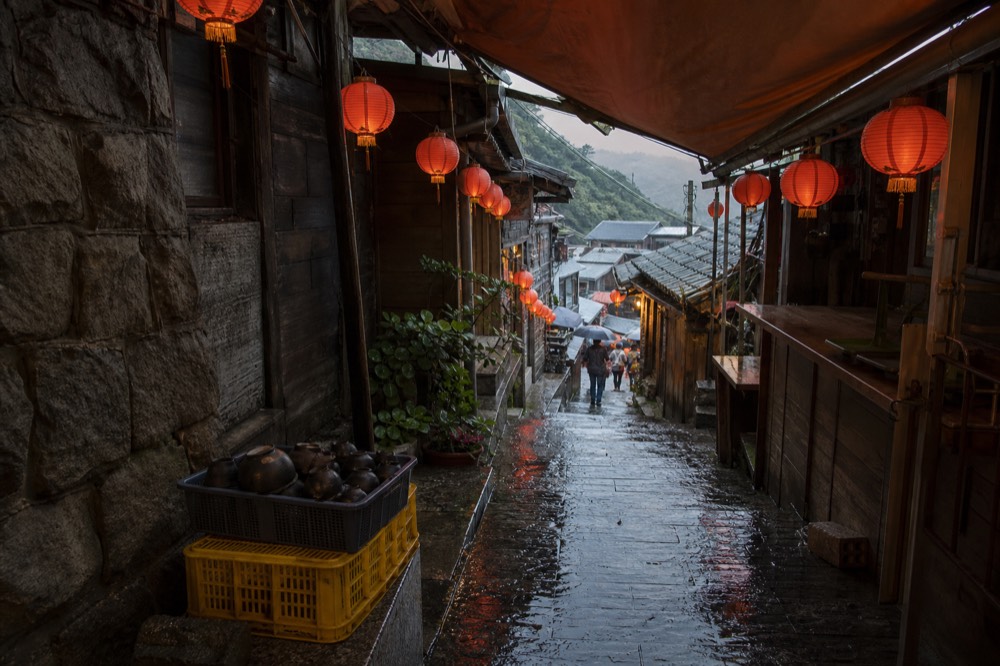
Does The Rain Ruin The Trip, Or Make It?
No, the rain does not ruin a Jiufen trip, because this coast's rain is mostly drizzle and low cloud rather than flooding rain, and the town's architecture, lanterns and teahouses are built for exactly that weather. Roughly 193.6 rain days a year mean most visitors see some rain whenever they come. The real question is whether you want the fog aesthetic or the view, and only you can answer it.
It helps to be precise about what rain means here. With 193.6 rain days a year, a rain day is close to a coin flip in every month except July, August and June. But the annual total of 3,589.7 mm spread over that many days produces a lot of grey, misty, lightly damp days rather than a lot of ruined ones. The monsoon months deliver the atmosphere that made the town famous in photographs: red lanterns dissolving into cloud, wet stone lanes, tea steam on a window.
What the rain genuinely costs you is the coast. Yehliu's rock formations in horizontal drizzle are a diminished experience, the Yin Yang Sea viewpoint is often a white wall, and the sky lantern release in Shifen, while legally restricted to one marked stretch of the Pingxi branch regardless of weather, is a better memory under a visible sky. The sky lantern management measures that define where and when lanterns may be released, including the ban between 22:00 and 06:00, apply year-round, so weather is the only variable in that experience.
The honest planning move is to decide which Jiufen you want. The July Jiufen is a bright hillside town with a blue sea below it, hot stairs, and photographs that look like postcards. The November Jiufen is a moody lantern-lit maze with a quarter of the sunshine and most of the atmosphere. Both are real. The mistake is booking November expecting July, which is what the national best-month advice quietly encourages people to do.
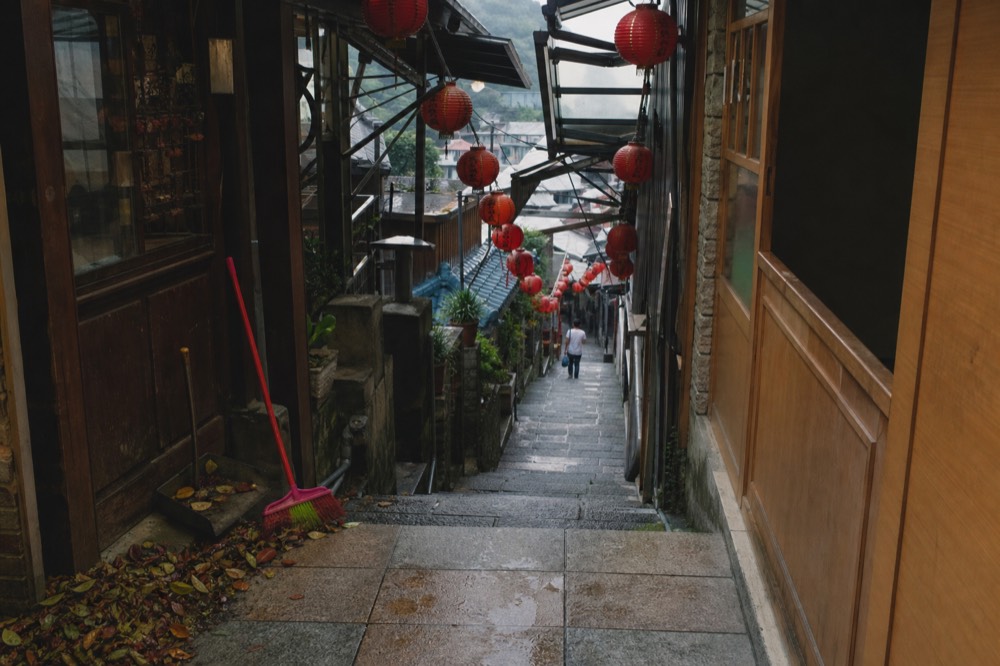
How To Plan Around A Month You Cannot Change
If your dates are fixed, plan the coast around them rather than against them: in the wet months book a private driver with free cancellation, keep Yehliu for the clearest morning in your window, put teahouses and the Gold Museum indoors as fallbacks, and remember the Gold Museum closes the first Monday of every month. In the dry months, book the coastal circuits and go on a weekday anyway, because summer weekends still bring the crowds.
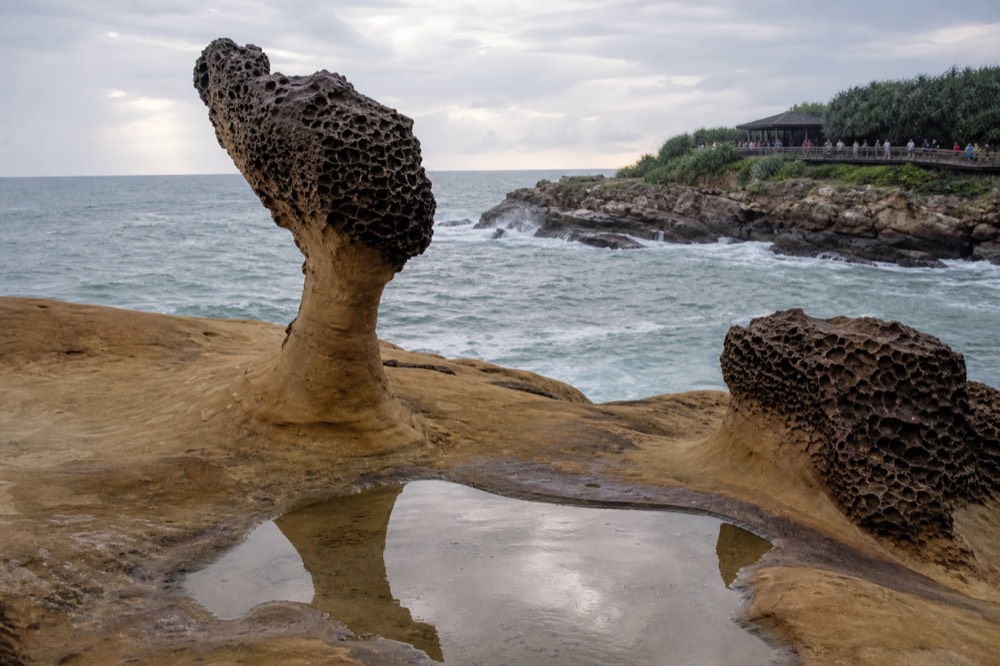
Fixed dates are the normal case, so the month table should drive itinerary order, not despair. The monsoon-month playbook is straightforward. Give the coast two possible days and commit to Yehliu on whichever morning looks best, because the geopark's Queen's Head and honeycomb rock are the most weather-dependent sights on the circuit. Hold Jiufen for late afternoon into evening, when the lanterns come on following sunset and fog becomes an asset. Keep the Gold Museum at Jinguashi as the rain fallback, at NT$80 admission, and remember its one quirk: closed the first Monday of every month, and if that Monday is a holiday it closes the following day instead.
The dry-month playbook is simpler but has its own trap. July and August deliver the weather, and every coach in three counties knows it. Weekend coach access is rationed under the traffic control plan, and the street is at its busiest midday. The fix is the same as in November: weekday, early, and the train rather than the road. There is no direct train from Taipei to Shifen, so the standard rail pattern is Taipei Main Station to Ruifang, 45 to 47 direct services a day from NT$73, then the Pingxi branch, 17 trains a day at a flat NT$29, with the same 17 running on a Saturday as on a Monday because the line gets no extra weekend capacity.
For the shoulder months, April and June, the plan is a hybrid: book the coastal day normally, keep one flexible morning, and treat a rain day as a teahouse day. The verified floor at A-Mei Tea House, from its own menu, is NT$100 per person in tea water fees plus NT$500 for the cheapest pot, so NT$700 for two before any food, a number worth knowing before you sit down rather than after.
The rail and fallback options side by side:
| Option | Key figures | Best month for it |
|---|---|---|
| Train to Ruifang, then Pingxi branch | 45 to 47 direct trains a day, from NT$73; branch 17 trains a day, flat NT$29 | Any; the same 17 branch trains run Saturday as Monday |
| Yehliu Geopark morning | Geopark adult ticket NT$120, hours 08:00 to 17:00 year-round and 08:00 to 18:00 in summer, last entry at closing | The clearest morning in your window, any month |
| Gold Museum, Jinguashi | Admission NT$80, closed the first Monday of every month | Monsoon months, as the indoor fallback |
| A-Mei Tea House | NT$100 per person tea water fee, cheapest pot NT$500, open 09:00 to 21:30 | Rain days and winter evenings |
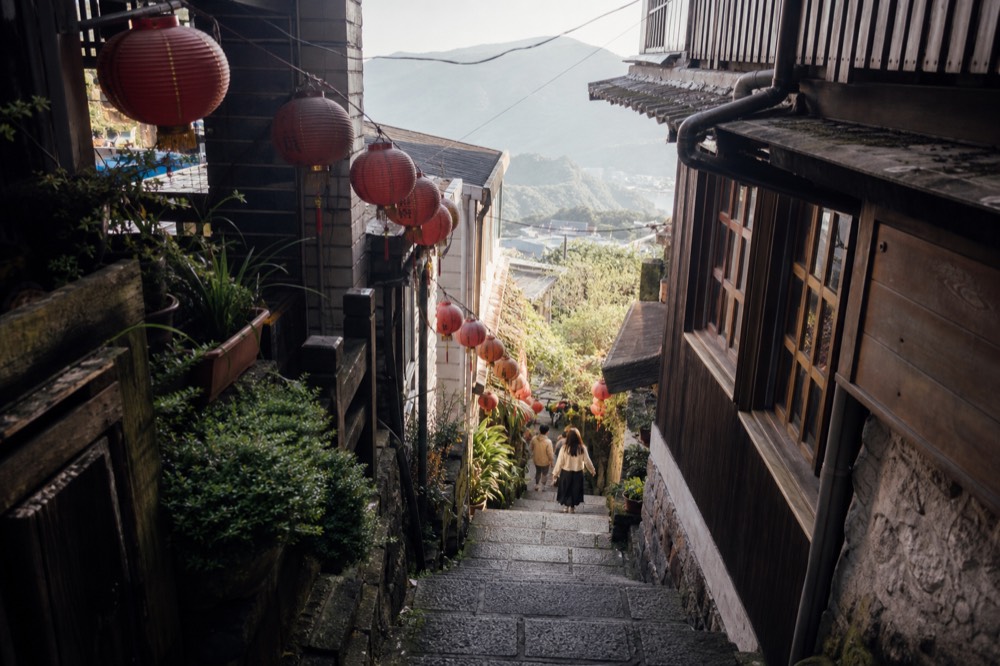
The Short Answer, Month By Month
Pick July if you want the view and can take the heat, August if you want the second-sunniest month with slightly better odds on rain, April if you want spring without the monsoon, and a weekday in any month if crowds worry you more than weather. Avoid November, October and December for a view-first trip, and treat September as a coin flip. That is the whole decision, built on the Keelung 30-year record.
The one-sentence version for a friend: the best month to go to Taiwan depends on which Taiwan you are visiting, and if it is the northeast coast, the one with Jiufen on it, the answer is the month everyone else told you to skip. The national answer and the coastal answer disagree because the island's weather is regional, and the coastal answer is the one backed by a 30-year official station record 12 km from the town in question.
A final note on what the numbers cannot tell you. Climate normals are averages, and any individual July can hand you a wet week while any November can hand you a golden one. The normals tell you the odds, not the forecast. Check the live forecast a few days out, keep cancellation terms on anything booked, and treat the month table as a way of tilting the odds rather than a promise. The site's own Jiufen Tour planning pages carry the town-specific detail for whichever month you land on.
The best month for Taiwan depends entirely on which part of the island you are visiting, and the questions below cover the ones travellers ask most: the single best month, the month to avoid, whether July is too hot, where the numbers come from, how often it actually rains, and whether the wet months at least buy you smaller crowds. Each answer is drawn from the official 30-year station record for the northeast coast, not from guidebook generalisations.
Common Questions About The Best Month To Visit Taiwan
What Is The Best Month To Go To Taiwan?
For the northeast coast, where Jiufen, Shifen and Yehliu sit, the best month is July, the driest in the official 30-year record at 119.5 mm across 8.5 rain days, with August second. For Taiwan generally, spring and late autumn are the conventional picks, but on this coast October and November are among the wettest months, so match the answer to your itinerary, not the island's average.
Which month not to visit Taiwan?
For the northeast coast, November: 396.9 mm of rain, 18.6 rain days, and the lowest useful sunshine of the autumn. October and December are close behind, and September is the second-wettest month despite its transitional reputation. If your trip is the Jiufen coast and you want views rather than fog, those are the months to avoid.
Is Taiwan too hot in July?
July is hot, with a mean of 29.5 °C at the Keelung station nearest Jiufen, and the stairs and lanes of the hill towns feel it. But it is also the driest and sunniest month on this coast, with 229.2 sunshine hours. If heat bothers you more than fog, go in April; if fog bothers you more than heat, July is the better trade.
Where do the weather numbers for Jiufen come from?
There is no weather station at Jiufen. The figures cited here are the Central Weather Administration's 30-year normals for 1991 to 2020, measured at Keelung station 466940, about 12 km away on the same windward coast. The pattern holds for Jiufen and likely runs wetter, but no measured Jiufen-specific figure exists.
Does it rain every day on the northeast coast?
Not every day, but more than half of them: 193.6 rain days a year at the Keelung station, against Taipei's 163.3. July drops to 8.5 rain days, June to 14.8, while the September-to-February stretch runs 15 to 20 rain days a month. Most of it is drizzle and low cloud rather than downpours.
Are the crowds smaller in the rainy months?
Not as much as you would think. The Ruifang scenic area that contains Jiufen Old Street recorded 3,769,615 visitors in January and February 2026 alone, third in New Taipei City, so winter does not empty the town. Weekdays thin the crowds in every month, and weekend coach access is rationed under the holiday traffic control plan, which shapes the day as much as the weather does.