Is The Pingxi Lantern Festival Worth It?
An honest answer that separates the festival from the everyday sky lantern release in Shifen, with the lantern law, the train numbers and the crowd arithmetic a visitor actually needs.
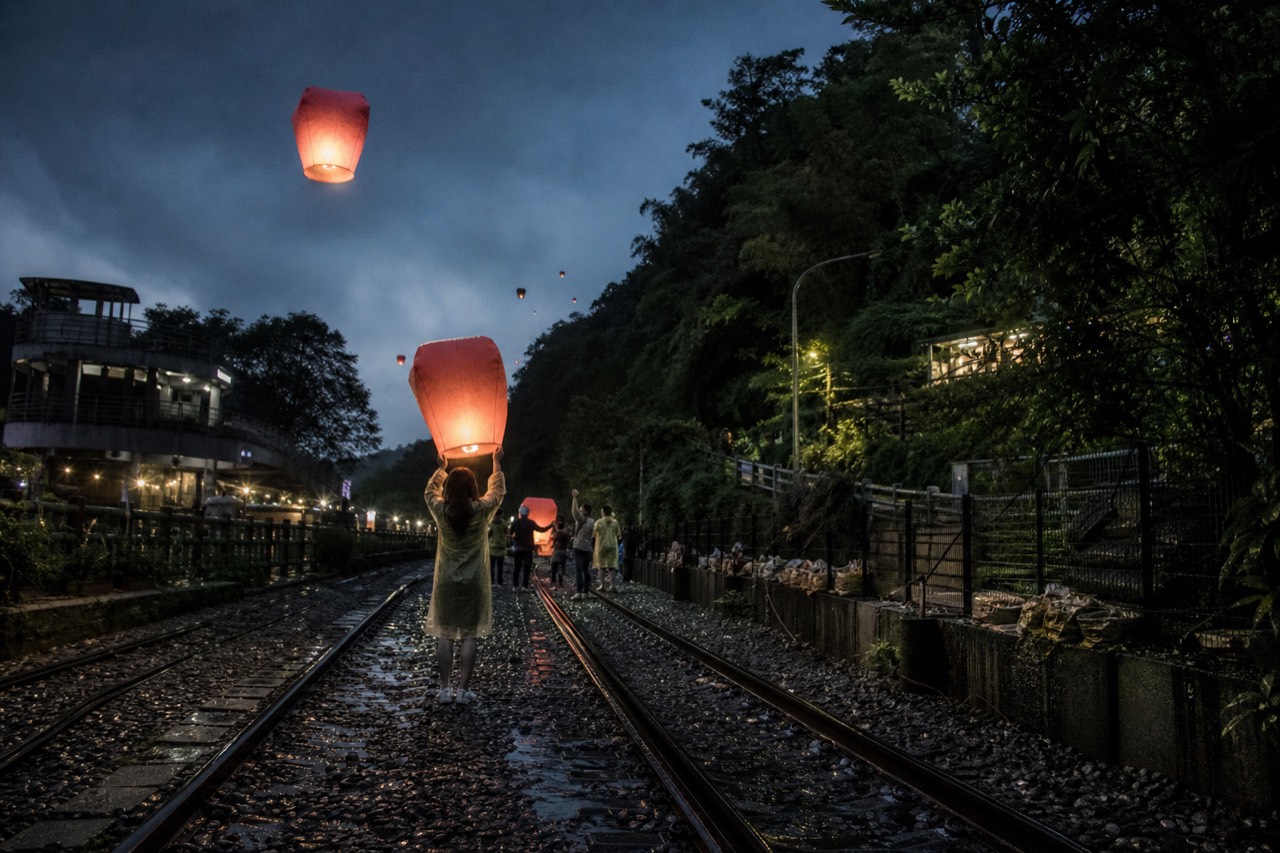
Is The Pingxi Lantern Festival Worth It?
For most visitors, no, not as a trip plan: the festival happens only around the Lunar New Year period, its dates and venues are announced by the city government rather than fixed, and the crowd pressure on the one small branch line that serves the area is severe. The everyday lantern release in Shifen, legal and bookable every day of the year, delivers the same experience without the festival logistics.
The first thing to separate is the thing itself from the thing you can book. The Pingxi Sky Lantern Festival is a New Year-period event run around the Lunar New Year calendar, which moves every year against the Gregorian calendar, so there is no fixed month you can circle. The city government announces the details of each edition rather than publishing them far ahead, and this site does not carry festival dates, venues or attendance figures because none of those have been verified from an official source for any specific edition. If you are planning a trip around the festival, the honest advice is to check the official announcements for the year you are travelling, and to treat anything else you read as unconfirmed.
The everyday release is a different animal. Releasing a sky lantern is legal in exactly one marked stretch of New Taipei City, from the Shifen Visitor Center to Shigong Bridge along County Road 106, and visitors do it there every day of the year, buying lanterns from the shops along Shifen Old Street and releasing them from the railway line itself. You do not need the festival to do it. You need a train ticket to Shifen and a shop that sells lanterns, and both exist on an ordinary Tuesday.
That trio is the shape of the market: a full private day that strings Yehliu, Shifen and Jiufen together, a dense half-day private option built around the lantern stretch, and a shared coach day with a lantern release built into the price. None of them is a festival product. All of them run on ordinary days, which is precisely the point.
What Is The Festival, And What Is The Everyday Release?
The festival is a government-organised, New Year-period event with mass releases and official announcements; the everyday release is a legally regulated commercial activity that happens daily in one permitted stretch of Shifen. The law governing both is the New Taipei City Sky Lantern Release Management Measures, promulgated in June 2011 under the Fire Services Act, and it is the best source on what is actually allowed.
The statutory text is worth reading directly, because it answers questions most English guides get wrong. Under the New Taipei City Sky Lantern Release Management Measures, releasing a sky lantern is banned everywhere in New Taipei City except the marked Pingxi stretch: from the Shifen Visitor Center to Shigong Bridge, within 200 m of the Keelung River along County Road 106, plus any area the city separately announces. Release sites must be clear of flammable material and at least 100 m from any petrol station, gas station, tank farm, magazine or chemical plant. The permitted zone is marked on the ground by government notice boards.
Two provisions matter for the festival question. First, no releases are allowed between 22:00 and 06:00, except at New Year and at special festivals announced by the government, or with Fire Bureau permission. That exception is the legal fingerprint of the festival: it is the one context in which lanterns legally go up after dark in numbers. Second, any organisation releasing 100 or more lanterns at once must apply to the Fire Bureau five days in advance with a safety plan and a map of the guarded zone. A mass release is, by definition, a bureaucratically pre-cleared event, not something a street of shops improvises.
The everyday release carries its own rules, and they are stricter than most visitors expect. A legal lantern must have a base of 60 to 70 cm, a height of 130 to 140 cm, an outer circumference of 360 to 370 cm, and weigh no more than 300 g, with a kerosene and soybean oil fuel mixture. No firecrackers may be attached. Anyone under 14, and any person with a disability, must be accompanied when releasing. And every lantern sold must be labelled with the seller's name and address, with the safety notice displayed in the shop. That labelling rule is the detail no English competitor carries, and it is on the statute book.
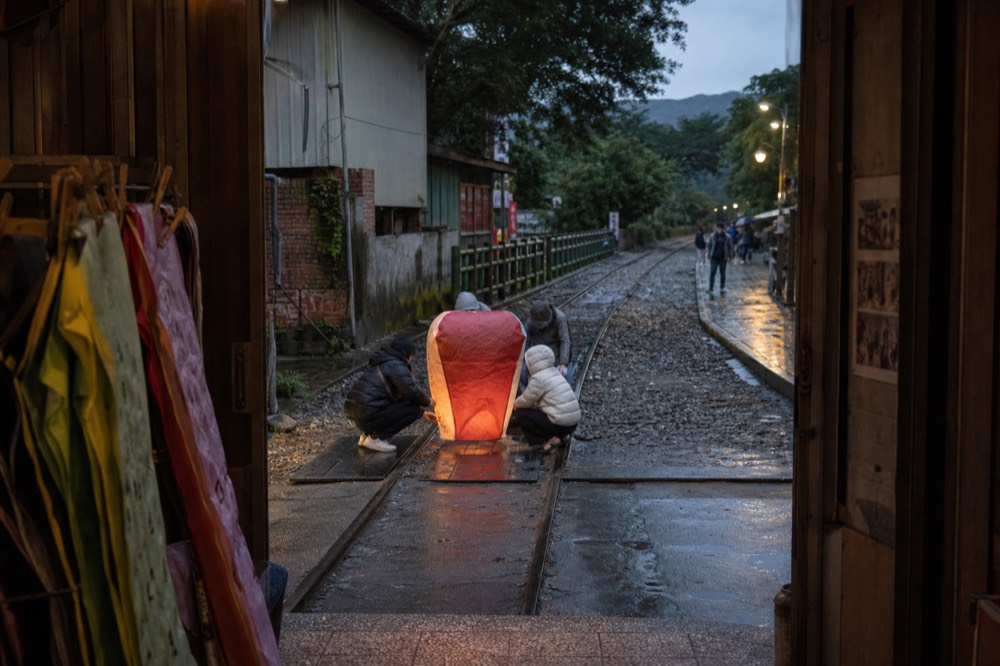
So the honest answer to "is it worth it" forks here. If your trip happens to coincide with an announced festival edition and you are comfortable with heavy crowds on a small branch railway, the mass release is a spectacle. If it does not, the everyday release gives you the same lantern, the same stretch of river, the same legal framework and a fraction of the crowd, on any date you choose.
Pingxi Is A District, And What Tours Actually Reach Is Shifen
Pingxi is a rural district of New Taipei City, not a town a coach drives to, and every tour on this site that could be filed under "Pingxi" in fact reaches Shifen, which sits inside Pingxi District. Three listings on this site name Pingxi in their title and not one itinerary lists Pingxi as a stop. Reading "Pingxi tour" as a promise of a place called Pingxi will mislead you.
This matters more than it sounds. The Pingxi branch line, the railway that carries the lantern traffic, runs through Pingxi District and has stations at Shifen, Pingxi and Jingtong among others, so the district name is genuinely on the map. But the lantern release, the old street and the waterfall that visitors photograph are all at Shifen. When a tour title says Pingxi, the itinerary says Shifen Old Street and Shifen Waterfall, every time, across the whole roster this site carries.
The half-day private option makes a good example. Its title is "Half Day Private Tour to Jiufen, Shifen Waterfall & Sky Lantern", and its verified stops are Shifen Old Street, Shifen Waterfall, the Yin Yang Sea, the Jinguashi Thirteen-Level Ruins, the Golden Waterfall and Jiufen Old Street: six real stops in six hours, the densest half-day on the site. The word Pingxi appears in its slug, and the place it reaches is Shifen. The same holds for the related private day tour, whose title says Pingxi and whose itinerary is Yehliu Geopark, Shifen Waterfall, Shifen Old Street and Jiufen Old Street.
Rated 4.9 across 534 reviews, from $120 per person, with free cancellation confirmed and hotel pickup included, it is the best-proofed private product on this site for a day that combines the coast, the lantern stretch and Jiufen. If you want a fuller treatment of the district and its railway, the Shifen old street and lantern guide covers the street itself, and the Jiufen and Shifen in one day guide works through the pairing question in detail.
The Train Arithmetic That Decides Your Festival Day
There are 17 direct trains a day from Ruifang to Shifen on the Pingxi branch line, at a flat NT$29, taking 27 to 32 minutes, and the count is identical on a Saturday and a Monday: the line gets no extra weekend capacity, let alone festival capacity. There is no direct train from Taipei to Shifen at all; every journey changes at Ruifang.
Those numbers are the crowd argument compressed into a timetable, and they come from the Taiwan Railway Corporation's own system. Seventeen trains a day sounds workable until you spread them out: departures from Ruifang run 05:07, 06:26, 07:12, 07:55, 09:04, 09:57, 10:55, 11:55, 13:00, 14:00, 15:00, 15:59, 16:54, 18:33, 19:22, 21:06 and 22:20. Roughly hourly through the middle of the day, then thin, with a 1h39m gap after 16:54 and a 1h44m gap after 19:22. Miss a late-afternoon train and you are standing on the platform for the better part of two hours.
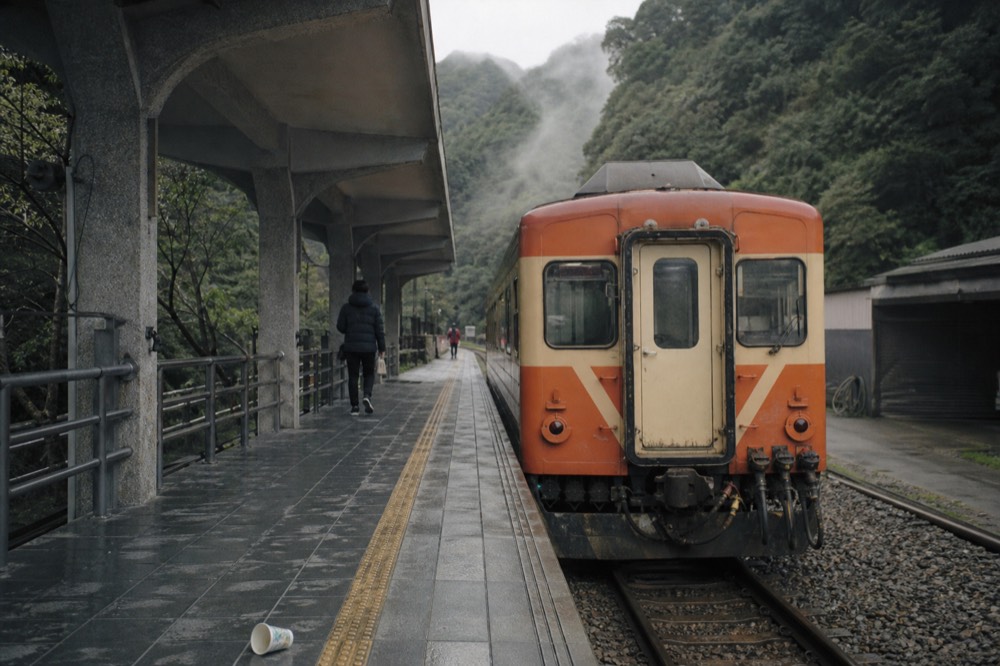
Getting to Ruifang in the first place is easy, which is the part most guides get right. Taipei Main Station to Ruifang has 45 to 47 direct trains a day, 32 to 68 minutes with a median of 46, and the local train fare is NT$73 against NT$114 for the fastest expresses. The express saves about 13 minutes over the median local and costs NT$41 more, so the local is the sensible default on this route. The step almost every English guide skips is the second one: Taipei to Shifen returns zero direct services. You change at Ruifang, always, and the branch line is the only rail way in.
| Leg | Trains per day | Fare | Journey time | The catch |
|---|---|---|---|---|
| Taipei Main Station to Ruifang | 45 to 47 direct | NT$73 local, NT$114 fastest express | 32 to 68 min, median 46 | No direct service onwards to Shifen |
| Ruifang to Shifen (Pingxi branch) | 17, same on weekdays and Saturdays | NT$29 flat | 27 to 32 min | No extra weekend capacity; gaps of 1h39m and 1h44m in the late afternoon and evening |
| Ruifang to Houtong | 44 | NT$22 | 5 to 7 min | Different direction, cat village rather than lanterns |
| Ruifang to Jingtong (branch end) | 16 | NT$44 | 37 to 51 min | Passes through Shifen en route |
Now put the festival on top of that. A mass release concentrated into one evening pushes demand onto exactly the thin end of that timetable, the post-16:54 and post-19:22 gaps, on a line that adds no trains for weekends and none that this site can verify for festivals either. If you go for a festival release, you are competing for seats on the same 17 trains with everyone else who had the same idea, and the return is worse than the arrival because everyone leaves at once. That is the mechanical reason the everyday release is the better plan for most people.
Festival Crowds Versus Everyday Crowds
On any weekend or national holiday between 08:00 and 20:00, the Jiufen and Ruifang area operates under a signed New Taipei City traffic control plan, in force since 1 January 2025, that rations coach access to roughly 20 approved coaches per half-day slot and refuses applications entirely on holiday runs of three or more consecutive days. A festival date, which is by definition a national holiday period, is the most restricted access window of the year.
The plan is a real government notice, 新北府交規字第1132450546號, dated 10 December 2024, and its signed text is public. Control hours are 08:00 to 20:00 on every weekend, national holiday, Labour Day and make-up working day. Coaches must apply in advance to Ruifang Police Precinct and may not drive to Jiufen Old Street on their own; applications are split into morning and afternoon slots of roughly 20 coaches each, and during holiday runs of three or more consecutive days, applications are not accepted at all. Coaches that miss out drop passengers at the New No. 9 car park or at Shuinandong, and passengers transfer to a shuttle.
The restriction is on coaches, not private cars and never pedestrians, so a private car or a train journey is unaffected by the rationing itself. But the rationing tells you what the road looks like on those days, and it tells you which tour formats are even possible. A shared coach tour on a long weekend is not driving to the old street, full stop; it is feeding you into a shuttle arrangement. A private car tour, or the train, keeps you inside the plan rather than outside it.
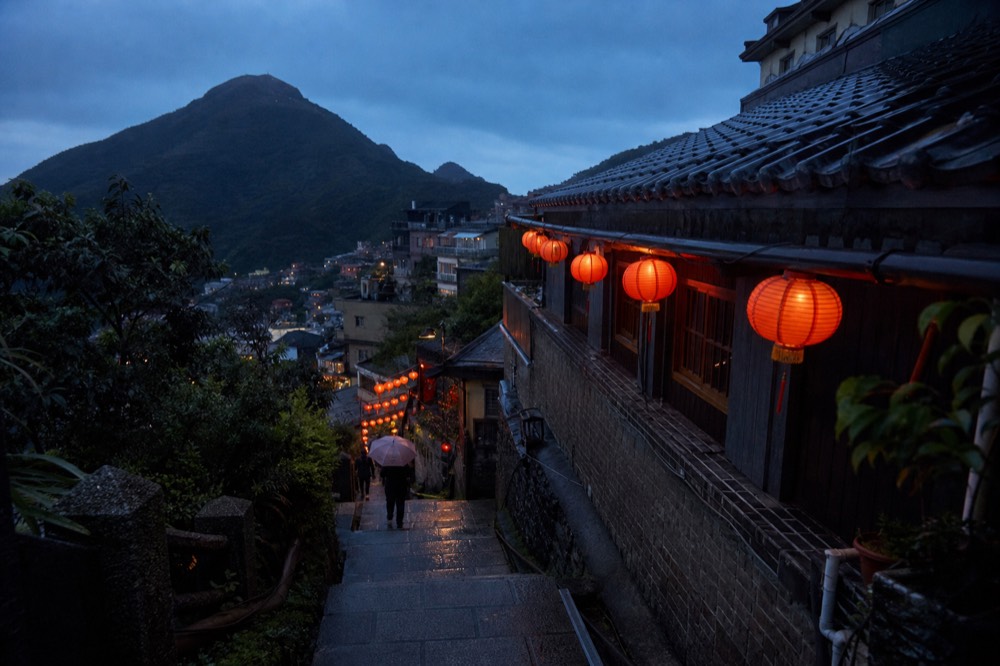
The everyday release has its own crowd pattern, and it is predictable in the way festival crowds are not. The heaviest pressure on Shifen Old Street is through the middle of the day, and the street calms before about 09:00 and after about 19:00, in the pattern visitors consistently report. A morning branch-line train, a lantern release before the coaches arrive, and an early afternoon departure is the shape of a good ordinary day, and it is achievable with the timetable above.
What You Can Actually Book, And When
The bookable product is the everyday release, and the strongest versions on this site are the shared day tour with a lantern release built into the price, from $82 per person with free cancellation confirmed, and the private options from $99 and $120 per person. No tour on this site sells festival access, because festival access is not a commercial product; it is a free public event with its own registration process.
The shared option deserves a specific mention because it is the only roster product where the lantern release is inside the price rather than an extra. It runs nine hours from Taipei, stops at Yehliu Geopark, Jiufen Old Street, Shifen Waterfall and Shifen Old Street, includes refreshments and hotel pickup, is rated 4.7 across 1,006 reviews, and carries confirmed free cancellation. For a visitor who wants the lantern moment guaranteed in the booking rather than negotiated on the street, that is the cleanest structure on the site.
The private half-day, from $99 per person with free cancellation confirmed, is the time-efficient alternative: six stops in six hours including Shifen Old Street, Shifen Waterfall, the Yin Yang Sea, the Jinguashi ruins, the Golden Waterfall and Jiufen Old Street. And the full private day at from $120 per person, rated 4.9 across 534 reviews, is the one to pick if Yehliu is also on the list. Prices on the live listings move with sales, so check the operator's listing for the day you want rather than anchoring to a number read here.
One caution that costs nothing to observe: this site also carries a red blessing lantern experience redeemed in Jiufen itself, from $7.89 per person. It is a different thing entirely from a Shifen sky lantern, it does not go up into the air, and no sky-lantern price or comparison belongs attached to it. If what you want is the release into the sky, it happens in the permitted Pingxi stretch, at Shifen, and nowhere else in New Taipei City.
The Honest Verdict
The festival is worth it for a visitor whose dates coincide with an announced edition, who arrives by train, and who accepts a crowded return leg. For everyone else, the everyday release in Shifen is the better product: identical lantern, identical legal stretch of river, ordinary-day crowds, and a booking that can be made for any date. Plan for the everyday release and treat the festival as a bonus.
The deeper point is that the festival question is really a logistics question. The lantern itself, the law that permits it, the marked stretch of County Road 106 and the shops that sell labelled lanterns are all there every day. What the festival adds is scale, after-dark release under the announced-event exception, and the crowd and access pressure that scale brings, on a branch line that runs the same 17 trains on a Saturday as on a Monday. What the festival costs you is flexibility: you go when the city says, on the holiday-rationed weekend, with everyone else.
If you want to keep digging, the guide to what happens to lanterns after they burn out covers the environmental side, and the Taiwan Tourism Administration's own Jiufen page is the official anchor for the wider area. For the practical pairing of the two towns, start with the one-day Jiufen and Shifen itinerary. And if the verdict here points you toward the everyday release, the tours above are the bookable versions of exactly that. This page is part of Jiufen Tour, the site's wider coverage of the town, its coast and its railway lines.
The short answers: the festival is a hard-to-plan holiday event, the everyday release in Shifen is available daily, Pingxi is a district whose tours actually reach Shifen, every rail journey changes at Ruifang, and two tours on this site include the lantern release: a shared coach day tour and a private shore excursion. The details below unpack each of those.
Common Questions About The Pingxi Lantern Festival
Is The Pingxi Lantern Festival Worth It?
For most visitors, no, not as a trip plan. The festival runs only around the Lunar New Year period, its dates are announced by the city government rather than fixed, and it piles demand onto a branch line that runs the same 17 trains a day on a Saturday as on a Monday. The everyday lantern release in Shifen is legal, bookable and available every day of the year, and it is what most tours actually sell.
Can I release a sky lantern on a normal day, without the festival?
Yes. Releasing a sky lantern is legal in one marked stretch of New Taipei City, from the Shifen Visitor Center to Shigong Bridge along County Road 106, and shops along Shifen Old Street sell lanterns for release there daily. No releases are allowed between 22:00 and 06:00 except at announced festivals, so a normal-day release is a daylight or early-evening activity.
Is Pingxi the same place as Shifen?
Pingxi is a district; Shifen is the town inside it where the lantern release, the old street and the waterfall actually are. Three tour listings on this site name Pingxi in their title and not one itinerary lists Pingxi as a stop; what they reach is Shifen. Read "Pingxi tour" as a Shifen tour and you will not be misled.
How do I get to Shifen by train?
Take any Taipei Main Station to Ruifang service, 45 to 47 direct trains a day from NT$73, then change to the Pingxi branch line: 17 direct trains a day to Shifen at a flat NT$29, taking 27 to 32 minutes. There is no direct train from Taipei to Shifen; every journey changes at Ruifang.
Are there extra trains during the festival?
This site carries no verified information about festival-period capacity. What is verified is that the branch line runs the identical 17 trains on a Saturday as on a Monday, with no extra weekend capacity, and that the late-afternoon and evening timetable has gaps of 1h39m and 1h44m. Plan around the published timetable and check the operator's announcements for the edition you are targeting.
Do any tours include the lantern release in the price?
Two products on this site build a sky lantern release into the price: the nine-hour Yehliu, Jiufen and Shifen day tour with a lantern release, from $82 per person with free cancellation confirmed, and a private Keelung shore excursion with the Shifen release included. Other tours reach the lantern stretch but leave the lantern itself as an on-street purchase, for which no official price is published, so check the shop boards in Shifen.