Is New Taipei Worth Visiting?
Yes, and most visitors already answer it without noticing: Jiufen, Ruifang, Shifen, Pingxi, Jinguashi and Yehliu are all New Taipei City. What the city itself runs, regulates and charges for.
Is New Taipei Worth Visiting?
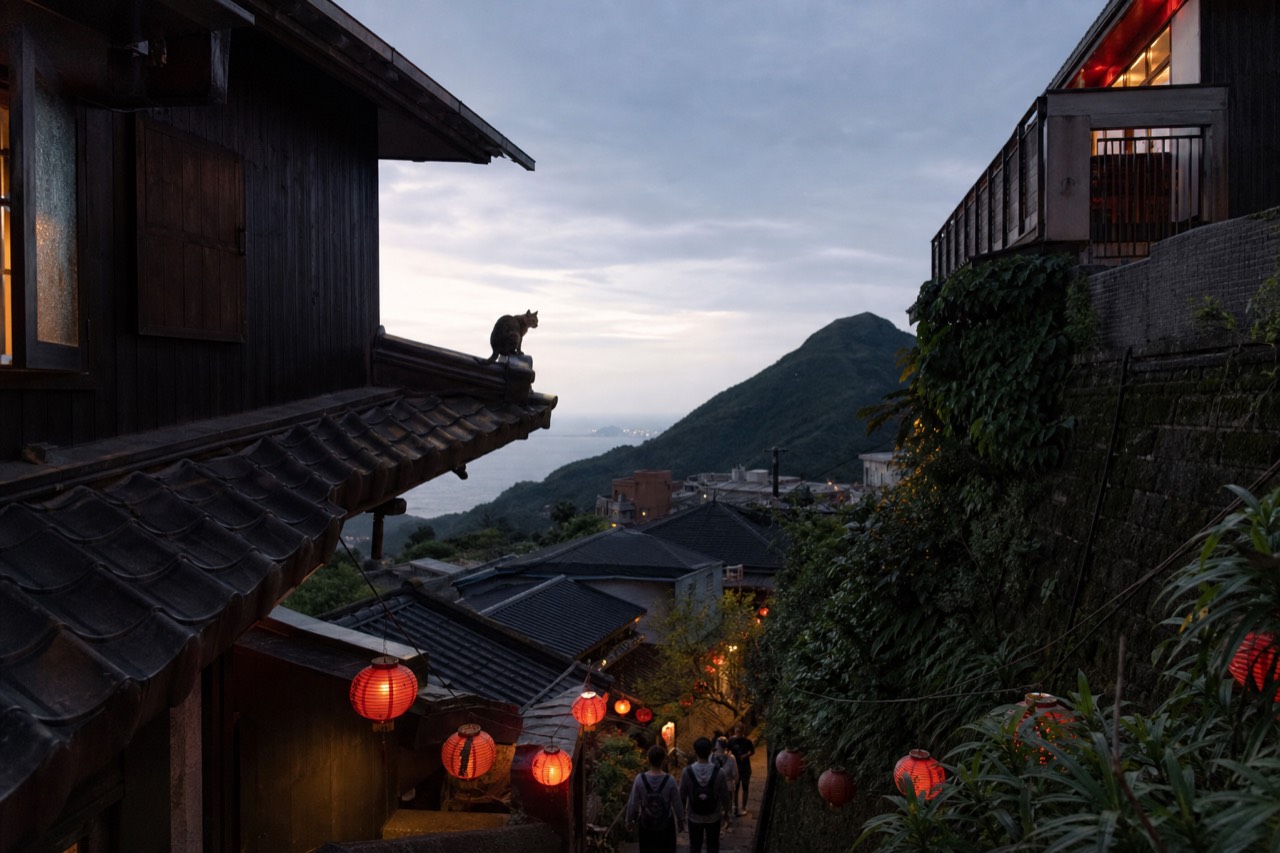
Yes, and the honest answer is that most visitors have already said so without noticing. Jiufen, Ruifang, Shifen, Pingxi, Jinguashi and Yehliu Geopark are all inside New Taipei City, not Taipei City, and the region that travellers describe as "the day trip from Taipei" is really a tour of one enormous municipality that wraps around the capital on three sides.
The confusion is understandable. Taipei City is a small, tightly drawn box, and everything beyond its border, the north coast, the Keelung River valley, the gold-mining hills, is New Taipei City, a separate and much larger municipality that wraps around the capital on three sides. When a coach pulls out of Taipei and heads for the coast, it leaves Taipei City almost immediately and spends the rest of the day inside New Taipei.
That matters for more than pedantry, because New Taipei City is not a passive backdrop here. It is the level of government that decides how many coaches may reach Jiufen Old Street on a Saturday, that wrote the law saying where you may release a sky lantern, that runs the Gold Museum at Jinguashi, and that published the research correcting the folk story about where the name Jiufen comes from. The best day-trip region in northern Taiwan is also the most actively managed, and the management is the story. This site, Jiufen Tour, exists to cover exactly that corner of the municipality, and the rest of this page is the evidence.
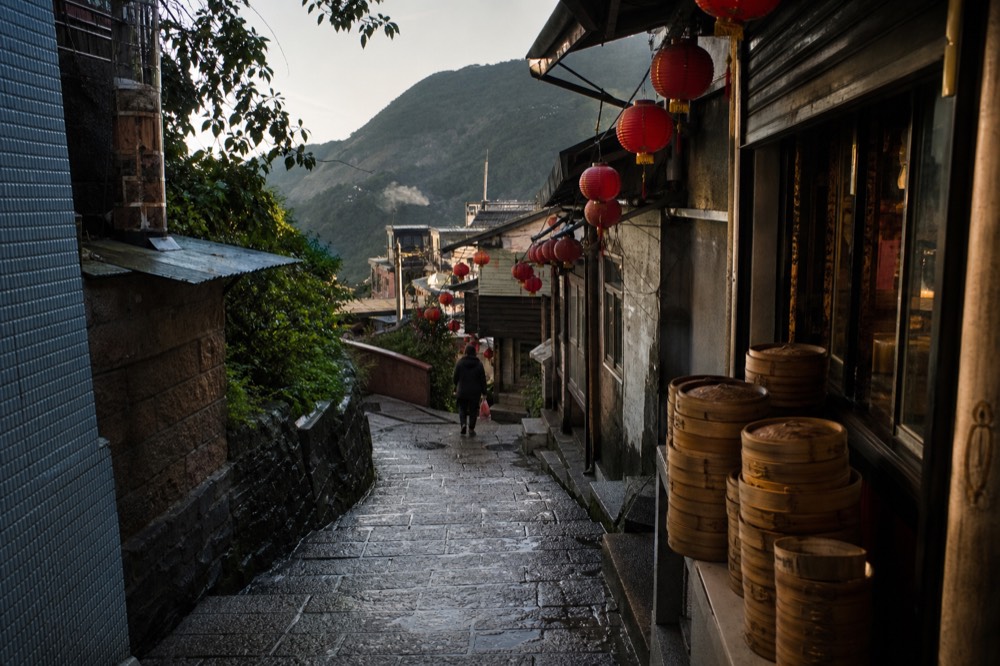
The scale is easy to underestimate. The Ruifang scenic area that contains Jiufen Old Street recorded 3,769,615 visitors in January and February 2026 alone, third among all New Taipei attractions in the national tourism statistics, and that is a single corner of one district of one municipality. A region pulling those numbers in two winter months does not need much help answering a worth-it question, but it does need explaining, and the explanation is municipal.
For a first visit built around the classics, these three cover the coast, the hills and the branch line:
What Is New Taipei Known For?
Outside Taiwan, almost nothing by name, which is the point. It is known for the places inside it: Jiufen's lantern-lit old street, the sky lantern railway at Shifen, the rock formations of Yehliu Geopark, the gold-mining landscape of Jinguashi, plus neighbouring Keelung, the port city it wraps around. Domestically it is known as the municipality that surrounds the capital and holds several million people who do not live in Taipei City proper.
The list of things travellers actually come for is almost entirely a New Taipei list, even when the brochures say Taipei. Yehliu Geopark, with its Queen's Head mushroom rock and its startling fine schedule for anyone who climbs on the formations, sits in Wanli District, New Taipei. Shifen, where the sky lanterns rise over the railway tracks, is in Pingxi District, New Taipei. Jinguashi and its Gold Museum are in Ruifang District, New Taipei. Tamsui, the riverside old town at the northwest end of the metro, is New Taipei too.
| Place | District, New Taipei | What it is known for |
|---|---|---|
| Jiufen | Ruifang District | Lantern-lit old street, teahouses, gold-rush history |
| Shifen | Pingxi District | Sky lanterns over the railway, Shifen Waterfall |
| Yehliu Geopark | Wanli District | Queen's Head and other hoodoo rock formations |
| Jinguashi | Ruifang District | Gold Museum, mining landscape, Golden Waterfall |
| Houtong | Ruifang District | Cat village on the rail line to the coast |
| Tamsui | Tamsui District | Riverside old street and sunset over the estuary |
What makes the municipality genuinely interesting, rather than just large, is how much of the experience is city policy rather than geography. The next three sections are about that: the traffic plan, the lantern statute and the museum, each one a New Taipei City instrument that shapes a visit in a way almost no English-language coverage notices. If you are weighing a private day against a shared coach, the traffic plan alone may settle it, and you can Check availability on the live listing while you think it through. For the individual stops, the site's Jiufen Old Street guide and the Yehliu Geopark guide break each one down in detail.
The City Rations Coach Access To Jiufen On Weekends
On every weekend, national holiday and make-up working day, from 08:00 to 20:00, New Taipei City operates a signed holiday traffic control plan across Ruifang, Jinguashi and Jiufen, under which coaches must apply in advance to the police, may not drive to Jiufen Old Street on their own, and are rationed to roughly 20 approved coaches per half-day slot, with applications refused entirely on holiday runs of three or more consecutive days.
This is not a blog rumour. It is New Taipei City Government notice 新北府交規字第1132450546號, dated 10 December 2024 and in force from 1 January 2025, amending the Ruifang, Jinguashi and Jiufen Area Holiday Traffic Control Plan. The signed notice sets out nine control points, three A-grade and six double-A, and unifies coach and car control hours at 08:00 to 20:00.
The practical reading is blunt: on any weekend or public holiday in daylight hours, Jiufen is a managed-access destination. Coaches that miss out on a slot drop passengers at New No. 9 car park, free if the vehicle leaves within 20 minutes, or at Shuinandong, and everyone transfers to a Keelung Bus shuttle for the last stretch. The plan also designates the road from Jiufen Police Station to the Quanjitang car park at Jinguashi a dangerous, accident-prone section where two vehicles struggle to pass, barring large coaches entirely.
Two honest conclusions follow. One, this is a real argument for the train: the rail approach via Ruifang is untouched by any of it, and the branch line runs the same 17 trains a day whether it is a Monday or a Saturday. Two, it is a real argument for a weekday, when the control plan does not apply at all. What it is not is a ban on private cars, a point the plan is explicit about, and one that English summaries routinely get wrong.
A City Statute Decides Where Your Sky Lantern May Legally Rise
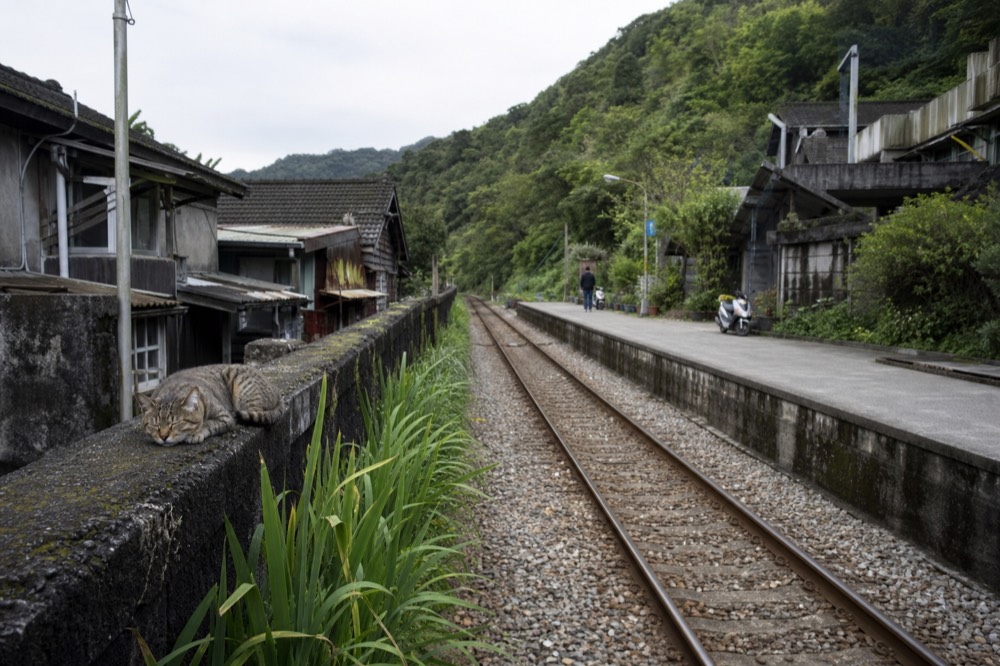
Releasing a sky lantern is banned everywhere in New Taipei City except one marked stretch of Pingxi: from the Shifen Visitor Center to Shigong Bridge, within 200 m of the Keelung River along County Road 106. The rule comes from the city's own 2011 statute, the New Taipei City Sky Lantern Release Management Measures, promulgated 15 June 2011 under the Fire Services Act, and the permitted area is marked on the ground by government notice boards.
The full statutory text is short and surprisingly specific. No releases between 22:00 and 06:00 except at announced festivals. Release sites must be at least 100 m from any petrol station, gas station, tank farm or chemical plant. Any organisation releasing 100 or more lanterns at once must apply to the Fire Bureau five days in advance with a safety plan. A legal lantern has a base of 60 to 70 cm, a height of 130 to 140 cm, an outer circumference of 360 to 370 cm, weighs no more than 300 g, and burns a kerosene and soybean oil fuel, with no firecrackers attached.
Two provisions are the ones no English competitor carries. Anyone under 14, and any person with a disability, must be accompanied when releasing. And every lantern sold must be labelled with the seller's name and address, with shops required to display the safety notice, which makes the lantern in your hands a traceable, regulated product rather than a novelty.
This is municipal texture in the purest sense. The reason Shifen is the lantern town is not folklore, it is zoning: the city wrote one legal release corridor into existence and enforced it everywhere else. If a day trip pairs Jiufen with Shifen, the lantern release happens where the statute allows it, and nowhere else on the route. The site's Shifen sky lantern guide covers the practical side of that corridor.
The City Runs The Gold Museum And Corrected Jiufen's Name
New Taipei City Government operates the Gold Museum at Jinguashi, admission NT$80, open 09:30 to 17:00 on weekdays and 09:30 to 18:00 on weekends and holidays, closed the first Monday of every month, and it was the city's own Gold Museum that issued the 2016 release calling the famous "nine families" origin of the name Jiufen a legend and giving the camphor-stove account as the more correct one.
The museum's own ticket and hours page carries the practical facts: payment by cash, EasyCard or O'Pay, free entry for New Taipei residents, nationals 65 and over and under 12, enrolled students, disability certificate holders plus a companion, and several other categories, with unclipped tickets refundable up to 30 minutes before closing. The first-Monday closure is the detail that quietly ruins most planned itineraries, because a huge share of visitors build Jinguashi into a Monday circuit without ever checking.
| Gold Museum, Jinguashi | Detail |
|---|---|
| Admission | NT$80 per person |
| Weekday hours | 09:30 to 17:00, Monday to Friday |
| Weekend and holiday hours | 09:30 to 18:00 |
| Closure | First Monday of every month; Lunar New Year's Eve and first day |
| Payment | Cash, EasyCard, O'Pay |
| Free entry | New Taipei residents, nationals 65+ and under 12, enrolled students, disability certificate holders plus companion, others |
The name story is the better-known part, and the city's version is not the one the English internet tells. The familiar tale says nine households lived here and supplies hauled up from the coast were divided into nine portions, hence Jiufen, "nine portions". The city's 2016 release calls that a 傳說, a legend, and reports scholarly research holding that before the gold boom the area lived by harvesting and boiling camphor, with 90 camphor stoves, ten stoves making one "fen", and nine fen in all. The Taiwan Tourism Administration's own English page gives the same camphor-stove account and never mentions nine families at all.
The same city release explains the town's layout in a way no guidebook does. Qingbian Road, the quiet flat lane parallel to the main street, is the trackbed of a human-powered light railway laid in 1931, which is exactly why it is level while Shuqi Road, "the road of many vertical steps", is a staircase. And of the Jiufen mine's ten numbered tunnels, only Nos. 5, 8 and 10 still have intact portals. That is a municipal archive doing work that travel content almost never reaches.
A private day that threads Jiufen, Shifen Waterfall and Yehliu Geopark in one loop is the cleanest way to see three faces of the municipality without transfer friction, and it is the option this site points most visitors toward:
Rain, Crowds And When The Municipality Is At Its Best
The northeast corner of New Taipei is one of the wettest inhabited corners of Taiwan, and the pattern inverts the usual advice about visiting the island. The driest month on the 30-year record is July, at 119.5 mm across 8.5 rain days, while the wettest is November at 396.9 mm, and September through February takes 61% of the year's rain in six months, all of it driven by the northeast monsoon.
These are Central Weather Administration 1991 to 2020 climate normals for the Keelung station, about 12 km from Jiufen on the same windward coast, and the honest caveat is that there is no CWA station at Jiufen itself, so the numbers are the region's, not the town's. Keelung records 3,589.7 mm a year against Taipei's 2,329.5 mm, about 54% more rain, and it rains on 193.6 days a year, more than half of all days. The CWA climate normals are the source for every figure in this paragraph.
| Month | Rainfall, mm | Rain days |
|---|---|---|
| July | 119.5 | 8.5 |
| August | 211.4 | 11.6 |
| April | 211.1 | 16.0 |
| October | 377.6 | 17.1 |
| November | 396.9 | 18.6 |
| December | 356.6 | 19.5 |
The counterintuitive reading: if dry sightseeing is the priority, summer is the best time for this specific corner of Taiwan, and November is the worst, the exact reverse of the island-wide rule of thumb. December manages just 48.5 sunshine hours in the entire month, about 1.6 hours a day, which is why the region's reputation is fog and drizzle rather than tropical downpour. Fog on the hills above the coast is genuinely atmospheric, and plenty of photographers prefer it, but it is worth knowing it is the statistical default, not luck.
Crowding follows the calendar more than the clock. The traffic control plan in force on weekends and holidays is the hard, official evidence that the district fills up, and the visitor statistics show the scale: 3,769,615 visitors to the Ruifang scenic area in January and February 2026 alone. Weekdays outside holiday runs are the quiet version of the same place, with the same trains running and no coach rationing at all.
Getting Around New Taipei Without A Car
The rail spine does most of the work. Taipei Main Station to Ruifang has 45 to 47 direct trains a day, 32 to 68 minutes, with fares from NT$73 on a local to NT$114 on the fastest express, and from Ruifang the Pingxi branch runs 17 direct trains a day to Shifen at a flat NT$29, with no direct train from Taipei to Shifen at all, a change at Ruifang is mandatory.
The local train is the sensible default on the main line: the fastest express saves about 13 minutes over the median local and costs NT$41 more. On the branch, the same 17 trains run on a Saturday as on a Monday, the line gets no extra weekend capacity, and the gaps to plan around are the 1h39m after the 16:54 departure and the 1h44m after the 19:22. Ruifang to Houtong, for the cat village, is 44 services of 5 to 7 minutes at NT$22.
| Rail leg | Fares and frequency |
|---|---|
| Taipei Main to Ruifang | NT$73 local / NT$87 Chu-Kuang / NT$114 express; 45 to 47 direct trains daily |
| Ruifang to Shifen | NT$29 flat, 27 to 32 minutes, 17 direct trains daily |
| Ruifang to Houtong | NT$22, 5 to 7 minutes, 44 services |
| Ruifang to Jingtong | NT$44, 37 to 51 minutes, 16 services |
| Taipei to Shifen | No direct service; change at Ruifang |
The bus layer exists but is uneven. Keelung Bus 1062 runs from Taipei toward Ruifang and Jinguashi, though its fare, frequency and journey time are not published in any form this site could verify, so no numbers for it appear here. Route 788 runs 05:00 to 22:30 seven days a week and reaches the Gold Museum stop, while route 827's last holiday departure is 11:10, making it a morning-only bus on weekends and no way home at all.
For travellers who would rather not build the day out of timetables, a guided or private option solves the transfer problem in one booking, and the shared coach circuit remains the cheapest way to see the coast, the old street and the waterfall in a single day. The trade-off is the weekend coach rationing described earlier, which private vehicles and the train simply sidestep.
Planning The Verdict
Worth visiting is barely a question once you know what the municipality contains and how it is run. New Taipei holds the north coast's rock formations, two lantern-lit old streets, a legal sky lantern corridor, a gold-rush museum with a first-Monday closure worth planning around, and a train network that reaches most of it, all governed by a city that publishes its own rules and enforces them.
The one-line itinerary for a first visit: a weekday if you can, the train to Ruifang if you cannot, Jiufen and Shifen as the spine, Yehliu or Jinguashi as the third leg depending on whether rocks or gold appeal more, and a lantern release in Shifen because that is the one place the statute allows it. Add Houtong if cats matter, add Keelung if a harbour night market does.
There is a version of this question that is really asking whether New Taipei is a distinct destination from Taipei City, and the honest answer there is also yes. The capital has the museums, the malls and the night markets of a big flat city. New Taipei has the topography: mountains that meet the sea, a coast carved into hoodoos, and hill towns built on the wealth of a gold field that drew prospectors of 4,000 families after someone struck gold near Jiufen in 1890, when the village was called little Shanghai. Different municipality, different trip.
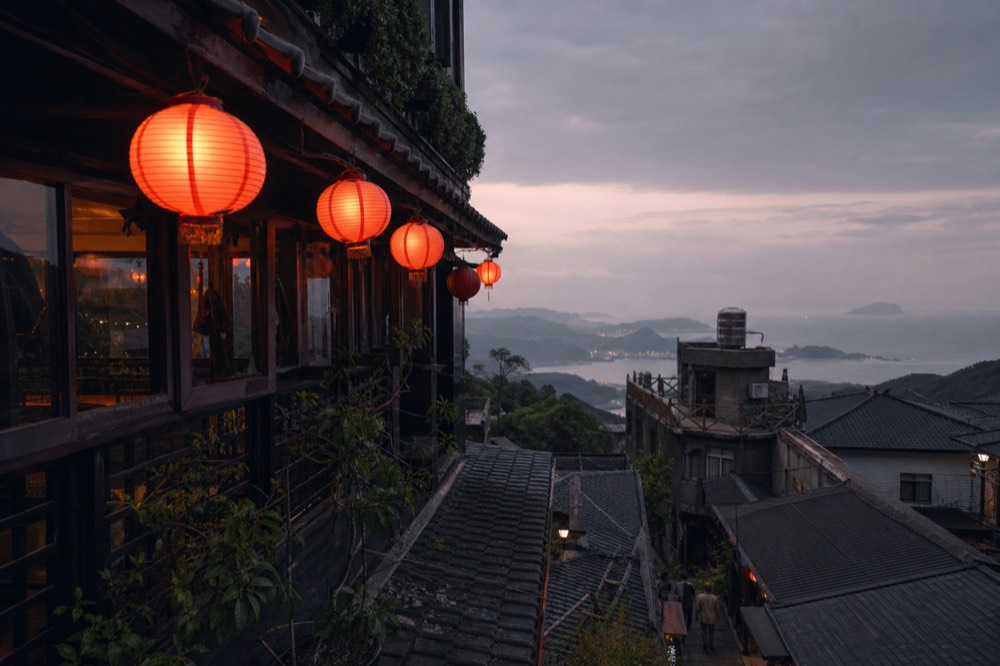
If the plan is one full day and the priority is covering ground comfortably, the private format is the one this site rates most highly for the trio of Jiufen, Shifen and Yehliu, and a food-and-tea alternative pairs the old street with Houtong Cat Village for a gentler circuit:
For comparing the formats side by side, these three cover the same region at three price points and group sizes:
New Taipei is worth visiting for the destinations it contains and the way it runs them: Jiufen, Shifen, Yehliu, Jinguashi and Houtong are all inside one municipality that rations coach access, zones its lantern releases and operates its own gold museum. These are the questions visitors ask most often about it.
Common Questions About New Taipei
Is New Taipei Worth Visiting?
Yes, and most visitors answer it by accident: Jiufen, Shifen, Yehliu Geopark, Jinguashi and Pingxi are all inside New Taipei City. The municipality holds most of northern Taiwan's marquee day-trip destinations, plus the city government that manages their access, regulates their lanterns and runs their museums.
What is new taipei known for?
For the places inside it: Jiufen's old street, Shifen's sky lanterns, Yehliu's rock formations, the Gold Museum at Jinguashi, Houtong's cat village and the port of Keelung. Internationally it is rarely named, because its attractions are usually sold as "from Taipei" day trips.
Is Jiufen in Taipei or New Taipei?
Jiufen is in Ruifang District, New Taipei City. Taipei City is a separate, smaller municipality entirely surrounded by New Taipei on three sides, and every coach or train heading from Taipei to Jiufen crosses the municipal boundary on the way.
Can coaches reach Jiufen Old Street on weekends?
Not on their own. Under the city's holiday traffic control plan, in force from 1 January 2025, coaches must apply in advance, are rationed to roughly 20 approved coaches per half-day slot, and on holidays of three or more consecutive days applications are refused entirely. Approved coaches park at designated lots and passengers transfer to a shuttle.
Where is it legal to release a sky lantern?
Only in one marked stretch of Pingxi District, New Taipei: from the Shifen Visitor Center to Shigong Bridge, within 200 m of the Keelung River along County Road 106, plus any areas the city separately announces. Everywhere else in New Taipei City, release is banned under the 2011 city statute.
Is the Gold Museum open every day?
No. It is closed the first Monday of every month, and if that Monday is a national holiday it opens and closes the following day instead. It is also closed Lunar New Year's Eve and the first day of Lunar New Year. Otherwise it runs 09:30 to 17:00 on weekdays and 09:30 to 18:00 on weekends and holidays, admission NT$80.