Is Jiufen Better To Visit During The Day Or Night?
Night wins in Jiufen, but the caveats are the real answer: the coach control window ends at 20:00, most tours leave before dark, and winter dusk is early and wet. Here is how to time it.
Is Jiufen Better To Visit During The Day Or Night?
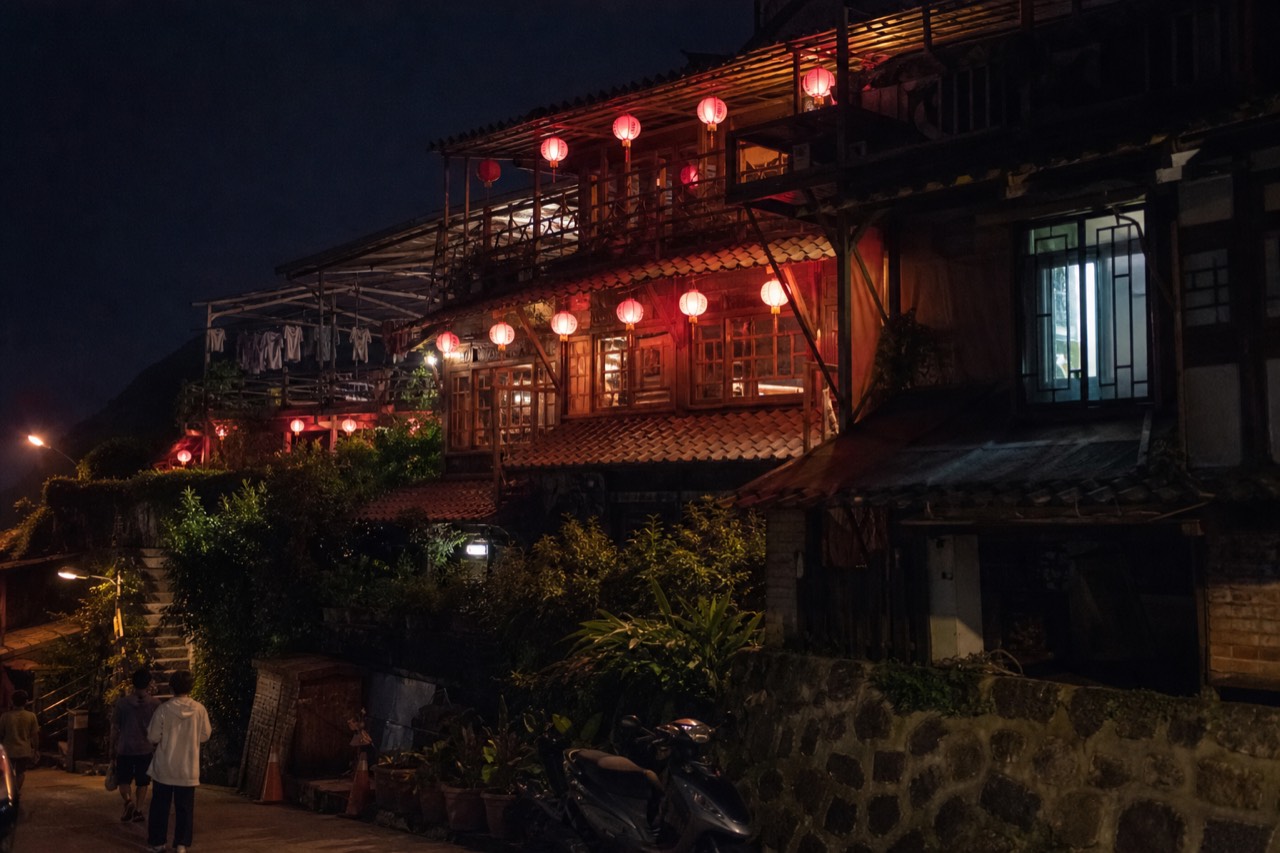
Night is the better time to see Jiufen, with two caveats: the town's red lanterns follow sunset at no published hour, so nobody can promise you a lighting time, and from September through February this coast takes 61% of its annual rain, so a winter evening visit is more likely to be wet than a summer one. The daytime case is real too, and the strongest version of it is that most organised tours only run in daylight hours.
The short version of the argument is arithmetic. This site's roster carries 35 bookable products, and only four of them run into the evening at all. Everything else, from the big coach circuits to the private car days, is a daytime product. If you arrive with the day-trip crowd you are seeing the town at its busiest, in the window that New Taipei City's own traffic control plan is built to manage. If you stay past that window, you are seeing the town the way the evening products sell it: lanterns, teahouses, and a street that has shed most of its visitors.
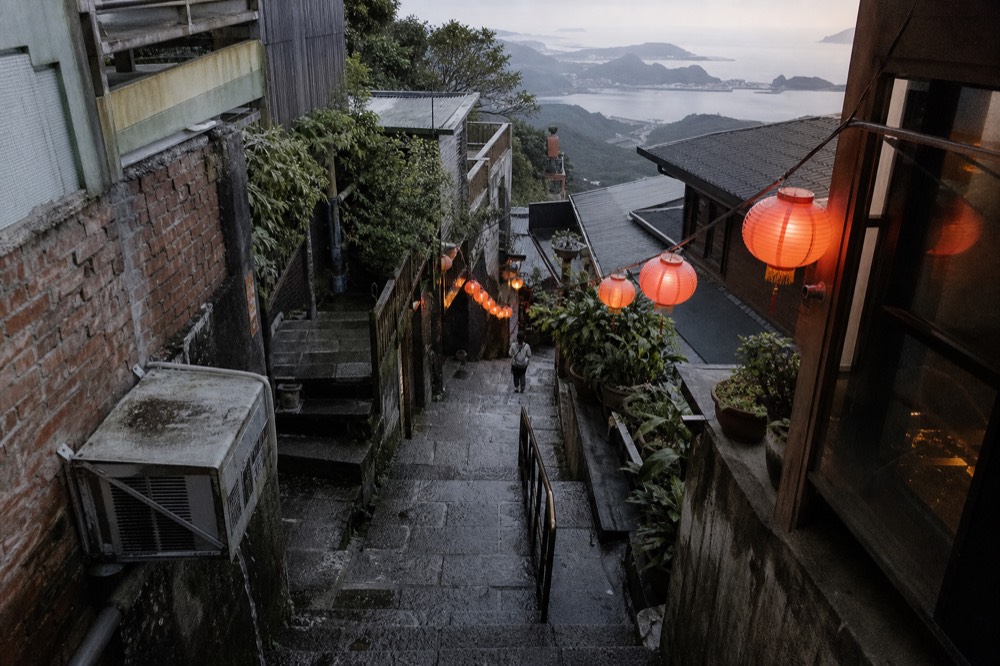
The case against night is just as concrete. There is no published hour for the lanterns. Every source says some version of "around dusk", and the honest answer is that they follow sunset, which moves through the year. A night visit in December is a different proposition from one in July, and not only because of the light: the Central Weather Administration's 30-year normals for the Keelung station, the nearest manned station to Jiufen at about 12 km away on the same windward coast, give December just 48.5 sunshine hours across the whole month, roughly 1.6 hours a day. Winter dusk here is early, and it is usually wet.
So the real answer is: night, if you can control for season and transport. Day, if you cannot. The rest of this page is about controlling for those two things, because they are what actually decides your visit.
The fastest way to land an evening in Jiufen without planning the rail and bus legs yourself is a tour that runs past sundown, and three of the four evening products are compared below.
Is It Better To Visit Jiufen At Night Or Morning?
Morning beats night on crowd logic and loses on atmosphere: the street is at its calmest before about 09:00 according to the pattern visitors consistently report, while the lantern-lit evening is the town's signature scene. The deciding fact is that the holiday traffic control window runs 08:00 to 20:00, so a morning arrival lands you inside the managed-access hours and a late evening lands you after them.
Morning has one genuine advantage that no amount of lantern-glow can replicate: emptiness. The reports that visitors leave across blogs and reviews agree on a pattern, and it is a pattern rather than an official schedule: heaviest crowding from roughly 10:00 to 17:00 on weekends and holidays, calm before about 09:00, and calm again after about 19:00. No official source publishes shop hours for the old street, so treat those as the shape of the day rather than a timetable.
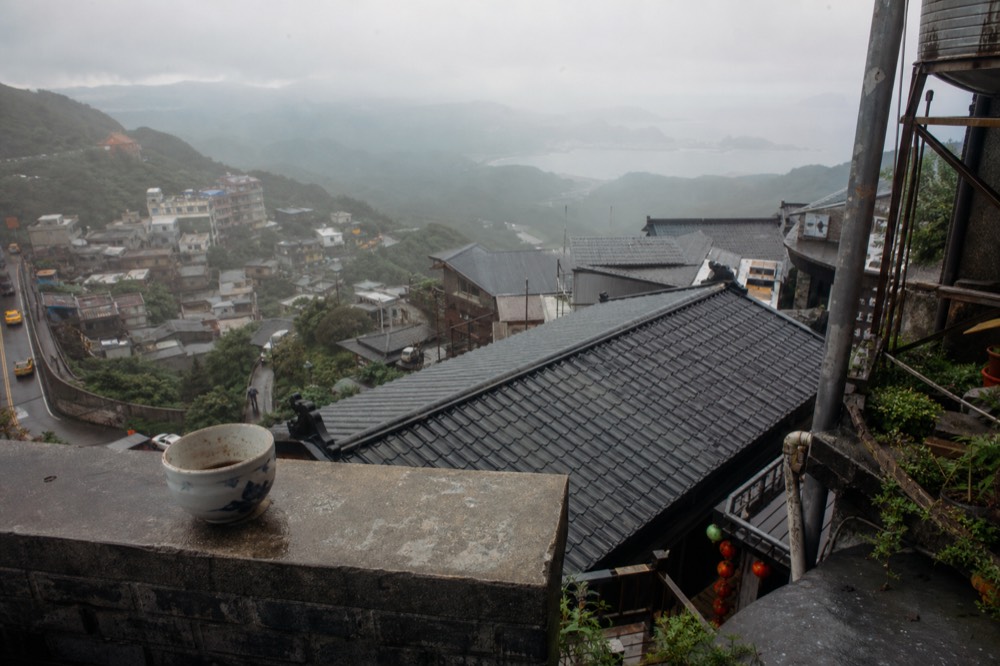
The morning case also gets you the view. Jiufen sits facing the sea, and the town's whole visual logic, mountain behind, water in front, is a daylight thing. Photography-minded visitors will tell you the morning light off the water and the low mist are the town at its most photogenic, and the site's Jiufen photo spots guide covers where to stand for it.
But the night case is the one people travel for. The red lanterns strung across Jishan Street, the lit windows of the teahouses stacked up the hillside, the dark sea below: that is the image that made the town internationally famous, and it simply does not exist at 09:00. The trade is that you accept two unknowns, the lighting time and the weather, in exchange for the scene.
A morning visit and an evening visit are not even mutually exclusive, and the best-value version of this whole question is a day that does both: arrive before the crowd builds, leave when the lanterns are lit. The half-day products exist for exactly that, and the Jiufen at night guide walks the evening in detail.
If you want the evening scene without gambling on self-directed transport after dark, a guided evening product is the simplest route, and the one below pairs the daytime coast with a Jiufen finish.
What Time Should You Go To Jiufen?
Arrive by mid-morning at the latest if you are day-visiting, and plan to still be there after 19:00 if the lanterns are the point. The two hard boundaries are the 08:00 start of the holiday traffic control window and the roughly 19:00 to 20:00 point at which the day-trip crowd drains away. Between those boundaries you get the town at its most crowded.
The honest way to answer "what time" is to work backwards from what you came for. If you came for the street food and the shops, go late morning to mid-afternoon and accept the crowd, because that is when everything is open and at full boil. If you came for the photographs, go early, before about 09:00, when the pattern visitors report says the street is calm. If you came for the lanterns and the teahouses, go in the afternoon and stay past dusk, which is the only strategy that gets you both the daylight view and the lit street in a single visit.
| You came for | Best arrival | Why | The catch |
|---|---|---|---|
| The lantern-lit street | Afternoon, stay past dusk | Lanterns follow sunset; street calms after about 19:00 | No published lighting time; winter dusk is early |
| Photographs and views | Before 09:00 | Calmest street, morning light off the sea | Some stalls not yet open |
| Food and shopping | 11:00 to 16:00 | Everything open and running | Peak crowds, especially weekends |
| A quiet wander | Weekday morning | Managed-access rules bite hardest on weekends | Weekday means you likely fought for leave |
Season bends all of this. Sunset in Taiwan moves through the year, and because the lanterns follow sunset rather than a clock, the "night" experience in midsummer starts hours later than it does in December. Add the rain pattern and the gap widens: July is the driest month on the Keelung record at 119.5 mm across 8.5 rain days, while November is the wettest at 396.9 mm. A July evening and a November evening in Jiufen are close to being different products. The best time to visit Jiufen guide works the month-by-month trade in full.
One more timing fact worth carrying: the traffic control plan restricts coaches, not private cars and never pedestrians. So the 08:00 to 20:00 window shapes how crowded the street is and how your tour bus behaves, but it does not close anything to you on foot.
The most popular single answer to "what time" on this site's roster is the tour below, which times the whole day so that Jiufen lands in the late afternoon and early evening.
Why The Street Empties After The Coaches Go
Jiufen is a managed-access destination on weekends and holidays between 08:00 and 20:00, under a signed New Taipei City Government notice in force since 1 January 2025, and coach access is rationed to roughly 20 approved coaches per half-day slot, with applications refused entirely on holiday runs of three or more consecutive days. That ration is why the crowd has a shape, and why it collapses in the evening.
This is the strongest practical fact on the whole timing question, and almost no English coverage carries it. The amended Ruifang, Jinguashi and Jiufen Area Holiday Traffic Control Plan, published as a signed government notice, unified coach and car control hours at 08:00 to 20:00 and requires every tour coach to apply in advance to Ruifang Police Precinct. Coaches may not drive to Jiufen Old Street on their own; those that miss the roughly 40-per-day ration drop passengers at New No. 9 car park or Shuinandong, and the passengers transfer to a shuttle.
Two consequences follow, and both matter to the day-or-night question. First, the daytime crowd is not an accident of popularity, it is a managed quantity, capped by a police-approved slot system. Second, the evening is structurally quiet, because the mechanism that delivers the daytime crowd is switched off, and on long weekends it is switched off entirely.
The plan also designates the stretch from Jiufen Police Station to the Quanjitang car park at Jinguashi an officially dangerous, accident-prone section where two vehicles cannot easily pass, barring large coaches except shuttles and scheduled services. That is a real reason the big bus products keep to a tight circuit, and a real reason the street's human rhythm changes when they go.
For a visitor, the read is simple. On a weekend, the hours between late morning and late afternoon are the managed, rationed, crowded Jiufen. The hours after that belong to whoever stayed.
What Winter Does To A Night Visit
Winter dusk on this coast is early, dark and wet: the Keelung station's 30-year normals give December 48.5 sunshine hours for the whole month, about 1.6 hours a day, and September through February delivers 2,198.8 mm of rain, 61% of the year's total in six months. A December evening in Jiufen is a lantern scene viewed through drizzle, and that can be exactly as beautiful as it sounds.
There is no weather station at Jiufen itself, so the honest citation is Keelung, about 12 km away on the same windward north coast, and the Central Weather Administration's 1991 to 2020 normals for that station. The numbers invert the usual Taiwan advice. The driest month is July, at 119.5 mm across 8.5 rain days, and August is next. The wettest is November at 396.9 mm, with October, September, December, February and January all above 320 mm. Summer, not winter, is the dry season on this particular corner of the island.
| Month | Rainfall (mm) | Rain days | Sunshine (hours) | What it means for an evening |
|---|---|---|---|---|
| July | 119.5 | 8.5 | 229.2 | Driest, brightest month; late dusk |
| August | 211.4 | 11.6 | 208.2 | Still dry; late dusk |
| November | 396.9 | 18.6 | 65.3 | Wettest month; early dusk |
| December | 356.6 | 19.5 | 48.5 | About 1.6 sunshine hours a day; earliest dusk |
| January | 327.8 | 19.6 | 52.6 | Wet, early dark |
What this does to the night case is worth stating plainly. The lantern scene is a winter scene in most of the photographs people have seen, low cloud, wet cobbles, reflected light, and the normals say that atmosphere is statistically earned: it rains on 193.6 days a year here, more than half of all days. If you want the moody version, winter delivers it, at the cost of short daylight and a high chance of drizzle. If you want a dry, warm evening with the lanterns, July and August are the months, at the cost of a dusk that arrives late.
The fog deserves a line of its own, and an honest one: no verified figure exists for how often Jiufen fogs over, so the site will not put a number on it. What can be said is that the northeast monsoon from September to February is why the town's reputation is fog and drizzle rather than tropical downpour.
The Four Products That Actually Run In The Evening
Only four of the 35 bookable products on this site run into the evening, and that scarcity is itself the answer to the day-or-night question: the market has voted, and almost everything it sells is a daytime product. The four evening options are a shared coach tour, a teahouse-and-night-market tour, a guided mining-town night walk, and a private Yehliu-and-Jiufen-by-night half day.
Two of the four are smaller-volume listings with too few reviews for a star claim, so the table below prints no rating for them. That is not a warning, it is just the state of the listings.
| Product | Duration | Rating | From (per person) | What it reaches |
|---|---|---|---|---|
| Jiufen View and Shifen Day Tour | 7 hours | 4.6 across 1,147 reviews | From $39 | Shifen Waterfall, Shifen Old Street, Jiufen Old Street |
| Jiufen A-Mei Teahouse, Sunset at Heping & Keelung Night Market | 7h30 | 4.7 across 866 reviews | From $58.90 | Jiufen Old Street, Heping Island, Keelung Miaokou Night Market |
| Taipei's Old Gold Rush Town: Jiufen Guided Night Tour | 8 hours | too few reviews for a star claim | From $85 | Golden Waterfall, Jinguashi Gold Ecological Park, Jiufen Gold Mine Museum, Baoshishan lookout, Jiufen Old Street, Jinguashi Thirteen-Level Ruins |
| Half Day Private Tour to Yehliu Geopark & Jiufen by Night | 6 hours | too few reviews for a star claim | From $105 | Yehliu Geopark, Jinguashi Thirteen-Level Ruins, Golden Waterfall, Jiufen Old Street |
One correction the table quietly makes: the A-Mei Teahouse, Heping and Keelung product is widely indexed as a "Yehliu, Shifen, Jiufen" tour, and it reaches neither Yehliu nor Shifen. Its actual itinerary is Jiufen Old Street, Heping Island and Keelung Miaokou Night Market, with an optional A-Mei Teahouse tea set. Book it for what it does, not for what its search listings say.
The guided night tour deserves a special mention because it is not a coach circuit at all. It is a guided walk about the mining town, taking in the Gold Mine Museum, the ruins and a lookout, which makes it the only evening product built around Jiufen's own history rather than around transport. For the town's story, the why is Jiufen famous post covers the gold rush and the film that followed.
If the teahouse-and-sunset version is the evening you want, this is the one to check.
If You Only Have Daylight
The best daylight-only strategy is a weekday morning: arrive before the 08:00 control window makes itself felt, walk Jishan Street while it is calm, and take the flat lane, Qingbian Road, which is the level trackbed of a human-powered light railway laid in 1931, rather than the staircase of Shuqi Road. The cheapest structured version is the Jiufen in-depth half-day tour, from $26.55 per person, rated 4.9 across 267 reviews.
The weekday point cannot be overstated, because the control plan's whole apparatus, the rationed coach slots, the shuttle drops, the closed dangerous section, applies on weekends, national holidays, Labour Day and make-up working days. A Tuesday is a different town from a Saturday, whatever the season.
The in-depth half-day tour is also the only product on the entire roster that goes to Jiufen and nowhere else. Every other listing bundles the town into a circuit with Yehliu, Shifen, Houtong or the coast. If Jiufen itself is the point of your trip, that focus is worth paying attention to, and the things to do in Jiufen guide fills out what a Jiufen-only day actually contains.
Daylight visitors should also know what the evening crowd knows: A-Mei Tea House, the one teahouse whose prices are verified from its own menu, is open 09:00 to 21:30 seven days, charges a tea water fee of NT$100 per person, and its cheapest pot of leaves is NT$500, so two people sharing that pot pay NT$700 before any food. The full menu is published on the teahouse's own site. That arithmetic is the honest floor of a teahouse stop, and it is the same arithmetic at 11:00 as at 20:00.
| Strategy | Best season | Transport | Trade-off |
|---|---|---|---|
| Stay past dusk | July to August | Evening tour or own rail plan | Dusk arrives late in summer |
| Stay past dusk | November to February | Evening tour or own rail plan | Early dark, high rain chance, the moody version |
| Weekday morning | Any | Train to Ruifang then bus or tour | Need a weekday; some stalls shut |
| Day tour with Jiufen last | Any | Coach or private | Jiufen lands mid-afternoon, crowd peak |
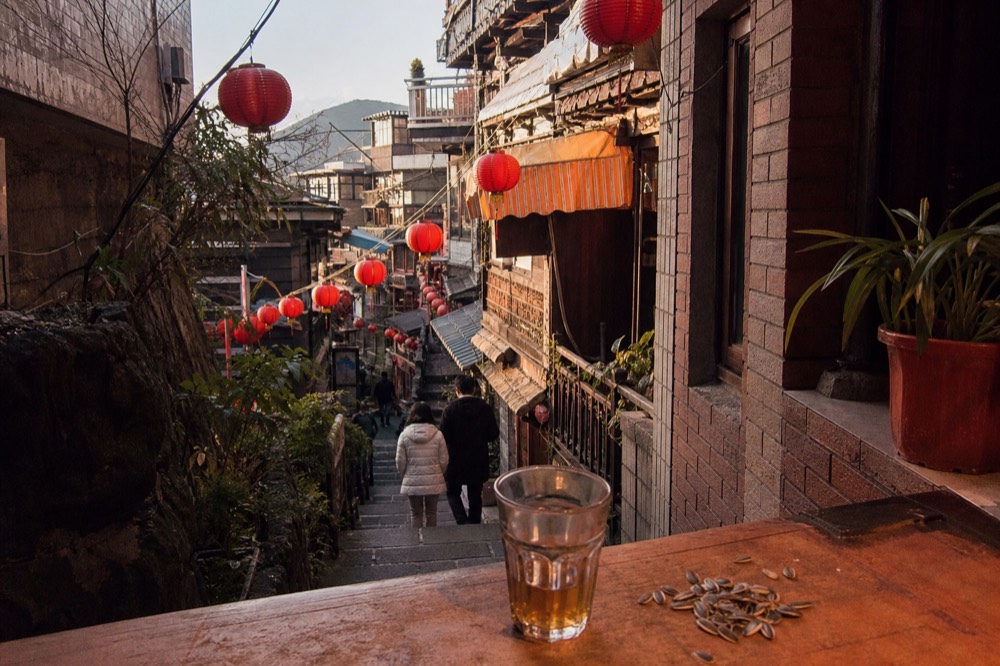
Whatever you choose, one planning note from the rail record: there is no direct train from Taipei to Shifen, and the Pingxi branch runs the same 17 trains a day from Ruifang on a Saturday as on a Monday, with gaps of well over an hour after the late-afternoon departures. If your evening plan involves the branch line, check the last departures before you commit, because the timetable thins at night rather than thickening. The Taipei to Jiufen guide carries the full fare and frequency detail, and the Jiufen Tour roster as a whole is the reference for every product named on this page.
The honest summary, then: night is the better Jiufen if the lanterns are what you came for, morning is the better Jiufen if calm is what you came for, and the only genuinely bad answer is the mid-afternoon weekend arrival that lands you inside the managed-access window at peak ration. Plan around the window, not around the clock.
Whichever way you land, these are the three products that best cover the day, the evening and the town-only visit.
The short answers: night wins for the lantern scene, morning wins for calm, the lanterns follow sunset at no published hour, the street calms after roughly 19:00 when the coach control window is nearly over, and only four of the site's 35 bookable products run into the evening at all. Each question below unpacks one of those points in full.
Common Questions About Jiufen By Day Or Night
Is Jiufen Better To Visit During The Day Or Night?
Night, if the lantern-lit street is what you came for, with the caveats that no published lighting hour exists and winter evenings are early and wet. Morning, if calm and photographs are the goal. Only four of the 35 bookable products on this site run into the evening, which tells you how the market itself splits the day.
Is it better to visit Jiufen at night or morning?
Night gives the signature scene, the lanterns and lit teahouses, once the day-trip crowd has drained away after roughly 19:00. Morning gives the calmest street, before about 09:00, and the daylight view over the sea. The holiday traffic control window runs 08:00 to 20:00, so a morning visit sits inside the managed hours and a late evening sits after them.
What time should you go to Jiufen?
Before 09:00 for calm and photographs, late morning to mid-afternoon for food and shops at full boil, or afternoon with a stay past dusk if you want both daylight and lanterns in one visit. Season matters: July and August are the driest months on the Keelung weather record, while November is the wettest.
What time do lanterns turn on in Jiufen?
There is no published time. Every source says some version of "around dusk", and the honest answer is that the lanterns follow sunset, which moves through the year: early and dark in December, late in July. Plan to be on the street as light fades rather than aiming for a clock time.
Is Jiufen crowded at night?
Less than by day, structurally. Coach access is rationed to roughly 20 approved coaches per half-day slot under the holiday traffic control plan in force since 1 January 2025, and the window ends at 20:00, so the delivery mechanism for the daytime crowd switches off in the evening. Visitors report the street calming after about 19:00.
Can you do Jiufen in the day and stay for the night?
Yes, and it is the best-value version of the question. Arrive before the crowd builds, walk the street and the flat Qingbian Road lane in daylight, take a teahouse stop, and stay past dusk for the lanterns. The Jiufen in-depth half-day tour, the only roster product that goes to Jiufen and nowhere else, covers the daylight half of that plan.