Is It Worth Staying In Jiufen Overnight?
An honest verdict on staying overnight in Jiufen: when the coaches leave, what the trains allow, and what the rain does to your plans.
Is It Worth Staying In Jiufen Overnight?
Yes, for exactly one reason: the hours when the coaches are not there. New Taipei City's holiday traffic control plan rations coach access to roughly 20 approved coaches per half-day slot on weekends and refuses applications entirely on holidays of three or more consecutive days, so staying overnight buys you the town that day visitors cannot see. Whether that trade is worth it depends on your tolerance for thin evening trains and rain.
The case for a night in Jiufen is not atmosphere or romance, though both exist. It is arithmetic. During control hours, 08:00 to 20:00 on every weekend, national holiday, Labour Day and make-up working day, Jiufen is a managed-access destination under a signed New Taipei City Government notice in force since 1 January 2025. Coaches must apply in advance to Ruifang Police Precinct, may not drive to Jiufen Old Street on their own, and are capped at roughly 20 per morning slot and 20 per afternoon slot. On long weekends the applications are refused outright. The plan restricts coaches, not private cars and never pedestrians, but the effect on the street is the same: the crowd arrives with the coaches and leaves with them.
A day visitor typically gets Jiufen between late morning and mid afternoon, inside the heaviest window. A guest who sleeps here gets the street before the coaches unload and after they are barred from returning. That is the whole product. Everything else about an overnight stay, the teahouses, the fog, the quiet lane that used to be a railway trackbed, is a bonus layered on top of that one structural fact, and this site exists partly because so few English pages carry it. The Jiufen Tour guide collection covers the town street by street; this page answers the narrower question of whether you should sleep in it.
The honest counterweights, and they are real: the Pingxi branch line thins sharply in the evening, the town itself is small, and the north coast rains on more than half of all days in a normal year. Each of those gets its own section below, with the numbers that matter. If you read nothing else, read the train times and the rain table before you book anything.
What Changes In Jiufen After The Day Crowds Leave?
The coaches are gone by regulation, not by chance, and the street empties with them. Under the control plan in force since 1 January 2025, coach access stops at 20:00 and is rationed all day, so the evening town belongs to people who are already here, and the pattern visitors report is a calm street after about 19:00 and before about 09:00.
The traffic control notice, 新北府交規字第1132450546號, dated 10 December 2024, sets out the mechanics in detail. Three A-grade control points and six double-A control points guard the approaches. Coaches that miss out on a slot drop passengers at New No. 9 car park, free if the vehicle leaves within 20 minutes, or at Shuinandong, and those passengers transfer to a shuttle. The stretch from Jiufen Police Station to the Quanjitang car park at Jinguashi is officially designated a dangerous, accident-prone section because two vehicles cannot easily pass, and large coaches are barred from it except shuttles and scheduled services.
| Control plan fact | Detail |
|---|---|
| Control hours | 08:00 to 20:00, weekends, national holidays, Labour Day, make-up working days |
| Coach slots | Morning and afternoon, roughly 20 approved coaches per slot |
| Long weekends | Coach applications refused entirely on runs of three or more consecutive days |
| Coaches at the old street | Not permitted to drive there on their own; passengers transfer by shuttle |
| Applies to | Coaches; the plan restricts coaches, not private cars, never pedestrians |
What that means at street level is simple. The heaviest crowding visitors report falls between about 10:00 and 17:00, and the street is calm before about 09:00 and after about 19:00. Those are reported patterns, not official hours, and no official source publishes shop opening times for the old street, so treat them as the shape of the day rather than a timetable. Teahouses stay open later than the food stalls, and A-Mei Tea House, the one teahouse in Jiufen whose hours are verified from its own site, keeps 09:00 to 21:30 seven days a week.
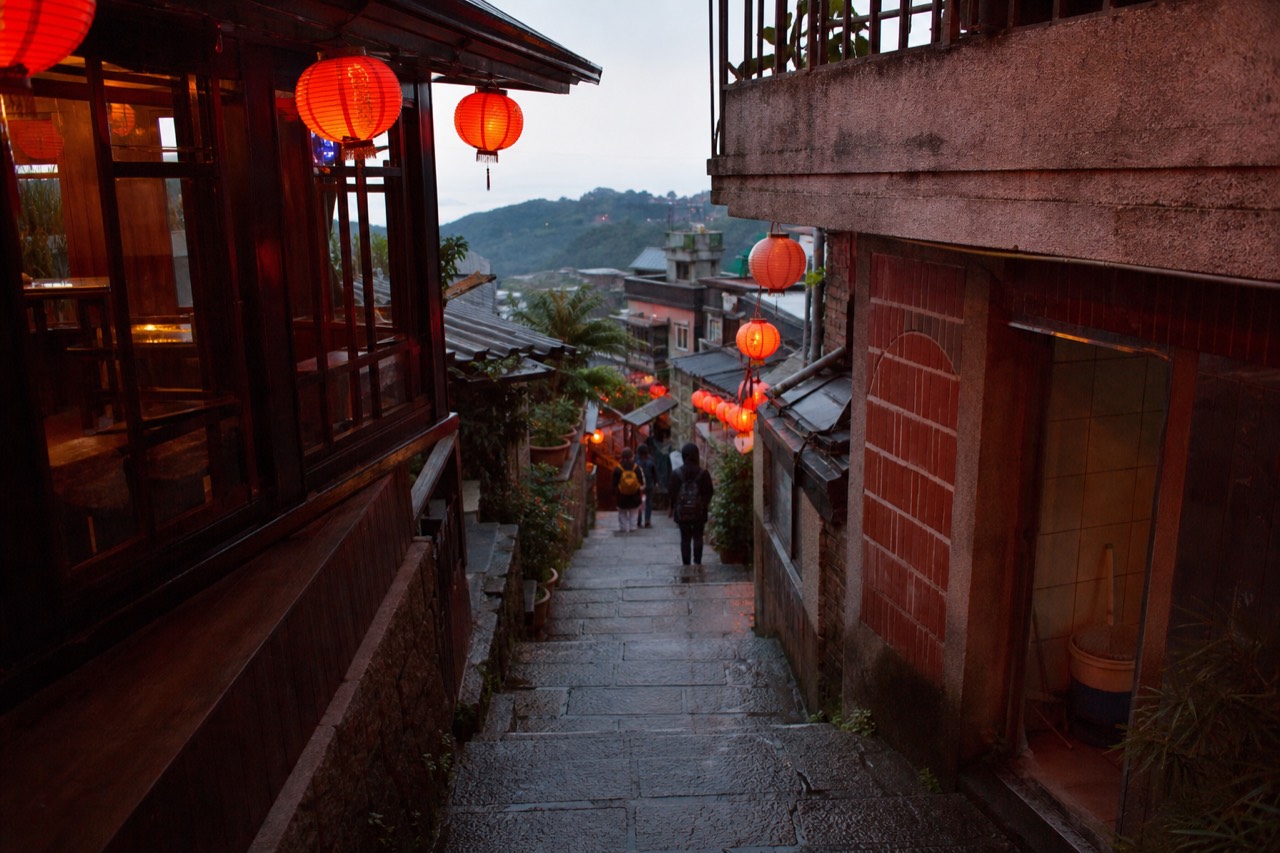
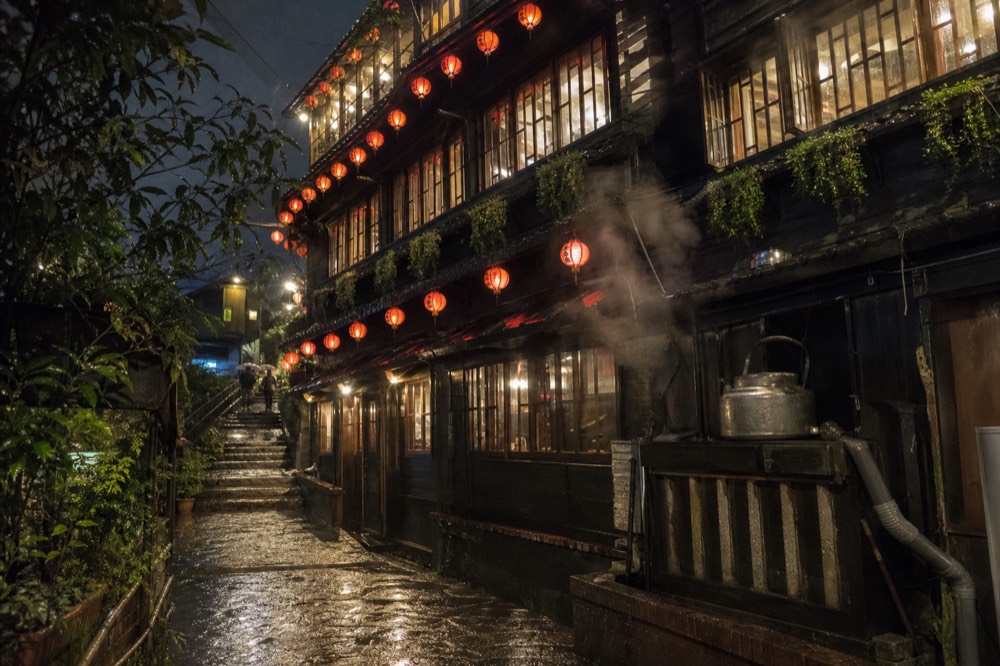
If you are staying, the evening is the part you paid for. The red lanterns come on around dusk, and no source states an exact time, because it follows sunset, which moves with the season. The fog, when it rolls in off the northeast coast, does something to the lantern light that photographs well and feels better than it photographs. If you are not staying but want the evening anyway, a guided night walk is the direct substitute, and there is a case for it even if you are staying, because the town's mining history reads differently after dark.
How Do The Trains Shape An Overnight Stay?
The last branch-line train from Ruifang toward Shifen leaves at 19:22, then nothing until 21:06, and the last Taipei-bound service from Ruifang departs at 23:29 and reaches Taipei Main Station at 00:08, after midnight, so an evening in Jiufen means either staying the night or leaving early enough to make the connections.
Jiufen has no station. You reach it by train to Ruifang and then by bus or taxi up the hill, and the rail facts below come from Taiwan Railway Corporation's own fare tables and live booking system. Taipei Main Station to Ruifang runs 45 to 47 direct trains a day, 32 to 68 minutes, median 46, with fares of NT$73 on the Local and Fast Local, NT$87 on the Chu-Kuang and NT$114 on the Tze-Chiang and Puyuma. The express saves about 13 minutes over the median local and costs NT$41 more, so the local train is the sensible default on this route.
The branch line is where overnight plans live or die. Ruifang to Shifen runs 17 direct trains a day, NT$29 flat, 27 to 32 minutes, and the identical 17 run on a Saturday as on a Monday: the line gets no extra weekend capacity. The evening gaps are the story.
| Ruifang departure (toward Shifen/Jingtong) | Time | Note |
|---|---|---|
| Afternoon service | 15:59 | Roughly hourly through midday and afternoon |
| Late afternoon | 16:54 | Last easy daytime departure |
| Evening gap | none for 1h39m | Nothing between 16:54 and 18:33 |
| Evening service | 18:33 | First post-gap departure |
| Night service | 19:22 | Then nothing for 1h44m |
| Late service | 21:06 | Followed by the 22:20 last train |
There is no direct train from Taipei to Shifen at all, zero services, you change at Ruifang, and most English blogs imply otherwise. For Jiufen itself the same logic applies with a bus leg added. If your plan is a Shifen lantern release and then dinner in Jiufen, the 19:22 gap is the wall you hit: release the lantern, watch it go, and you are choosing between a rushed exit and a night on the hill. That is not a flaw in the plan, it is the plan quietly telling you to stay.
What Does The Weather Do To An Overnight Stay?
The nearest weather station to Jiufen is Keelung, about 12 km away on the same windward coast, and its 30-year normals show 3,589.7 mm of rain a year against Taipei's 2,329.5 mm, about 54% more, falling on 193.6 rain days, so it rains on more than half of all days and an overnight stay needs a rain plan, not luck.
There is no Central Weather Administration station at Jiufen itself, so the honest page cites Keelung and says so. The pattern is the same on this corner of the coast and, sitting higher and further inland, Jiufen is probably wetter still, but no number may be put on that. What the Keelung normals do establish is the shape of the year, and it inverts the usual advice about avoiding Taiwan in summer.
| Month | Rainfall (mm) | Rain days | Sunshine (hours) | |---|---|---| | July | 119.5 | 8.5 | 229.2 | | August | 211.4 | 11.6 | 208.2 | | November | 396.9 | 18.6 | 65.3 | | December | 356.6 | 19.5 | 48.5 | | January | 327.8 | 19.6 | 52.6 | | February | 349.8 | 17.9 | 57.9 |
The driest month is July, 119.5 mm across 8.5 rain days, which turns the standard "avoid Taiwan in summer" rule on its head for this one stretch of coast. The wettest month is November at 396.9 mm, and September through February takes 2,198.8 mm, 61% of the year's rain in six months. That is the northeast monsoon, and it is why Jiufen's reputation is fog and drizzle rather than tropical downpour. December gets 48.5 sunshine hours in the whole month, about 1.6 hours a day.
For an overnight visitor this cuts two ways. A wet evening shrinks the old street to teahouse-hopping, which is no hardship when a verified teahouse menu exists. A-Mei Tea House charges a tea water fee of NT$100 per person, its cheapest pot of leaves is NT$500, so two people sharing that pot pay NT$100 + NT$100 + NT$500, NT$700 before any food, and its tea-and-snack set is NT$350 per person. That arithmetic, straight off the venue's own menu, is the number English blogs almost always get wrong by quoting only the fee. But fog and drizzle are also the town's best weather for photography, and the lantern light through mist is the image most visitors came for. The full climate picture, including the month-by-month table, sits in our best time to visit Jiufen guide.
Where Do You Actually Stay In Jiufen?
Jiufen's accommodation is small-scale and books out on weekends precisely because the town is small and coach-rationed, so the practical advice is to book early for any weekend or holiday night and to treat a weekday stay as the value move, when the control plan is switched off and the street is calm all day.
The town is a hillside village of lanes and stairways, not a resort, and its lodging reflects that. No official source publishes room rates for Jiufen's guesthouses, and this site does not print prices it has not verified, so the honest line is: rates are on each property's own listing, check the room. What can be said with confidence is structural. Weekend nights are the scarce commodity, because that is when the town is fullest and when coach access is rationed. Weeknights are the opposite: the control plan does not run Monday to Friday, the coaches are gone by late afternoon, and the evening street is close to what a stay promises even before dark.
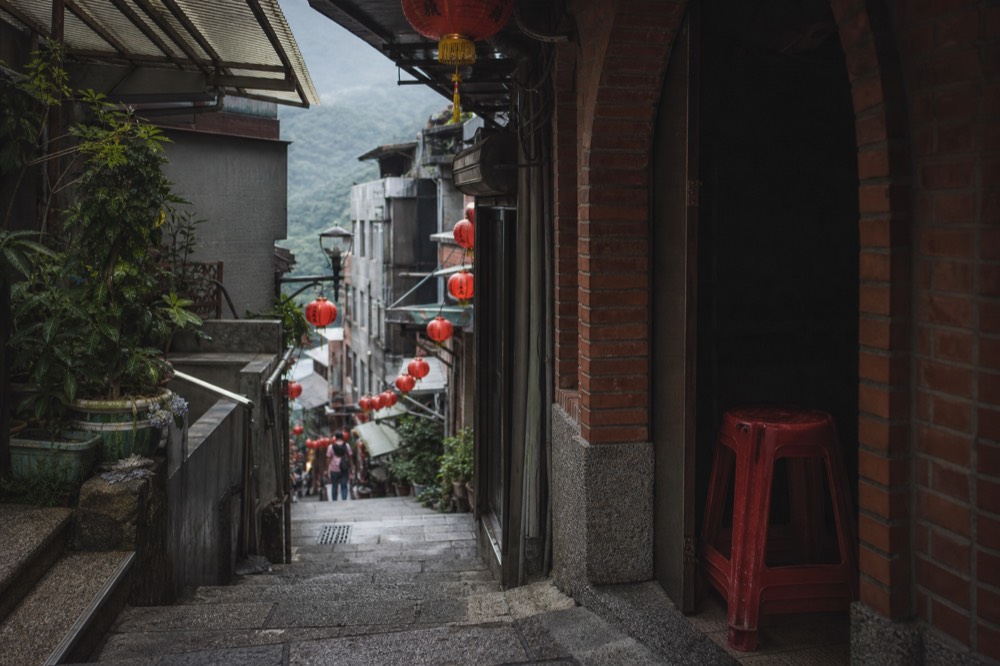
Two practicalities worth knowing before you book. First, the flat lane exists: Qingbian Road, parallel to Jishan Street, is the level trackbed of a human-powered light railway laid in 1931 by the Ruifang Light Railway Company, which is exactly why it is flat while Shuqi Road, "the road of many vertical steps", is a staircase. A guesthouse on or near Qingbian Road means less climbing with a bag, and that is a real factor in a town built on steps. Second, nothing verified exists on luggage storage or accessibility provision in Jiufen, so plan to travel light and ask the property directly about steps, lifts or assistance rather than relying on any published claim.
The alternative worth naming is staying in Ruifang or Keelung and riding up late. Ruifang is the rail junction the whole area hangs on, and Keelung adds a night market to the evening. Both trade the dawn-and-dusk Jiufen experience for easier logistics, and our where to stay in Jiufen guide works through the options in full, including the trade-offs of basing yourself outside the village.
What Is There To Actually Do In Jiufen At Night?
More than the street: a guided night walk covers the mine portals, the Gold Ecological Park, the Thirteen-Level Ruins and the Baoshishan lookout, A-Mei Tea House serves until 21:30, and the Jinguashi Gold Museum next door closes mid afternoon, so the evening is teahouses, lookouts and guided walks rather than ticketed attractions.
The one night product on this site's roster that goes deep rather than wide is the guided night tour of the old gold rush town. It is a walking tour about the mining town, not a coach circuit, and its stops read like a list of things you cannot easily find alone after dark: Golden Waterfall, Jinguashi Gold Ecological Park, the Jiufen Gold Mine Museum, the Baoshishan scenic lookout, Jiufen Old Street and the Jinguashi Thirteen-Level Ruins. It runs from $85 per person with hotel pickup, and free cancellation is confirmed. It is a newer, smaller-volume listing with too few reviews for a star claim, which is worth knowing and not a reason to skip it.
For a private evening, the half-day private tour to Yehliu Geopark and Jiufen by night packs four stops into six hours, Yehliu, the Thirteen-Level Ruins, Golden Waterfall and Jiufen Old Street, from $105 per person with hotel pickup and free cancellation confirmed. It is also a smaller-volume listing with too few reviews for a star rating. Between them and a self-guided evening, the choice is really about whether you want the mining history explained or just the lanterns.
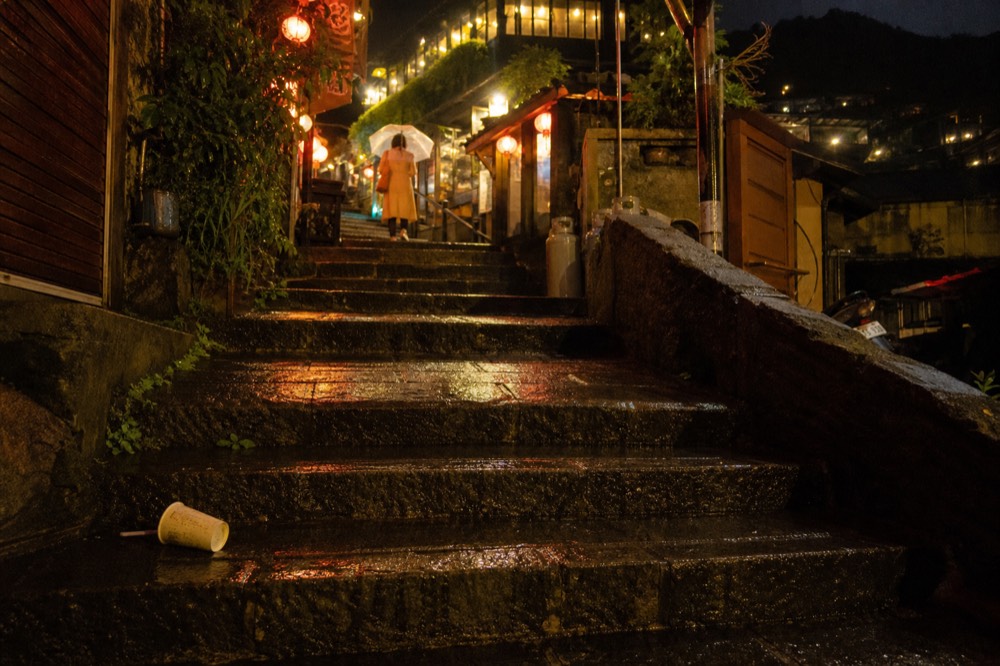
One thing to get right while you are here, because the evening street is where you will hear it: Jiufen did not inspire Spirited Away. On 19 September 2023, Studio Ghibli producer Toshio Suzuki, interviewed in Tokyo by Taiwanese media, was asked about the claim and denied it outright: "That's not true. Neither I nor Miyazaki has ever been to Jiufen." He said the moment of resemblance Miyazaki actually recalled came from an alley in Seoul, and added that the rumour does not trouble him because it means people care about the work. Taiwanese media framed the denial as ending a 22-year misunderstanding. The resemblance a visitor sees at night, lanterns and steep lanes and teahouse light, is real and worth seeing; only the causal claim is false, and no teahouse in town is "the Spirited Away teahouse". Our Jiufen and Spirited Away page carries the full story with sources.
Who Should Stay, And Who Should Day-Trip?
Stay if you want the town before 09:00 and after 19:00, if your date is a weekend or long weekend when coach rationing makes the daytime street worst, or if you want a night walk or teahouse evening without watching the clock. Day-trip if you are route-combining with Yehliu or Shifen, if your night must end back in Taipei, or if monsoon-season rain would strand you in a guesthouse.
The cleanest way to see the trade is side by side.
| Factor | Staying overnight | Day trip from Taipei |
|---|---|---|
| Evening street, after 19:00 | Yours, coaches barred from returning | Only if you accept the 19:22 branch-line wall |
| Morning street, before 09:00 | Yours, calm by reported pattern | Hard to reach before the coaches |
| Weekend crowding | Avoidable by timing | Unavoidable inside control hours |
| Weather risk | One or two wet evenings to fill | A wet afternoon shortens one day |
| Cost per person | Room plus meals, rates on each listing | Train fare of NT$73 each way plus food |
| Route combining | Jiufen-centred only | Easy to add Yehliu or Shifen |
The strongest single argument for staying is the long weekend. On holidays of three or more consecutive days, coach applications are refused entirely, which means the daytime crowd is thinner than a normal weekend even before the evening, and the town is at its most itself exactly when day-trippers assume it will be worst. The strongest argument against is a monsoon-season booking: November averages 396.9 mm of rain, and a washed-out evening in a village with no ticketed late attractions is a long one unless teahouses are the point, in which case it is a fine one.
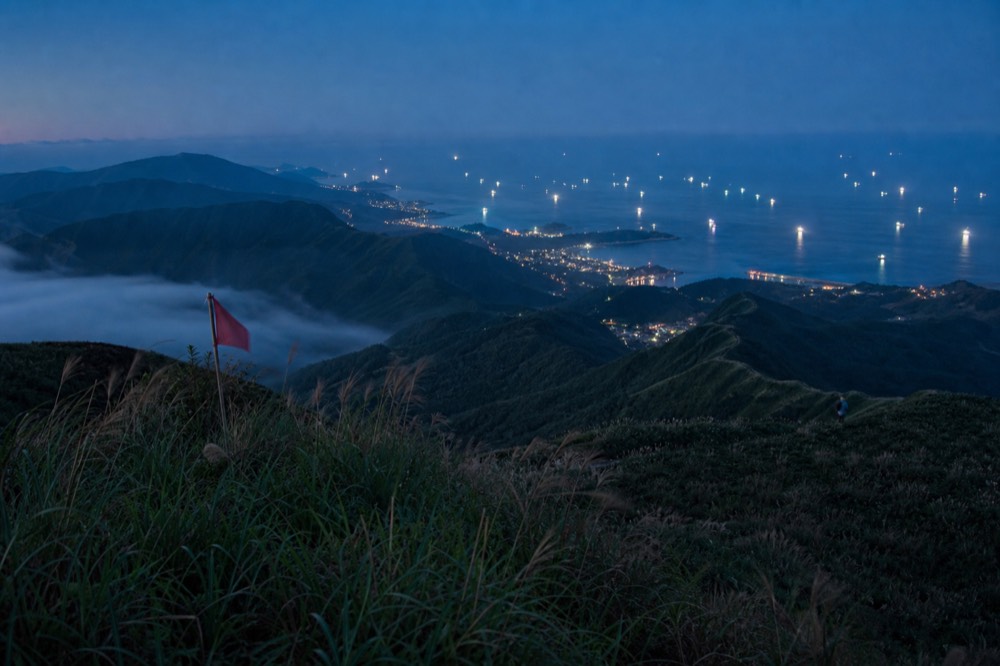
If you do day-trip, do it on a weekday and go late rather than early, arriving for the afternoon and staying into the first hour of lantern light before the bus down, or take one of the evening-oriented tours instead and let someone else manage the timing. The Jiufen at night guide works through those options in detail. If you stay, book the room early, pack light, ask about steps, and give the evening to a teahouse with a verified menu or a guided walk through the mine town's past. Either way, the deciding facts are the ones above: the coaches are rationed, the trains thin out after 19:22, and the rain falls on more than half the year's days. Everything else is preference.
The short answers here restate the deciding facts from the body of the page: coach rationing under the control plan in force since 1 January 2025, the branch-line gap after the 19:22 departure from Ruifang, Keelung's 193.6 rain days a year, and the Spirited Away denial of 19 September 2023. Each question below gets a direct answer with the numbers, so you can check the one fact you came for without rereading the whole article.
Common Questions About Staying In Jiufen Overnight
Is It Worth Staying In Jiufen Overnight?
Yes, if you want the town outside controlled hours. Coach access is rationed to roughly 20 approved coaches per half-day slot on weekends and refused entirely on holidays of three or more days, so overnight guests get the street before about 09:00 and after about 19:00 that day visitors cannot. It is less worth it if you need to be back in Taipei the same night or if monsoon-season rain would strand you.
What time do the last trains leave from Jiufen?
Jiufen has no station; you travel via Ruifang. The branch line's useful evening departures from Ruifang are 18:33 and 19:22, then nothing until 21:06, and the last branch train is 22:20. For Ruifang to Taipei, the last Taipei-bound train departs Ruifang at 23:29 and reaches Taipei Main Station at 00:08, after midnight; the last one that still arrives before midnight leaves Ruifang at 22:29, arriving 23:23.
Is Jiufen crowded at night?
Visitors consistently report the street calming after about 19:00, once the coaches have gone, and staying quiet before about 09:00. Those are reported patterns, not official hours. The one hard fact is regulatory: coaches may not drive to the old street on their own and are capped at roughly 40 approved per day on weekends, none at all on long weekends.
Does it rain often in Jiufen?
Yes. The nearest weather station, Keelung about 12 km away on the same coast, records 193.6 rain days a year, more than half of all days, and 3,589.7 mm annually, about 54% more than Taipei. July is the driest month at 119.5 mm; November is the wettest at 396.9 mm.
Can you see Spirited Away scenery in Jiufen at night?
You can see a real resemblance, lantern-lit lanes and teahouse light, but Jiufen did not inspire the film. Studio Ghibli producer Toshio Suzuki denied the connection on 19 September 2023, saying neither he nor Miyazaki has ever been to Jiufen, and attributing the moment of resemblance to an alley in Seoul. Enjoy the look; skip the claim.
Is it better to stay in Jiufen on a weekday or weekend?
Weekday, for value and calm: the traffic control plan runs only on weekends, holidays and make-up working days, so midweek the coaches are gone by late afternoon and the street is quiet through the evening. Weekends need an early room booking and reward staying precisely because that is when day-trip crowding is worst.