Jiufen Hotels: Where To Sleep On The Hill And Whether You Should
A bed in Jiufen buys one thing above all: the town after the day crowds thin and before they return. This page weighs that against the honest counter-argument, that most visitors do not need to stay here at all, and gives you the timing facts to decide for yourself.
Short answer
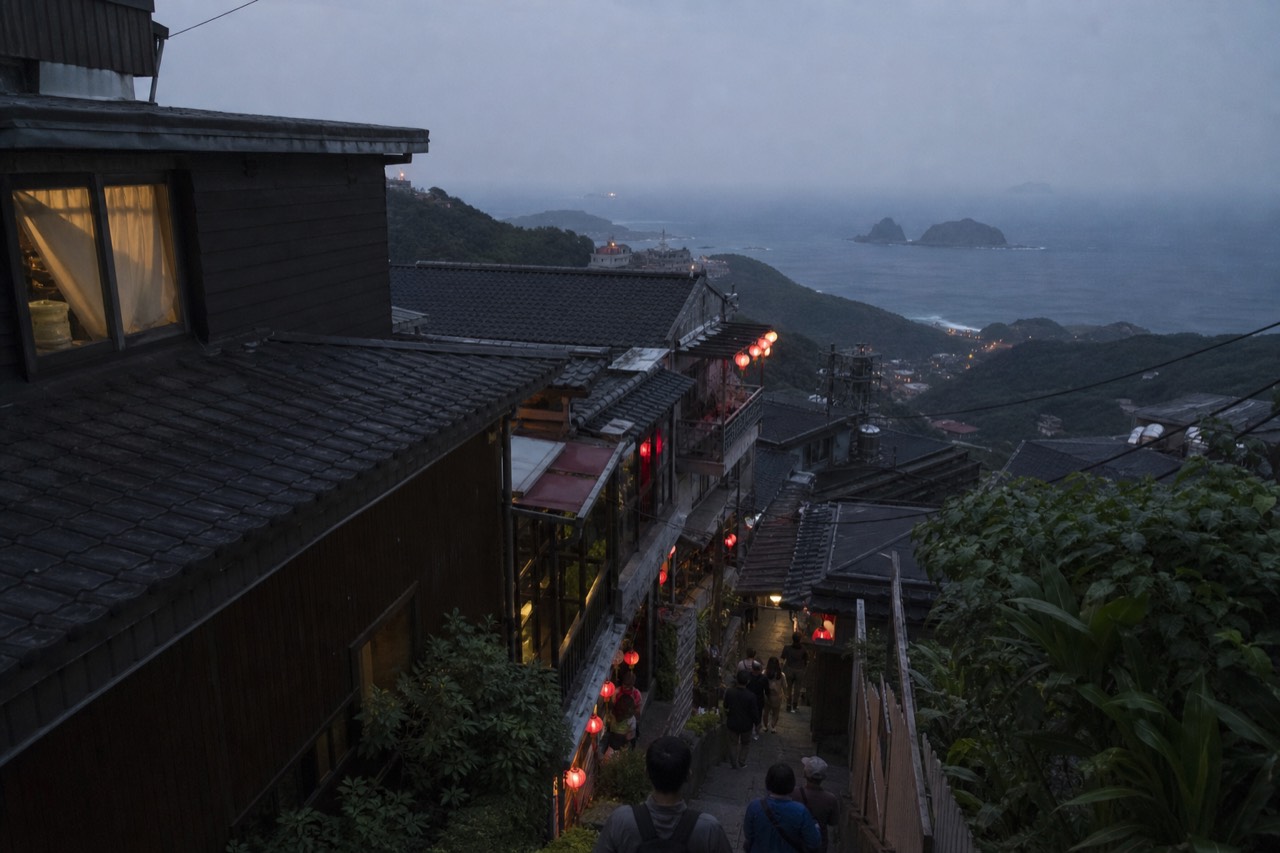
Stay in Jiufen if you want the town empty at dawn and glowing after dusk; the last Taipei-bound train leaves Ruifang at 23:29 and reaches Taipei Main Station just after midnight, so a late evening among the lanterns still has a way back. Most day visitors do not need a bed here, but photographers, slow travellers and anyone pairing the town with an evening tour benefit from one.
Jiufen empties twice a day. Once in the late afternoon, when the coaches roll back down the hill toward Taipei, and once in the early morning, before the first of them climbs back up. Everything a hotel room in this town buys you sits inside those two windows, and almost nothing else does.
That is the honest framing for this page. Jiufen is a small hill town of lanes and staircases, built on a gold rush and rebuilt by tourism, and the question of where to stay in it is really a question of whether you want to be present for the hours most visitors miss. This guide works through that trade-off with real numbers: the train times that actually constrain a late evening, the weather pattern that shapes a night on the hill, and the evening products that pair naturally with a bed here. Where a figure is not published anywhere verifiable, this page says so plainly rather than guessing. If you are weighing a bed here against a day trip, Jiufen Tour is the site that keeps both sides of that argument honest.
What Does Staying Overnight In Jiufen Actually Give You?
Staying overnight gives you Jiufen in the two daily windows when the day-trippers are gone: the late evening, when the red lanterns glow and the lanes quieten, and the early morning, before the first coaches arrive. It gives you no new attractions, no skip-the-line benefit and no ticket discount, because the old street is free to walk and always was.
The core benefit is temporal, not spatial. A day visitor sees Jiufen at its most crowded, roughly through the middle of the day, and leaves before the town changes character. An overnight guest sees both edges of that curve. Visitors consistently report the street calming after the evening and staying calm before mid-morning, though no official shop opening hours are published anywhere, so treat timing as pattern rather than promise.
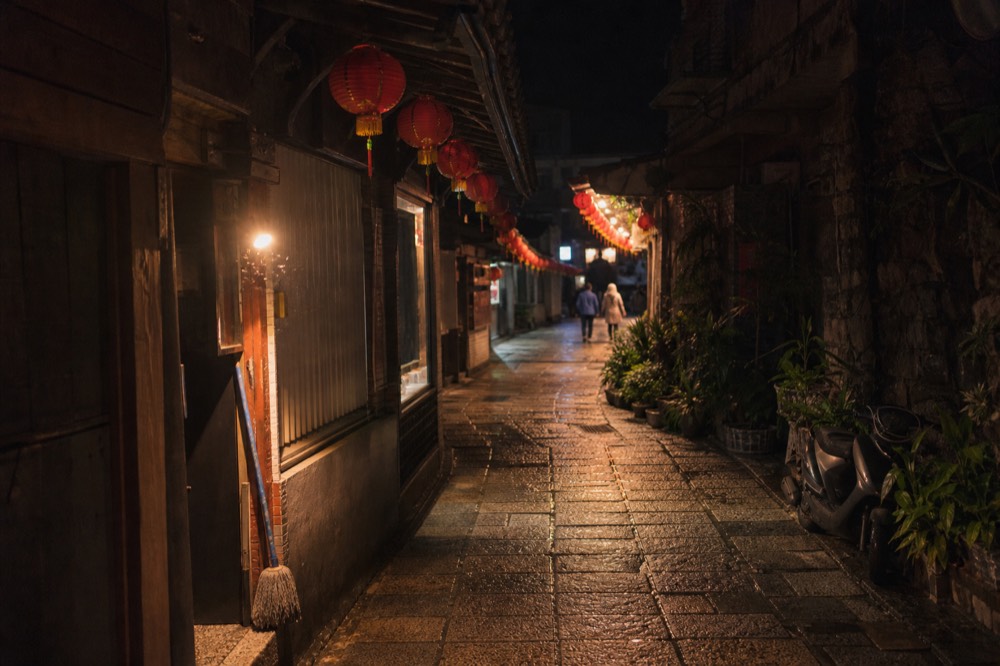
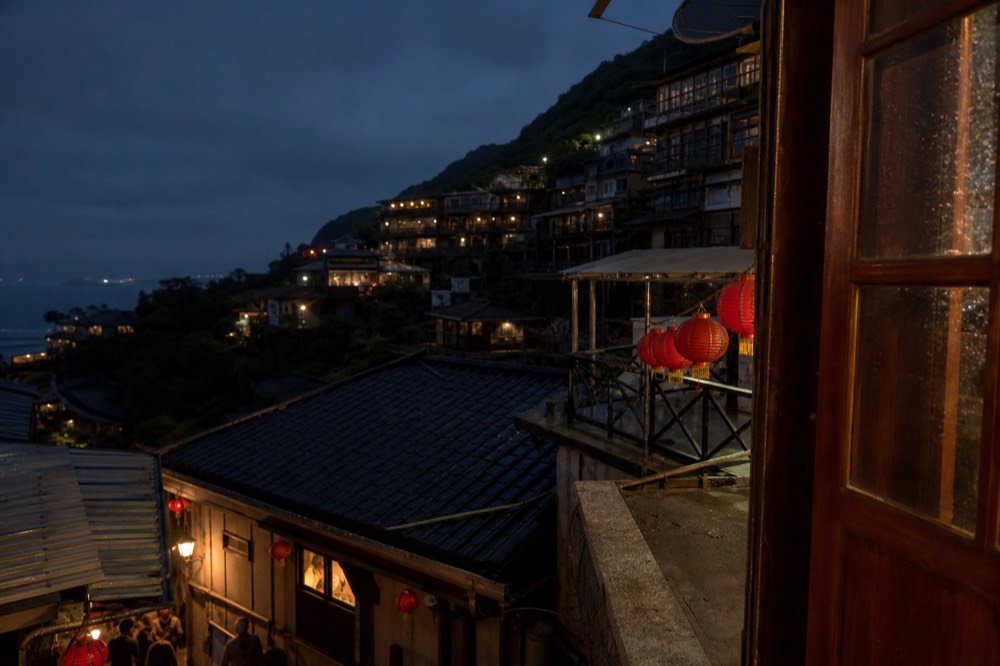
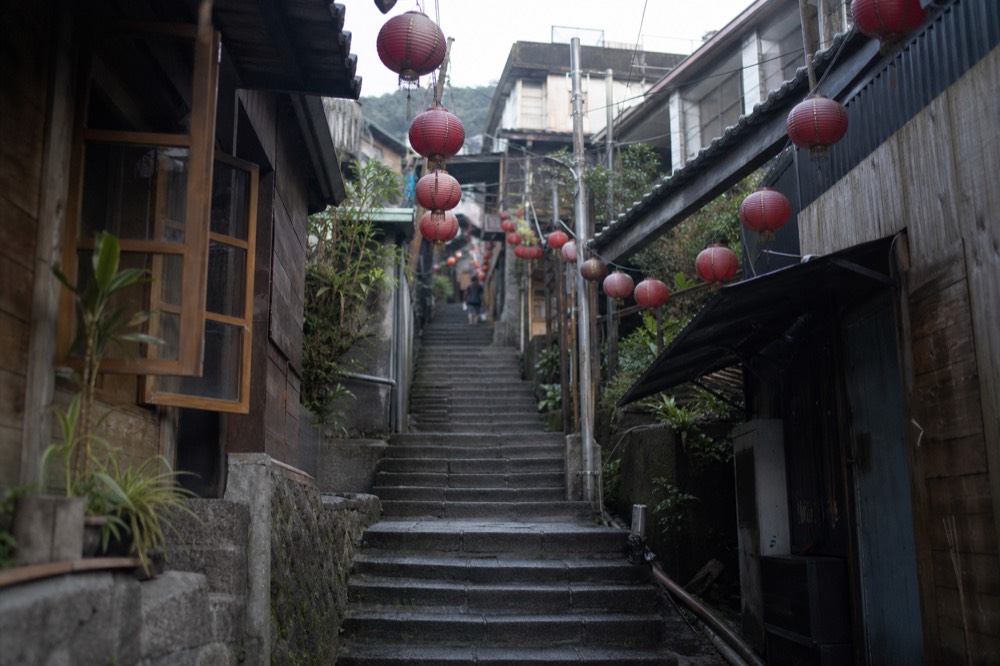
The second benefit is photographic. The lantern-lit lanes and the sea view after dark are the images that made this town famous on social media, and they are nearly impossible to capture on a day-trip schedule that has you back on a train before the light turns. A night on the hill puts you on the lane with a camera when the lanterns come on, which follows sunset rather than any published clock time.
The third benefit is simply pace. Jiufen rewards slow wandering: a teahouse sit, a walk along the flat lane that used to be a railway trackbed, a second pass along Jishan Street when a shop you missed is still open. If your instinct is to linger, a bed here removes the clock from the equation.
Is A Hotel In Jiufen Worth It, Or Is A Day Trip Enough?
For most visitors a day trip is enough, and this site says so plainly. Jiufen is reachable from Taipei in under an hour by train to Ruifang plus a short bus or taxi hop, 45 to 47 direct trains run every day, and the strongest day tours cover the town, Yehliu and Shifen in one outing from about $20 per person. A bed here is worth it for photographers, slow travellers and anyone booking an evening tour.
The counter-argument deserves its full weight. The site's strongest day product, the Yehliu, Jiufen, Shifen and Golden Waterfall circuit, is rated 4.9 across 47,355 reviews and runs from $20.29 per person, which is less than many Taipei hotel breakfasts. If your goal is to see Jiufen once, walk the lane, eat taro balls and leave, that tour does the job without a hotel booking, without luggage logistics on a staircase town, and without paying a premium for a room whose value is concentrated in hours you might spend asleep.
The argument for staying is strongest for three groups. Photographers who want the blue-hour lantern shots and the dawn mist. Travellers who want a teahouse evening without watching the clock. And anyone pairing the town with one of the evening products, which finish late enough that the last-train maths starts to pinch.
There is also a middle path worth naming: stay somewhere cheaper along the rail line, in Ruifang or Keelung, and take a late train back after your evening in Jiufen. The rail facts below make that trade-off concrete.
If you are leaning toward the evening option, these are the products built for it:
What Are The Best Areas To Stay In Around Jiufen?
The realistic areas are Jiufen village itself, Jinguashi just along the ridge, Ruifang down at the rail junction, and Keelung on the coast. Jiufen and Jinguashi buy you the morning and evening windows; Ruifang and Keelung buy you cheaper beds, flat streets and last-train safety, at the cost of a bus or short train ride up the hill.
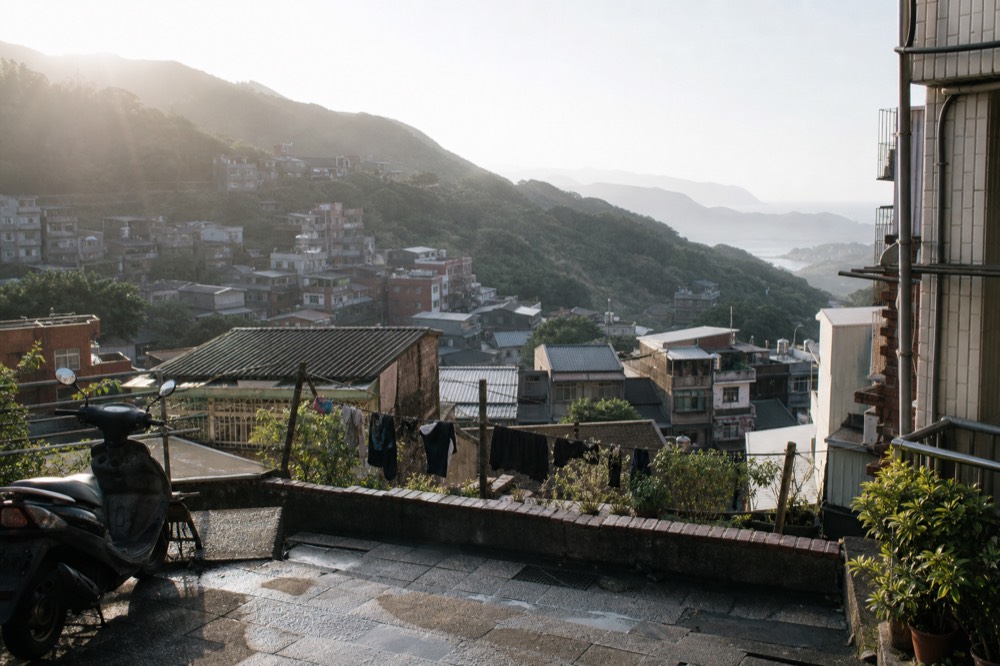
Jiufen village itself is the classic choice, and the constraint is physical rather than financial. The town is built on a steep hillside of lanes and staircases, luggage rolls badly here, and properties are small guesthouses and homestays rather than big hotels. What you get for accepting that is the ability to walk out of your door into the empty morning lane.
Jinguashi, the former mining settlement just along the ridge, is quieter still and sits next to the Gold Museum, which is closed the first Monday of every month, a detail worth checking before you plan a museum morning. The stretch of road between the two is officially designated a dangerous, accident-prone section where two vehicles struggle to pass, so a Jinguashi base means a shuttle or bus ride rather than a stroll home after dark.
Ruifang is the practical pick. It is the rail junction where the main line meets the Pingxi branch, so a bed there puts you one flat NT$29 branch train from Shifen and a short bus ride from Jiufen, with none of the hillside logistics. Keelung, further out, adds a night market and a wider hotel market, and the region's weather pattern, which this page covers below, is worth knowing before you commit to any of them.
| Base | What it buys you | The trade-off |
|---|---|---|
| Jiufen village | The empty morning and the lantern-lit evening, on foot | Steep lanes, small properties, luggage is hard work |
| Jinguashi | Quiet, next to the Gold Museum | A bus or shuttle ride home; check the first-Monday closure |
| Ruifang | Flat streets, the rail junction, cheaper beds | A bus or taxi ride up to Jiufen each visit |
| Keelung | Wide hotel choice, Miaokou Night Market | Furthest out; a longer return journey each time |
One honest note on hotel specifics: this site has verified pricing for its tours, its rail facts and its teahouse arithmetic, but it does not carry verified per-property hotel prices, and it will not print a nightly rate it cannot stand behind. Check the live listing of any property that interests you; treat published rates as moving with season and weekends, which in Jiufen are two different worlds because of the traffic control plan described below.
How Do The Last Trains Shape A Late Evening In Jiufen?
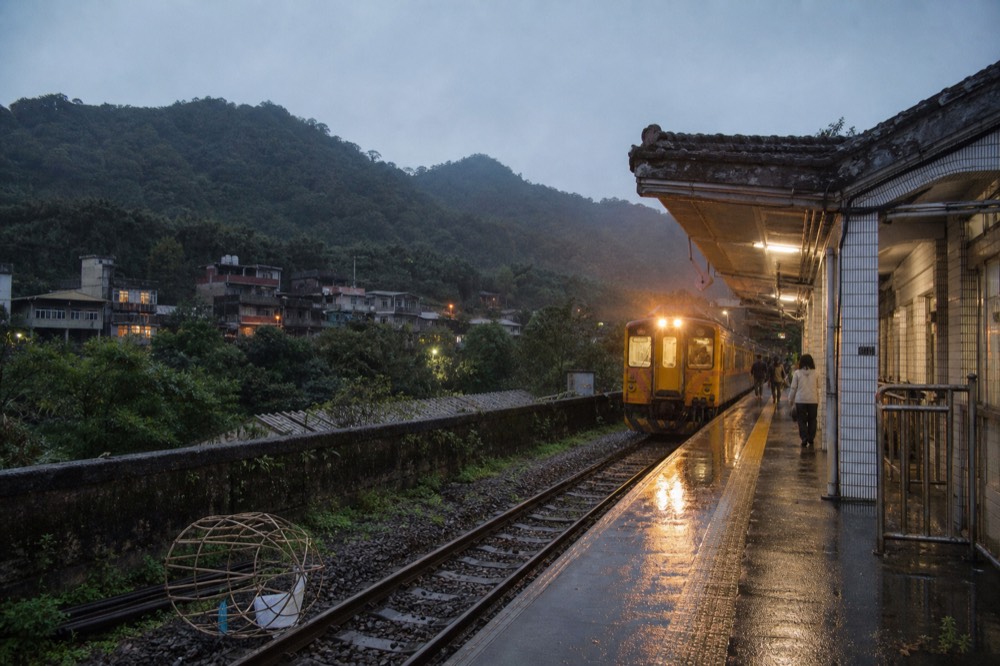
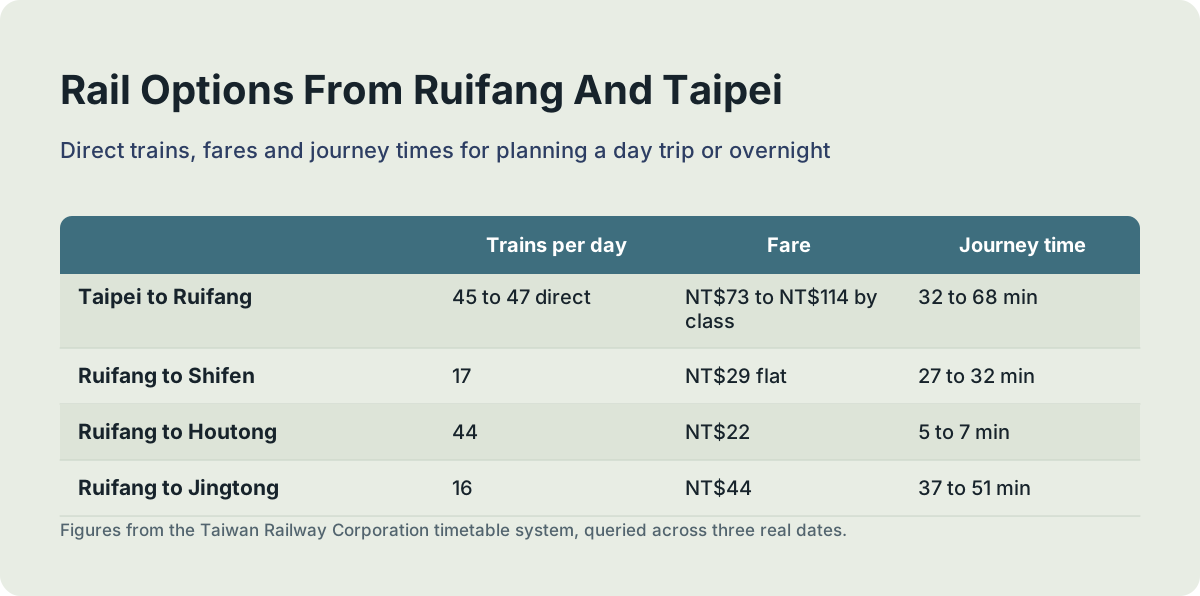
The last train from Ruifang to Taipei leaves at 23:29 and reaches Taipei Main Station at 00:08, after midnight; the last one that still arrives before midnight departs Ruifang at 22:29, arriving 23:23. The Shifen branch thins badly after the 19:22 departure from Ruifang, with nothing until 21:06 and then 22:20. A late evening in Jiufen is entirely doable by rail, but the branch line to Shifen effectively stops being a same-evening option after mid-evening.
These figures come from the Taiwan Railway Corporation's own timetable system, queried across three real dates, and they are the hard edge of every "should I stay?" decision. From Taipei Main Station, 45 to 47 direct trains a day reach Ruifang, journey 32 to 68 minutes, median 46. The fare is NT$73 on a local or fast local, NT$87 on a Chu-Kuang, NT$114 on a Tze-Chiang or Puyuma. The express saves roughly 13 minutes over the median local and costs NT$41 more, so the local is the sensible default on this route.
The evening constraint sits on the far side. Coming back, the last Taipei-bound train departs Ruifang at 23:29 and reaches Taipei Main Station at 00:08, after midnight. The last one that still arrives before midnight leaves Ruifang at 22:29, getting in at 23:23. Ruifang is down the hill from Jiufen, reached by bus or taxi, and the bus options have their own evening limits: route 827's last holiday departure is 11:10 in the morning, making it a morning-only bus on weekends, while the long 788 route runs until 22:30 seven days a week. Plan the descent from Jiufen with those last trains in mind, and with margin for the walk to the bus stop.
The Pingxi branch is a separate and sharper constraint. From Ruifang to Shifen there are 17 direct trains a day, flat NT$29, 27 to 32 minutes, and the identical 17 run on a Saturday as on a Monday: the line gets no extra weekend capacity. The evening departures from Ruifang are 15:59, 16:54, 18:33, 19:22, 21:06 and 22:20, which means a 1h39m gap after 16:54 and a 1h44m gap after 19:22. If your evening plan involves Shifen lanterns and then Jiufen, the branch timetable, not your appetite, sets the order.
| Journey | Trains per day | Fare | Journey time | Evening notes |
|---|---|---|---|---|
| Taipei to Ruifang | 45 to 47 direct | NT$73 to NT$114 by class | 32 to 68 min | Last departure from Taipei is 23:04 |
| Ruifang to Shifen | 17 | NT$29 flat | 27 to 32 min | Gaps of 1h39m after 16:54 and 1h44m after 19:22 |
| Ruifang to Houtong | 44 | NT$22 | 5 to 7 min | Frequent; useful for the cat village |
| Ruifang to Jingtong | 16 | NT$44 | 37 to 51 min | Branch end; same evening gaps apply |
There is no direct train from Taipei to Shifen at all, zero services, so every Pingxi plan changes at Ruifang. That single fact, which much of the English internet blurs, is the skeleton of every itinerary in this region.
For travellers who want the evening without the timetable arithmetic, the private evening product below is built exactly for that window, and free cancellation is confirmed on it:
What Is The Weather Like For An Overnight Stay?
The nearest official weather station is Keelung, about 12 km away on the same windward coast, and its 30-year normals show 3,589.7 mm of rain a year against Taipei's 2,329.5 mm, about 54% more, falling on 193.6 rain days a year. July is the driest month at 119.5 mm across 8.5 rain days; November is the wettest at 396.9 mm.
There is no weather station at Jiufen itself, so every honest climate statement about this town is a Keelung statement with a caveat, and this page makes that caveat explicit. The pattern, not the exact totals, transfers: Jiufen sits higher and further inland on the same northeast-facing slope, so if anything it is wetter, but no verified figure exists for the town itself and none will be invented here.
The practical reading for a hotel decision runs in two directions. First, the wet season is real: September through February takes 2,198.8 mm, 61% of the year's rain in six months, and December manages just 48.5 sunshine hours in the entire month, about 1.6 hours a day. A winter overnight here is a gamble on fog and drizzle, which is atmospheric in a lantern-lit lane and miserable in a cold one.
Second, and this inverts the usual advice about Taiwan: July and August are the driest months on this coast, 119.5 mm and 211.4 mm respectively, with the fewest rain days. The standard "avoid Taiwan in summer" guidance, written for the flat west coast, is simply wrong for this corner of the island. If a summer evening on the hill is what you are after, the climate record is on your side. The Central Weather Administration publishes the full 30-year normals behind these figures.
| Month | Rainfall mm | Rain days | Note for an overnight |
|---|---|---|---|
| January | 327.8 | 19.6 | Wet and dim: 52.6 sunshine hours all month |
| April | 211.1 | 16.0 | A reasonable shoulder-season bet |
| July | 119.5 | 8.5 | Driest month; inverts the avoid-summer advice |
| August | 211.4 | 11.6 | Second driest; warm evenings |
| September | 390.1 | 15.2 | Monsoon build-up begins |
| November | 396.9 | 18.6 | Wettest month; fog and drizzle territory |
Do Weekends And Holidays Change The Staying Decision?
Yes, materially. Under a New Taipei City traffic control plan in force since 1 January 2025, Jiufen is a managed-access destination from 08:00 to 20:00 on every weekend, national holiday and make-up working day, with coach access rationed to roughly 20 approved coaches per half-day slot and refused entirely on holiday runs of three or more consecutive days.
This is a signed government notice, not a blog rumour, and it cuts both ways for a hotel guest. On the one hand, a weekend overnight means you experience the controlled hours as a pedestrian, which the plan does not restrict, and you watch the rationed coaches depart in the late afternoon. On the other, a weekend arrival and departure by car or taxi sits inside the control hours too, and the roads are genuinely congested while they run.
The coach rationing explains something a weekend visitor feels but rarely understands: the crowd in Jiufen on a Saturday is not unbounded, it is capped by roughly 40 approved coaches a day plus everyone who comes by train, bus and private car. On a three-day holiday weekend the coach applications are refused outright, and the town's rhythm shifts accordingly.
For a staying decision, the cleanest reading is this: a weekday overnight gives you the quietest version of both windows, morning and evening, with no control hours at all. A weekend overnight gives you the spectacle of the town at full throttle and then emptying, but with harder logistics on either side of it. The full control plan is published as a signed notice if you want the primary document.
What Kind Of Accommodation Exists In Jiufen?
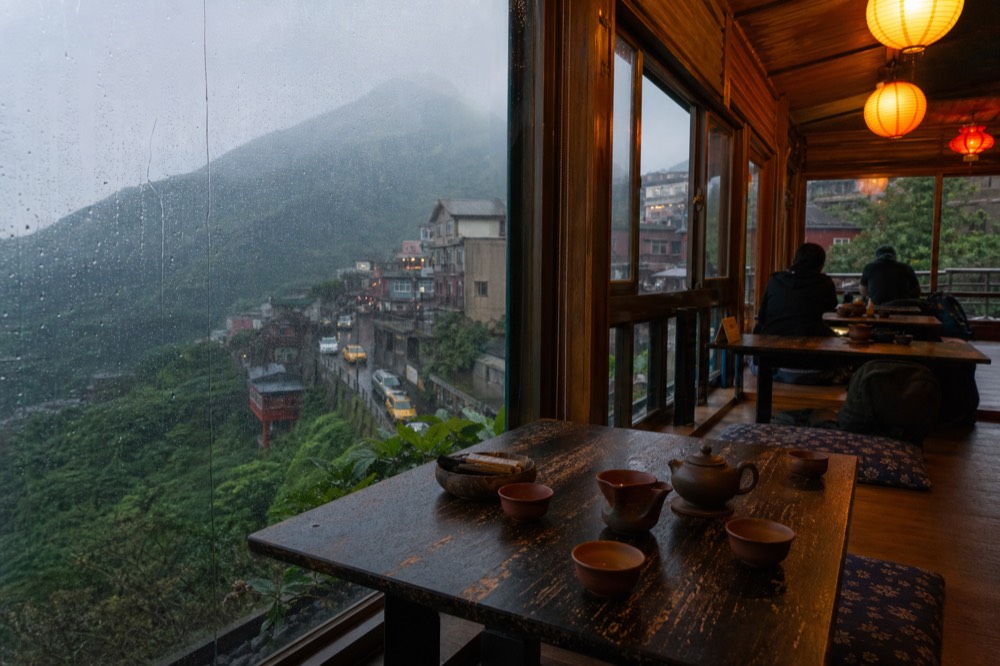
Jiufen's accommodation is dominated by small guesthouses and homestays rather than hotels, spread along the steep lanes between Jishan Street and the sea view edge, with a flatter, quieter cluster around Jinguashi. No verified per-property price list exists for this town, so this page describes the categories honestly and directs you to live listings for rates.
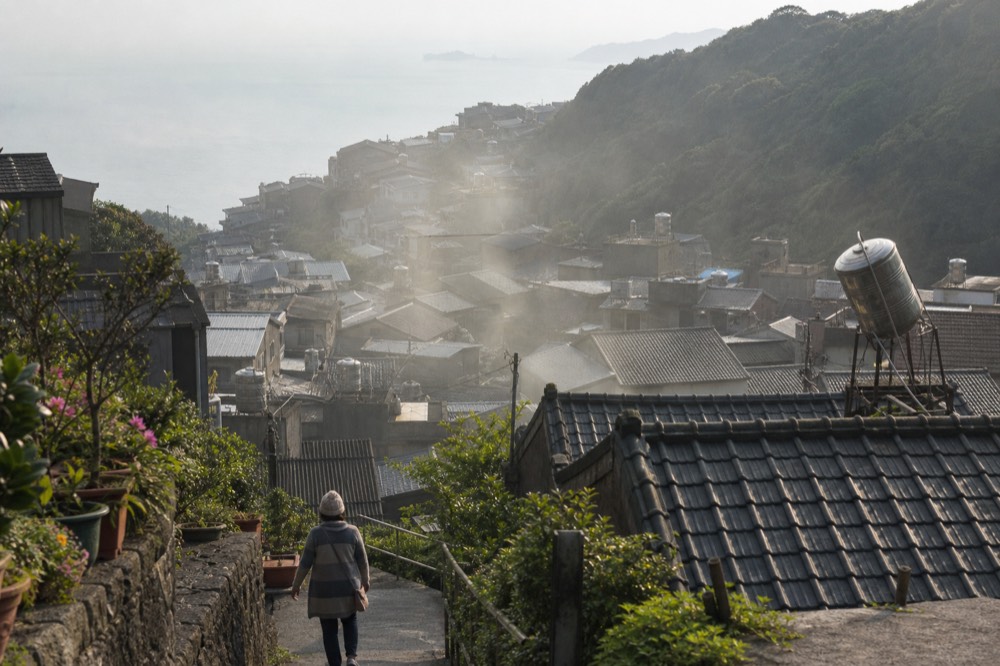
The physical character of the town dictates the inventory. Buildings cling to a hillside threaded by staircases; Jishan Street is the commercial spine, Shuqi Road is, by its own official name meaning, the road of many vertical steps, and Qingbian Road is the flat lane, level because it is the surviving trackbed of a human-powered light railway laid in 1931. A guesthouse reached from Qingbian Road is a different logistics proposition from one reached from the staircase, and no verified accessibility information for any specific property or route exists, so this page makes no accessibility claim at all.
What can be said honestly about the market: rooms are small and characterful, sea-view rooms carry a premium and are worth it for the dawn window, and prices swing hard between weekday and weekend because of the demand pattern the traffic plan reveals. Lantern-facing rooms above the old street are the most photographed and the most in demand.
The teahouses are part of the accommodation question too, in a different way. An evening tea sit is the signature indoor experience of a Jiufen night, and the one teahouse whose prices are fully verified is A-Mei Tea House: open 09:00 to 21:30 seven days, with a NT$100 per person tea water fee before anything else, and the cheapest pot of leaves at NT$500. Two people sharing that cheapest pot pay NT$700 before food, arithmetic straight off the venue's own menu, and a number most English pages get wrong by quoting only the fee.
| Category | Character | Best for | Watch out for |
|---|---|---|---|
| Old street guesthouse | Small, lantern-adjacent, steep access | The dawn and dusk windows on foot | Luggage on staircases; weekend price swings |
| Sea-view room | Views over the coast from the hill edge | Photographers and slow mornings | Premium rates; fog in the wet season |
| Jinguashi homestay | Quieter, near the Gold Museum | Museum mornings and stillness | Bus or shuttle back up after dark; first-Monday closure nearby |
| Ruifang hotel | Flat, modern, at the junction | Rail-first travellers and late returns | You commute to Jiufen each visit |
For the evening itself, the guided night walk below is the roster's deepest dive into the mining town after dark, and it is a smaller-volume listing without enough reviews yet for a star claim:
Should You Pair A Stay With An Evening Tour Or Explore Alone?
Pairing works best when the tour removes a constraint you would otherwise carry: the private evening tour removes the last-train maths, the guided night walk adds mining history no signpost gives you, and the teahouse voucher turns an evening into a booked event. Exploring alone is better for photographers who want to set their own pace through blue hour.
The solo option deserves its case stated fairly. A guest with a bed in town needs no guide for the evening: the lane, the lanterns and the sea view are free, the teahouse arithmetic above is published here, and the morning window needs no escort. Independent evening exploration is the purest version of what the room buys.
The paired option wins when the tour adds something structural. The private Yehliu and Jiufen by night product covers Yehliu Geopark and the Jinguashi ruins and waterfall before Jiufen, a combination that is genuinely awkward by public transport after mid-afternoon, and hands you back to Taipei without needing the 23:29 departure from Ruifang that reaches Taipei after midnight. The guided night walk spends its hours on the mining story, the Gold Ecological Park, the Gold Mine Museum and the Baoshishan lookout, which is a different town than the one day visitors see.
The teahouse is the third pairing. Haiyue Tower, a landscape teahouse in Jiufen itself, runs from $15.79 per person at the current sale price with refreshments included, rated 4.5 across 366 reviews, and it is redeemed in place, in Jiufen, not boarded in Taipei. For a guest staying on the hill it functions as a booked evening anchor rather than a tour.
| Evening option | What it adds | Format | From price |
|---|---|---|---|
| Explore independently | Total control of blue hour and dawn | Solo | Free, plus tea and food |
| Private Yehliu and Jiufen by night | Yehliu plus the ruins before Jiufen; no timetable maths | Private, hotel pickup | From $105 per person |
| Guided night walk, old gold rush town | Mining history, museums, Baoshishan lookout | Guided walk, hotel pickup | From $85 per person |
| Teahouse evening | A booked tea sit with refreshments included | In-place experience | From $15.79 per person |
How Many Nights Should You Spend In Jiufen?
One night is the sweet spot for most travellers: it captures the evening and the morning, the two windows a day trip misses, without paying for a second night whose marginal value is small. Two nights suit photographers waiting on weather, since this coast rains on more than half of all days, and travellers pairing Jiufen with slow mornings in Jinguashi. Beyond two, most itineraries are stretching.
The one-night logic is arithmetic on the windows. Arrive mid-afternoon, before the control hours end on a weekend or after the midday peak on a weekday, have the evening, sleep, have the dawn and the empty lane, and leave before the coaches return. You have bought both windows for the price of a single room.
Two nights become worth it when weather is the variable. With 193.6 rain days a year at the Keelung station, a single evening has a real chance of drizzle, and a photographer who wants the lantern lane under clearing skies is buying a second attempt, not a second attraction. The same logic applies to the dawn view: one morning, one dice roll.
More than two nights and you are living in Jiufen rather than visiting it, which some travellers genuinely love, this is a town that rewards residents' pace, but which most itineraries cannot justify against the pull of Taipei, Yehliu and the Pingxi branch. If you want the broader picture of how the town fits into a wider trip, the Jiufen and Shifen in one day guide lays out the full circuit, and how long to spend in Jiufen covers the day-visitor version of the same question.
What Should You Know Before Booking A Jiufen Hotel?
Check three things before you book: the walking route from the bus stop to the door, since the town is staircases and no verified accessibility information exists for any property; the weekend-versus-weekday price gap, which is large because coach demand is rationed on weekends; and the first-Monday Gold Museum closure if a Jinguashi morning is part of your plan. Never rely on a printed nightly rate from a third-party page.
The luggage question is the one that surprises people. Jiufen's lanes were built for porters and light railway wagons, not roller cases, and the level lane exists because it was a railway trackbed while the parallel road is, by official meaning, the road of many vertical steps. No step count, walking time or gradient figure for any route in this town is verified anywhere, so this page prints none of them; ask your property directly which lane serves its door.
Payment and practicalities on the hill are equally undocumented in any verifiable source. There is no verified statement on which stalls or guesthouses take cards, no verified ATM or convenience-store map, and no verified luggage-storage claim for Ruifang Station, so plan on cash in hand and check storage with your property or the station on the day.
The booking-window advice is simpler. Weekday rooms are the value play, the town's demand curve is weekend-shaped because the traffic plan makes it so, and a Sunday-night stay captures the empty Monday morning, with the one caveat that the Gold Museum, the main Jinguashi draw, is closed the first Monday of every month. The Taiwan Tourism Administration's own Jiufen page is the official reference for the town's basics if you want a primary source alongside this one.
| Before you book | Why it matters | Where to check |
|---|---|---|
| Walking route to the door | Staircase town; no verified route figures exist | Ask the property directly |
| Weekday vs weekend rate | Coach rationing shapes weekend demand | The live listing for the property |
| First-Monday closure | Gold Museum shuts the first Monday monthly | The museum's own hours page |
| Evening transport down the hill | Last Taipei-bound train at 23:29 from Ruifang | The railway's own timetable |
| Cash on hand | No verified card-acceptance facts for the hill | Your bank and your property |
What Are The Alternatives To Staying In Jiufen Itself?
The real alternatives are Ruifang, one junction down the hill with flat streets and the whole rail network at its door; Keelung, with the widest hotel choice and a night market; and Taipei itself, from which the strongest day tours run for about $20 per person. Each removes the staircase logistics and keeps the region reachable.
Ruifang is the alternative this site rates highest for rail-first travellers. Every Taipei train stops there, the Pingxi branch starts there, and the 788 bus runs from Keelung through to the Gold Museum area from 05:00 to 22:30 seven days a week. A Ruifang bed plus a bus ride up the hill gives you most of the evening window and a cheaper, flatter room, at the cost of not stepping out of your door into the lantern lane.
Keelung adds a city to the equation. The Miaokou Night Market is a genuine evening destination in its own right, and one roster product, the Jiufen A-Mei Teahouse, Heping Island sunset and Keelung night market tour, from $58.90 per person, is built precisely around that triangle: Jiufen Old Street, Heping Island and the night market, and, binding note, it reaches neither Yehliu nor Shifen despite how it is indexed elsewhere. Rated 4.7 across 866 reviews, it is a natural pairing with a Keelung bed.
Taipei itself remains the default for most visitors, and honesty requires saying that the day-tour economics are hard to beat: the hero circuit at from $20.29 per person, rated 4.9 across 47,355 reviews, does Yehliu, Jiufen, Shifen and the Golden Waterfall in one guided day. If your trip is short and your interest in the dawn-and-dusk windows is mild, a Taipei base plus that tour is the rational answer, and this site will not pretend otherwise.
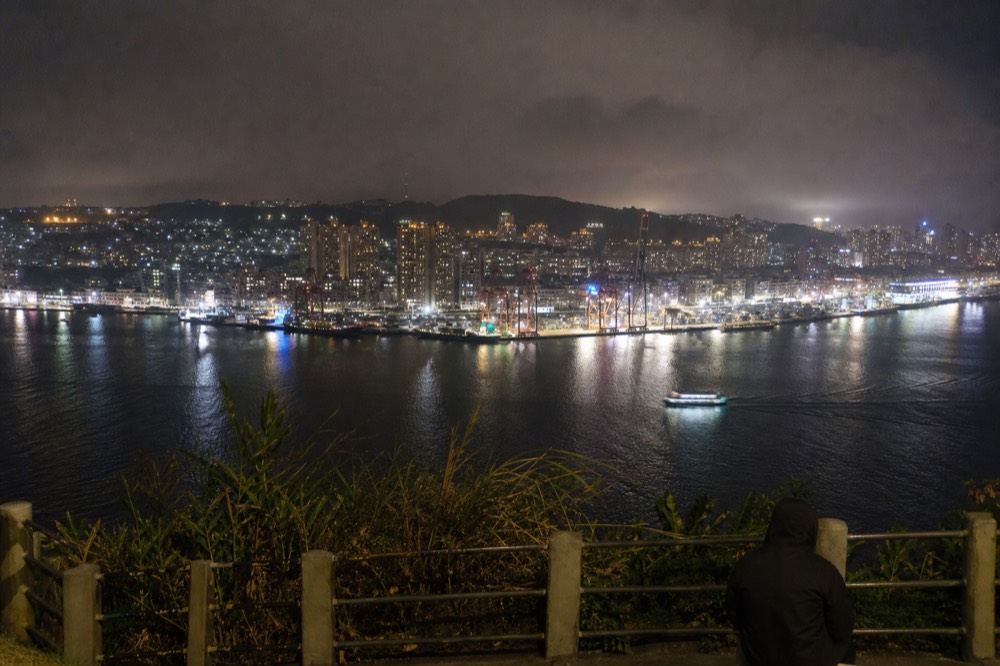
For travellers who do want the hill at night, the teahouse below is the cheapest way to book an evening event in Jiufen itself, redeemed in place:
Whether you sleep on the hill or below it, the decision comes down to those two daily windows. A bed in Jiufen is a ticket to the town most visitors never meet, the one that exists after 20:00 and before the first coach. Everything else, the guides, the timetables, the weather tables above, is just the machinery for deciding whether that ticket is worth its price on your trip. For the wider picture of the town after dark, see Jiufen at night, and for the full evening argument, is Jiufen better during the day or night weighs the same trade-off from the day-visitor side.
The short answers: an overnight is worth it for the two daily windows a day trip misses, the last Taipei-bound train leaves Ruifang at 23:29 and reaches Taipei after midnight, the branch line to Shifen thins badly after 19:22, no verified hotel price list exists for this town, July is the driest month on this coast, and Ruifang or Keelung are the smart alternatives to the hill itself.
Common Questions About Staying In Jiufen
Is it worth staying overnight in Jiufen?
It is worth it if you want the town after the coaches leave and before they return, the two windows a day trip cannot capture. It is not worth it if Jiufen is a one-time checkbox: the strongest day tour covers it with Yehliu and Shifen from about $20 per person, and most short trips are better based in Taipei.
What time is the last train from Ruifang to Taipei?
The last Taipei-bound train leaves Ruifang at 23:29 and reaches Taipei Main Station at 00:08, after midnight. The last one arriving before midnight departs 22:29. From Jiufen, be down the hill at Ruifang in time, with margin.
Does the Pingxi line run late at night?
Not usefully. From Ruifang the branch departures thin to 18:33, 19:22, 21:06 and 22:20, with gaps of 1h39m after 16:54 and 1h44m after 19:22. A same-evening Shifen-and-Jiufen plan is constrained by the branch timetable, not by your energy.
Are Jiufen hotels expensive?
No verified per-property price list exists for Jiufen, and this site does not print rates it cannot stand behind. What is verifiable is the shape of the market: small guesthouses, a weekend premium driven by rationed coach demand, and cheaper weekday rooms. Check the live listing of any property that interests you.
Which month is best for an overnight in Jiufen?
By the climate record of the nearest station, Keelung, July is the driest month, 119.5 mm across 8.5 rain days, and November is the wettest at 396.9 mm. The usual avoid-Taiwan-in-summer advice does not hold on this coast; September through February takes 61% of the year's rain.
Can I stay near Jiufen instead of in it?
Yes, and it is often the smarter call. Ruifang sits at the rail junction with flat streets, Keelung has the widest hotel choice plus a night market, and both keep the region reachable by train and bus without the hillside logistics.