Jiufen At Night: What Actually Changes After The Coaches Leave
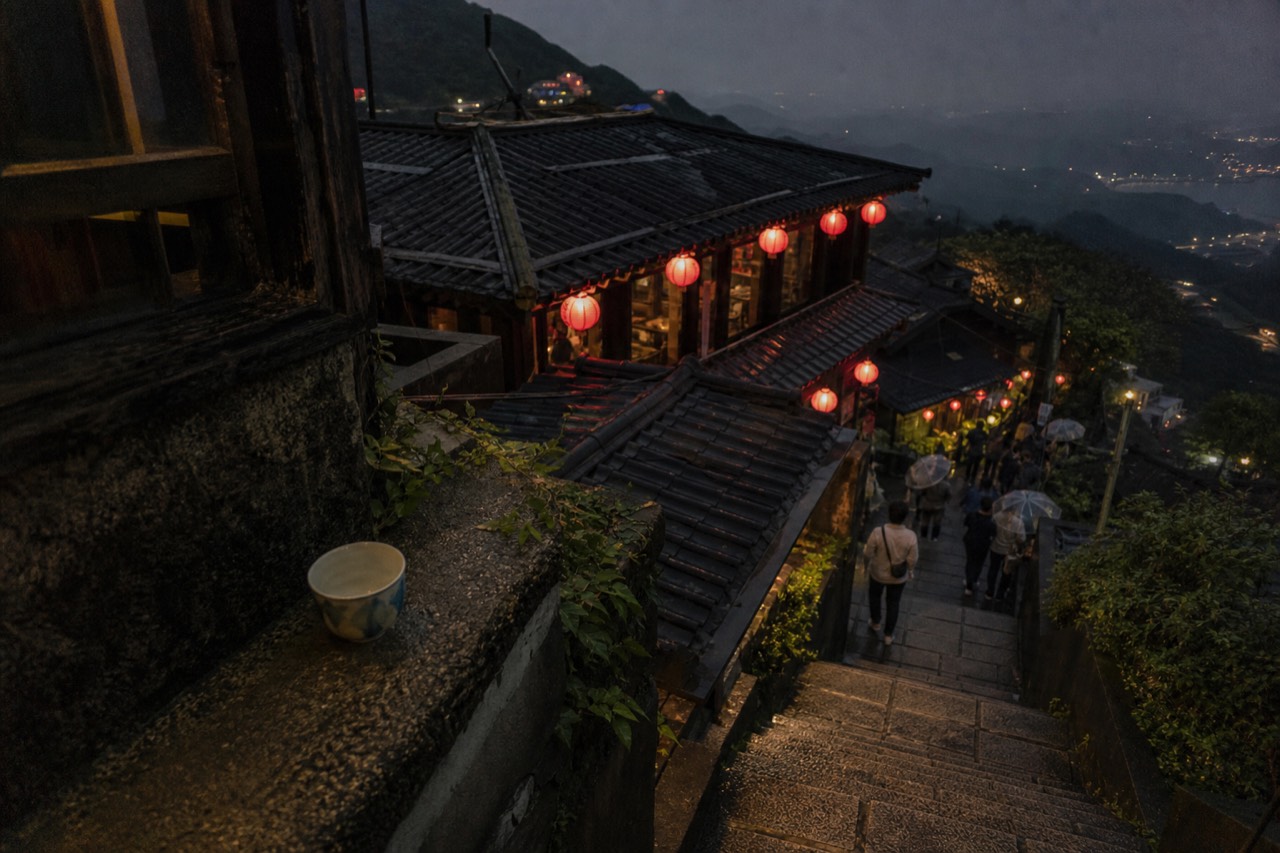
Jiufen at night is a different town from the one the day crowds see, and the change is mechanical, not romantic: the holiday traffic control window that rationed coach access all day ends at 20:00, the buses roll out, and the street belongs to whoever stayed.
Short answer
Jiufen at night is the calmer, lantern-lit version of the town: the 08:00 to 20:00 holiday control window ends in the evening, most day tours leave before the lanterns matter, and the roster carries four evening products against roughly thirty daytime ones. A-Mei Tea House stays open until 21:30, and December dusk arrives early, with just 48.5 sunshine hours all month.
What Actually Changes In Jiufen After Dark?
The change is structural, and it happens on a clock: New Taipei City's holiday traffic control plan runs 08:00 to 20:00 on every weekend, national holiday and make-up working day, and when it ends the approved coach slots end with it, the day-trip buses clear out, and the street population collapses to the people who chose to stay. That single fact, from a signed city government notice in force since 1 January 2025, explains the whole evening. It is not that Jiufen magically becomes quiet. It is that the machinery that fills it during the day is switched off at a published hour.
During the day, coach access to Jiufen is rationed. Tour buses must apply in advance to Ruifang Police Precinct, in a morning and an afternoon slot of roughly 20 coaches each, and they may not drive to Jiufen Old Street on their own at all. On holiday runs of three or more consecutive days, applications are refused entirely. So the daytime crowd arrives in pulses, delivered and collected on someone else's schedule, and that schedule points downhill well before dark for most of them.
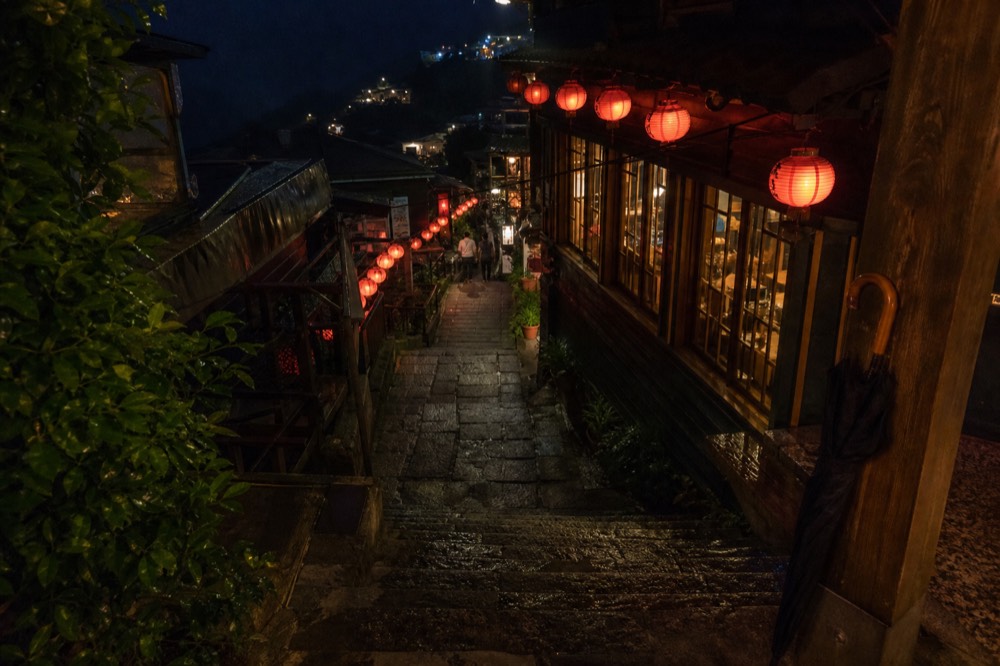
The evening inverts this. The lanterns come on following sunset, not at a published hour, and the teahouses, which stay open later than the snack stalls, become the main event instead of a footnote. Visitors report the street calming down after about 19:00, once the last coach loads have gone, and the heaviest crowding of 10:00 to 17:00 fades with them. No official source publishes shop hours, so treat that as the pattern travellers describe rather than a timetable, but the direction of it is consistent everywhere.
| Daytime Jiufen | Evening Jiufen | |
|---|---|---|
| Who controls the crowd | The traffic control plan, 08:00 to 20:00 on holidays | Nobody: the control window has ended |
| Coaches | Rationed to roughly 40 approved per day | Gone, or applying for the next day's slots |
| Street character | Snack queues, through-traffic, photo stops | Teahouses, lanterns, slower walking |
| Light | Whatever the weather gives | Red lanterns, following sunset |
| Who is there | Day tours on a fixed itinerary | Overnight guests and evening-arrival tours |
The practical upshot: if you want the Jiufen of the photographs, the one with lanterns rising over dark rooflines, you either stay overnight or you arrive late on purpose. Both work. What does not work is hoping a standard day tour will hand you the evening for free, because almost none of them are built to. That is the gap this page on Jiufen Tour is written to close.
When Do The Lanterns Come On, And When Does Dusk Actually Arrive?
There is no published lantern switch-on time, and any page that gives you one is guessing: every source agrees the lanterns come on around dusk, which means they follow sunset, and sunset in this corner of Taiwan moves a long way across the year, from long, bright summer evenings to a December that averages just 48.5 sunshine hours for the whole month. That December figure comes from the Central Weather Administration's 30-year normals for the Keelung station, the nearest manned station to Jiufen at about 12 km away on the same windward coast, and it works out to roughly 1.6 hours of sun per day.
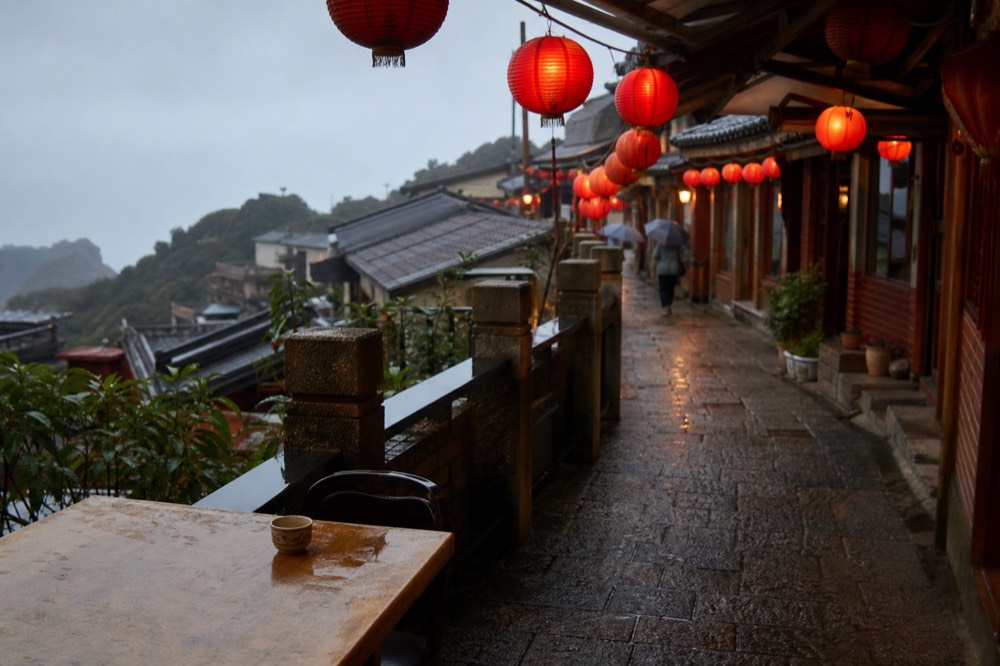
This is the part most first-time visitors get wrong. They plan a Jiufen evening for a winter weekend expecting a golden-hour arrival, and instead they arrive in the dark at 17:00, because winter dusk on the northeast coast comes early and usually wet. November is the wettest month of the year at the Keelung station, 396.9 mm on average, and September through February together takes 2,198.8 mm, which is 61% of the year's rain in six months. The northeast monsoon is why Jiufen's reputation is fog and drizzle rather than tropical downpour, and the evening lanterns against that mist are, honestly, part of the appeal.
Summer flips the calculation. July is the driest month on the whole calendar, 119.5 mm across just 8.5 rain days, and 229.2 sunshine hours, which inverts the usual advice to avoid Taiwan in summer for this specific stretch of coast. But a July dusk is late, so an evening visit means a late start and a late return. If you are choosing between seasons for a night visit, decide whether you want warm and late or atmospheric and early, because you cannot have both.
| Season | What dusk gives you | What to plan around |
|---|---|---|
| Summer (July, August) | Late sunset, driest months, 229.2 and 208.2 sunshine hours | A late arrival and a very late return to Taipei |
| Autumn (September, October) | Sunset moving earlier, 390.1 and 377.6 mm of rain | Fog and drizzle likely, lanterns at their most atmospheric |
| Winter (November to February) | Very early dusk, 48.5 sunshine hours in December | Lanterns glowing soon after an early dusk, wet, cold, and much quieter streets |
| Spring (March to May) | Gradually later sunsets, 274.4 to 284.1 mm of rain | Changeable: pack for both the clear and the misty version |
One honest note on the light itself: the red lanterns are the town's own doing, strung by the shops along Jishan Street and the stairways, and they come on when the shopkeepers decide the day has ended. If you want to be certain of catching them, be there before sunset in winter, and give yourself slack in summer, and do not chase a precise hour, because none is published.
Do The Day Tours Really Leave Before The Lanterns Matter?
Yes, and this is the real reason evening products exist: of the 35 bookable products on this site, only four are built around Jiufen after dark, and the standard day circuit, Yehliu in the morning, Jiufen mid-afternoon, Shifen for the lantern release, is timed to deliver you back to Taipei before the old street's own lanterns become the show. The site's hero day tour, rated 4.9 across 47,355 reviews from $20.29 per person, runs 7h15 to 9h45 and includes Golden Waterfall, but its day is a daytime day. Nothing about that is a flaw. It is just a different product.
The mechanics make it unavoidable. A coach doing the full northeast circuit has to collect a full day of stops inside daylight, and the holiday control plan pushes in the same direction: coaches get a morning or an afternoon slot, roughly 20 per slot, and they must apply in advance. An itinerary that lingers in Jiufen until 20:00 eats the entire afternoon slot and leaves nothing for Shifen. So the industry's default answer to Jiufen's evening is to not be there for it.
That leaves you three honest routes to the night version. Stay overnight in Jiufen itself, which turns the whole question into a non-question. Arrange your own evening transport, which the train and bus numbers further down this page support. Or book one of the four products actually built for the evening, which is what the rest of this guide walks through. The evening-view tour from Taipei, rated 4.6 across 1,147 reviews from $39 per person, is the entry-level version: Shifen's waterfall and old street first, then Jiufen as the light goes, with hotel pickup and free cancellation confirmed.
The trade is worth naming plainly. A day tour buys you efficiency and the full circuit. An evening tour buys you the hour the day tours miss, in a town that is measurably emptier, at the cost of skipping whatever daylight stops you gave up. Neither is a better product in the abstract; they are different answers to the same coastline.
How Does The 08:00 To 20:00 Control Window Shape The Evening?
The control window shapes the evening by ending it: from 08:00 to 20:00 on every weekend, national holiday, Labour Day and make-up working day, Jiufen is a managed-access destination with 3 A-grade and 6 double-A control points, and the moment the window closes, the road rules relax, the coach rationing stops until the next holiday morning, and the town's population is whatever the trains, the 788 bus and the overnight guests make it. The plan restricts coaches, not private cars and never pedestrians, so an evening arrival by car is not the thing the plan is policing.
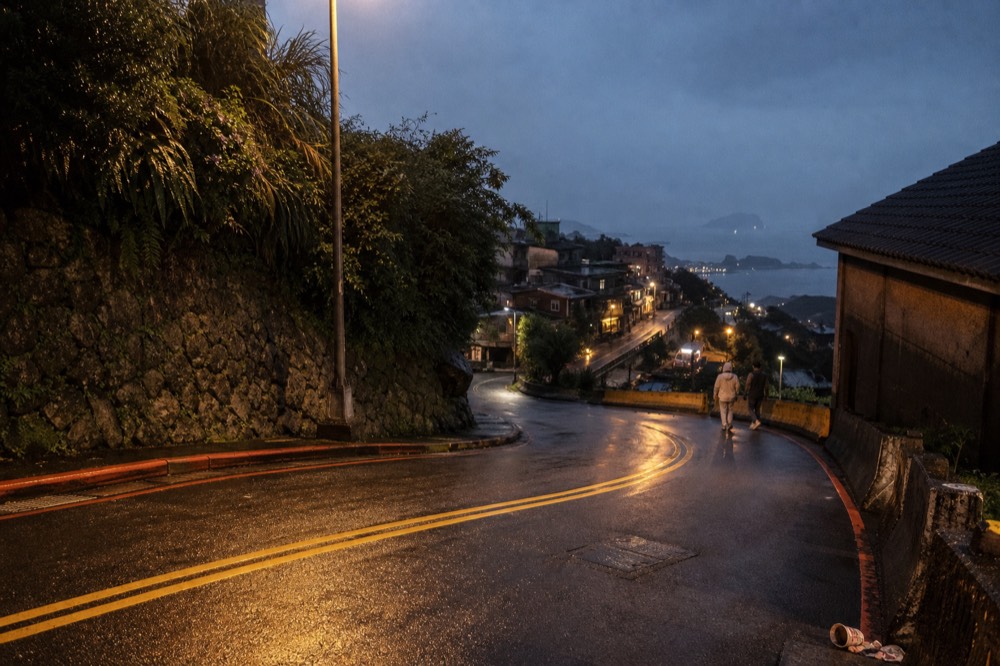
The notice itself, 新北府交規字第1132450546號, dated 10 December 2024 and in force from 1 January 2025, unified the hours: coaches had previously been controlled 08:00 to 19:00 and cars 08:00 to 20:00, and both are now 08:00 to 20:00. Coaches that miss out on a slot drop passengers at New No. 9 car park, free if the vehicle leaves within 20 minutes, or at Shuinandong, and passengers transfer to a Keelung Bus shuttle. The stretch from Jiufen Police Station to the Quanjitang car park at Jinguashi is officially designated a dangerous, accident-prone section where two vehicles cannot easily pass, which is why large coaches are barred from it except shuttles and scheduled services. You can read the signed notice itself as a PDF.
| Control fact | Detail |
|---|---|
| Hours | 08:00 to 20:00, weekends, national holidays, Labour Day, make-up working days |
| Coach slots | Morning and afternoon, roughly 20 coaches approved per slot |
| Long weekends | Coach applications refused entirely on holidays of 3 or more consecutive days |
| Control points | 3 A-grade, 6 double-A grade |
| What it restricts | Coaches, not private cars, never pedestrians |
| Evening effect | After 20:00 the rationing pauses until the next holiday morning |
Read as an evening-planning document, the notice is quietly generous. It tells you exactly when the crowd machinery stops, and therefore exactly when the town you came to photograph begins. An arrival after the window closes, or on a plain weekday when the window never opens at all, is the closest thing Jiufen has to a cheat code.
What Does Jiufen At Night Actually Look And Feel Like?
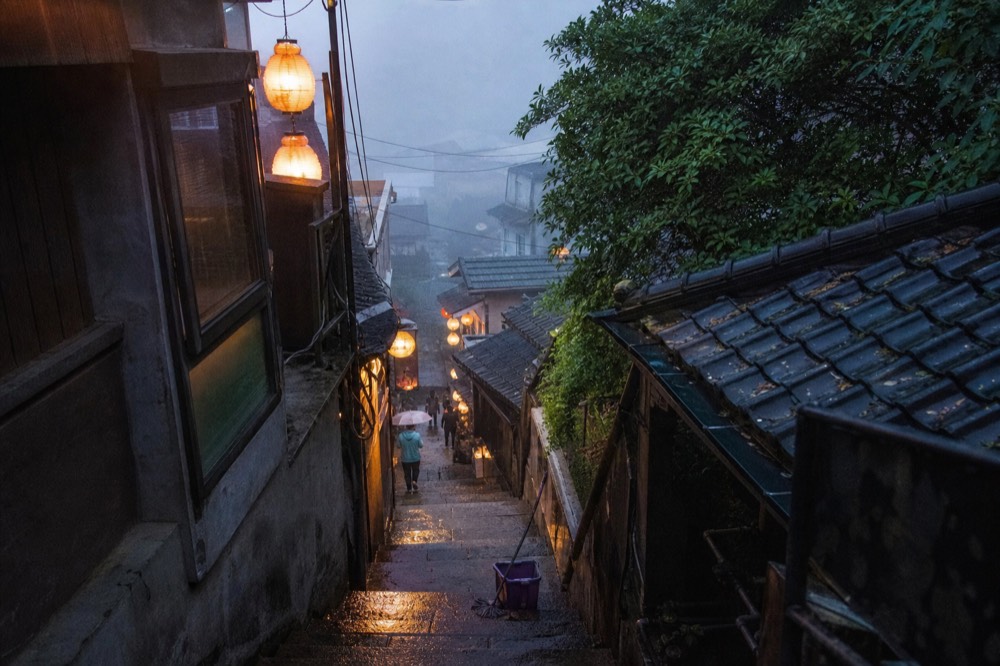
It looks like the postcard, but lived in: red lanterns strung over wet stone, teahouse windows glowing above the rooflines, mist coming off the hillside, and a street you can walk at your own pace because the through-traffic of the day is gone, all of it anchored by A-Mei Tea House, the one teahouse whose hours and prices are actually verified, open 09:00 to 21:30 seven days. The visual is real, and it is worth saying plainly that the resemblance people photograph here is worth seeing in its own right.
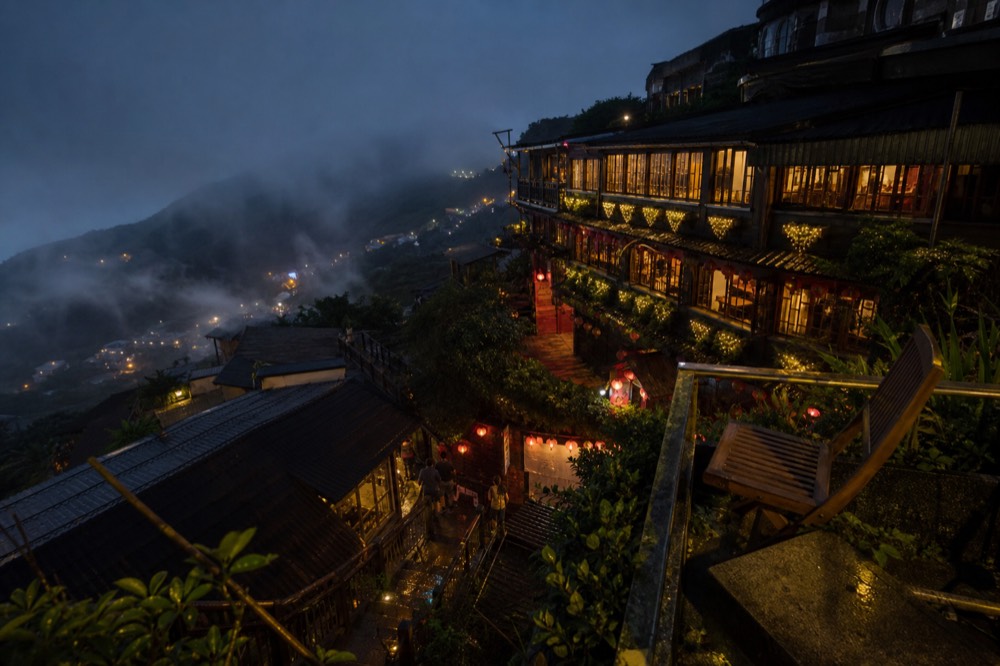
A word on the film association, because it follows the lanterns everywhere. Studio Ghibli producer Toshio Suzuki, interviewed by Taiwanese media in Tokyo on 19 September 2023, denied the connection outright: "That's not true. Neither I nor Miyazaki has ever been to Jiufen." He said the moment of resemblance Miyazaki actually recalled came from an alley in Seoul, and added that the rumour does not trouble him because it means people care about the work. Three outlets, ETtoday, Mirror Media and FTNN, carried the denial, and FTNN framed it as ending a 22-year misunderstanding. The honest position, and the one this site holds, is that the resemblance you see at night is real and worth seeing; only the causal claim is false. Our longer treatment lives at the Spirited Away question page.
For the evening itself, the teahouses are the point. At A-Mei, the arithmetic is on the venue's own menu: a tea water fee of NT$100 per person, plus the cheapest pot of leaves at NT$500, means two people sharing that pot pay NT$700 before any food. Set meals run NT$300 to NT$350 and are served 10:30 to 13:30 only, so an evening visit is tea and snacks rather than dinner, and parties of six or more must order two portions of leaves. The teahouse's own site carries the current menu, and no other teahouse in Jiufen has prices verified enough to print.
| Evening element | What is verified |
|---|---|
| Lantern light | Comes on following sunset, no published switch-on time |
| A-Mei Tea House | Open 09:00 to 21:30, seven days |
| Two-person tea floor at A-Mei | NT$100 + NT$100 + NT$500 = NT$700 before food |
| Street calm | Visitors report the street thins after about 19:00 |
| Shop hours | Not officially published anywhere, teahouses run later than stalls |
What the evening does not give you is the full snack-street lineup. The stalls that make Jiufen Old Street famous by day mostly close before the teahouses do, and no official hours exist for any of them, so an evening visit trades taro balls and crowd energy for lanterns, tea and quiet. Some visitors love that trade. Others arrive at 15:00, eat their way up the street, and let the lanterns be the dessert. Both are correct plans.
Which Evening Tour Should You Pick?
Pick by what you are willing to give up: the evening-view coach tour from $39 per person is the cheap, proven entry, the A-Mei teahouse and Keelung night-market tour from $58.90 is the food-and-sunset route that skips Shifen entirely, the guided gold-rush night walk from $85 is the deep local story, and the private Yehliu-and-Jiufen-by-night tour from $105 is the flexible one with a car and driver to yourself. Four products, four genuinely different evenings, and the numbers behind each are worth a closer look.
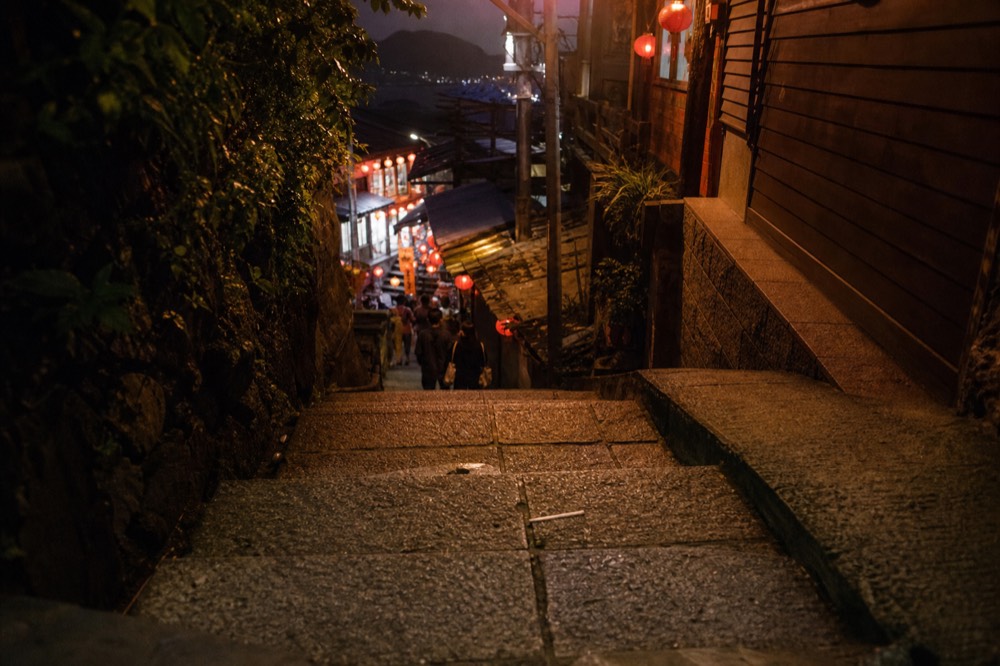
The evening-view tour is the volume product of the four, and the numbers say so: 1,147 reviews at 4.6 is a listing with real throughput, from $39 per person, seven hours, hotel pickup, and free cancellation confirmed. Its stops are Shifen Waterfall, Shifen Old Street and Jiufen Old Street, in that order, so the day is built to land you in Jiufen as the light goes. One caution that applies to every product on this site: read the itinerary, not the title, because titles outrun itineraries on a couple of listings and the stops list is the verified truth.
The teahouse-and-night-market tour suits a different appetite. It runs 7h30, rated 4.7 across 866 reviews, from $58.90 per person at today's sale price, and its stops are Jiufen Old Street, Heping Island and Keelung Miaokou Night Market, with an optional A-Mei Teahouse tea set. It is widely indexed as a Yehliu-Shifen-Jiufen tour, and that indexing is wrong: it reaches neither Yehliu nor Shifen. What it gives you instead is sunset at Heping Island and a night market in Keelung to finish, which is a food-forward evening rather than a lantern-forward one.
The guided night walk, from $85, is the smallest-volume listing of the four, too few reviews for a star claim, and it is a walking tour about the mining town rather than a coach circuit: Golden Waterfall, Jinguashi Gold Ecological Park, the Gold Mine Museum, the Baoshishan lookout, Jiufen Old Street and the Thirteen-Level Ruins. The private half-day by night, from $105, also carries too few reviews for a star claim, and covers Yehliu Geopark, the Thirteen-Level Ruins, Golden Waterfall and Jiufen Old Street in six hours with hotel pickup. Both confirm free cancellation.
| Product | From (per person) | Reviews | Evening shape | Free cancellation |
|---|---|---|---|---|
| Jiufen View and Shifen Day Tour | $39 | 4.6 across 1,147 | Shifen first, Jiufen as light goes, coach | Confirmed |
| A-Mei Teahouse, Heping Sunset, Keelung Night Market | $58.90 | 4.7 across 866 | Teahouse, island sunset, night market, no Shifen | Not stated |
| Old Gold Rush Town guided night tour | $85 | Too few for a star claim | Guided walking tour of the mining town | Confirmed |
| Private Yehliu Geopark and Jiufen by Night | $105 | Too few for a star claim | Private half-day, Yehliu plus Jiufen, car and driver | Confirmed |
A decision shortcut: if this is your only night in the region and you want the classic lantern street, take the evening-view tour. If you have already seen Jiufen by day, or you are eating your way through Taiwan, take the teahouse and night-market route. If you care about why the town exists at all, take the walk.
What About Weather, Winter Dusk And The Best Season For A Night Visit?
The best months for a dry Jiufen evening are July and August, at 119.5 mm and 211.4 mm of rain respectively on the Keelung normals, and the worst are November, September, October, December, February and January, all above 320 mm, with November the wettest at 396.9 mm, and all of these numbers are Keelung station figures, the nearest manned station about 12 km away, because there is no weather station at Jiufen itself. That provenance matters: the pattern transfers to Jiufen, and the town likely gets more, but no honest page can put a rainfall number on Jiufen directly.
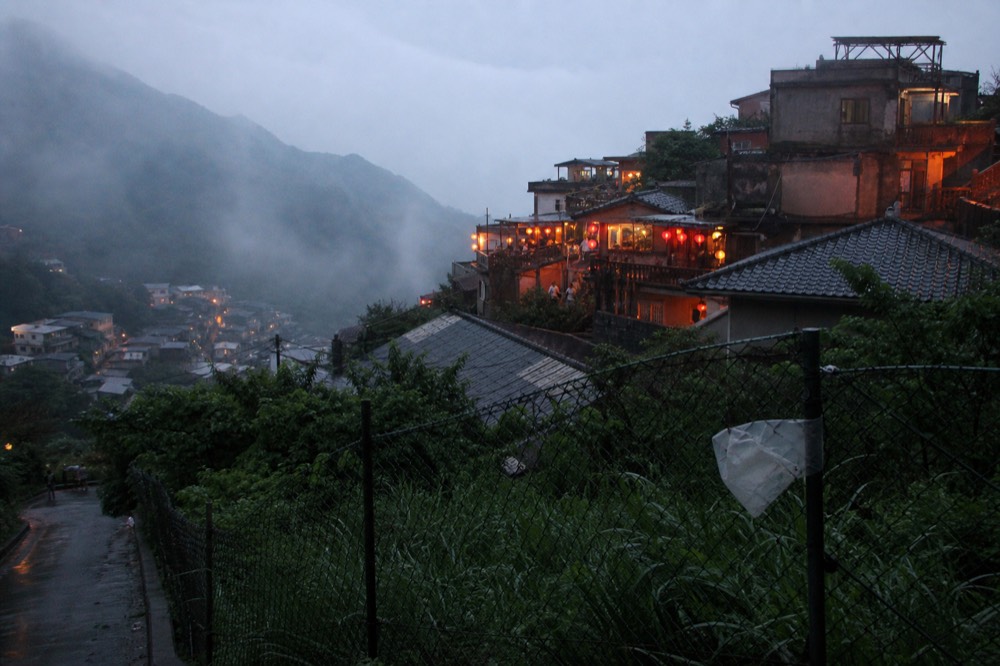
Winter is the season people underestimate. December's 48.5 sunshine hours for the entire month, about 1.6 hours a day, mean a winter evening visit starts in the dark and probably in drizzle, with 193.6 rain days a year across the calendar at this station, rain on more than half of all days. And yet winter is when the lanterns read best: wet stone reflects the red, the mist softens the rooflines, and the crowds are thinner because everyone else read the same forecast. If you go in winter, go early, dress for rain, and let the weather be the aesthetic rather than the enemy. The CWA's own climate normals page publishes the full series.
| Month | Rainfall (mm) | Rain days | Sunshine (hours) | Evening read |
|---|---|---|---|---|
| July | 119.5 | 8.5 | 229.2 | Driest, brightest, latest dusk |
| August | 211.4 | 11.6 | 208.2 | Second-driest, still bright |
| November | 396.9 | 18.6 | 65.3 | Wettest month, atmospheric |
| December | 356.6 | 19.5 | 48.5 | Earliest dark, thinnest crowds |
| January | 327.8 | 19.6 | 52.6 | Dark by early evening |
| February | 349.8 | 17.9 | 57.9 | Monsoon tail, lantern-friendly mist |
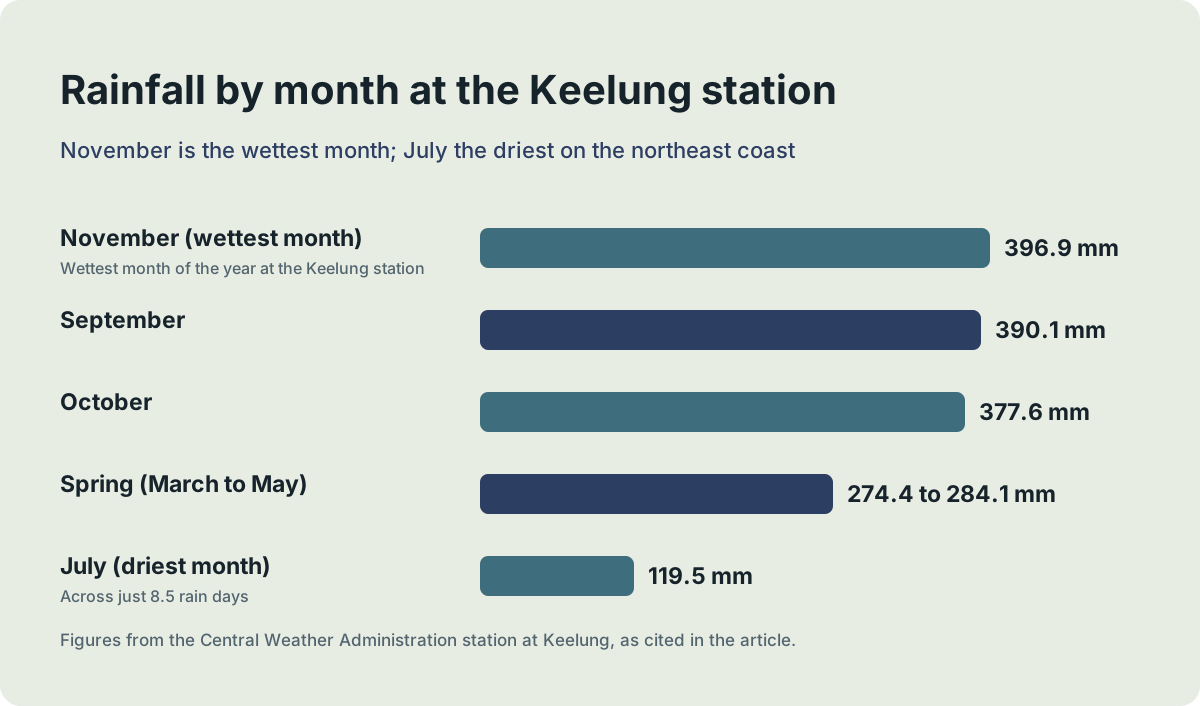
The seasonal choice also interacts with the tour question. A summer evening tour gives you a long, mostly dry evening but a very late return. A winter one gives you lanterns by early evening and a reasonable bedtime, at the price of probable rain. Our full season treatment, including the rain-day arithmetic month by month, is at the best time to visit guide.
How Do You Get Down The Mountain After Dark?
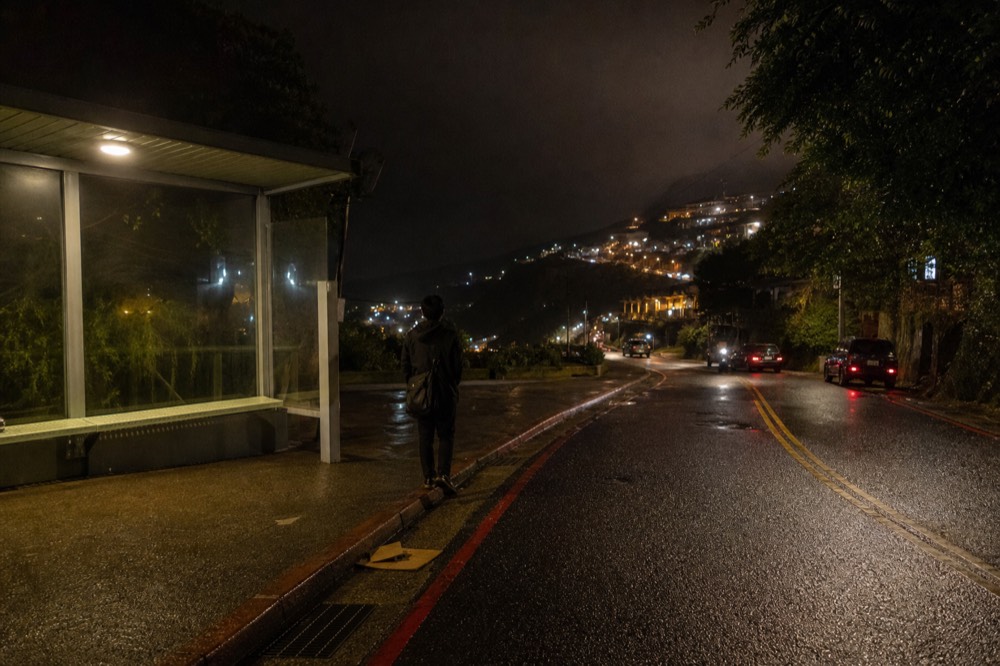
You get down the same three ways you came up, but the margins thin: the Pingxi branch line's last departure from Ruifang is 22:20, Keelung Bus route 788 runs until 22:30 seven days a week, and the Taipei to Ruifang rail corridor runs 45 to 47 direct trains a day, so an evening in Jiufen is entirely doable but the last buses and trains are real deadlines, not suggestions. Plan the downhill leg before you order the second pot of tea.
The train is the backbone. Taipei Main Station to Ruifang runs 45 to 47 direct services a day, 32 to 68 minutes with a median of 46, and the local train at NT$73 is the sensible default: the fastest express saves about 13 minutes over the median local and costs NT$41 more. From Ruifang, the branch to Shifen is a flat NT$29, 27 to 32 minutes, on 17 trains a day, and the schedule is identical on a Saturday as on a Monday, with gaps of 1h39m after 16:54 and 1h44m after 19:22 worth knowing about if your evening plan includes Shifen. There is no direct train from Taipei to Shifen at all; you change at Ruifang, and most English pages imply otherwise.
The bus is the evening's quiet workhorse. Route 788 runs 05:00 to 22:30 seven days a week between Keelung and Shuinandong and reaches the Gold Museum stop, which makes it the long, reliable option for getting back toward rail. Route 827 is a trap in the evening: its last holiday departure is 11:10 in the morning, so on a weekend it is effectively a morning-only bus. Route 1062 exists and is registered, but its fare, frequency and journey time are not verified from any operator source, so check the live listing rather than any number a blog gives you.
| Way down | Last verified movement | Notes |
|---|---|---|
| Pingxi branch from Ruifang | 22:20 | 17 trains a day, NT$29 flat, same schedule weekends |
| Bus 788 toward Keelung | 22:30 | Runs seven days, reaches the Gold Museum stop |
| Bus 827 | Last holiday departure 11:10 | Morning-only on weekends, not a way home |
| Taipei to Ruifang rail | 45 to 47 direct trains a day | Local NT$73, median 46 minutes, sensible default |
The private option removes the deadline entirely. The half-day private evening tour, from $105 per person, includes hotel pickup and covers Yehliu Geopark, the Thirteen-Level Ruins, Golden Waterfall and Jiufen Old Street in six hours, with free cancellation confirmed and a car waiting when you are done. For a winter evening, when the last daylight vanishes early and the drizzle sets in, that is the version where nobody in your group is watching a watch.
If you would rather not watch the clock at all, staying overnight solves it completely, and the where to stay guide covers the overnight case, including the argument that a night in town is the only way to see both the evening lanterns and the morning street before anyone arrives. For the full transport picture, including the fare tables and the branch-line gaps, see the Taipei to Jiufen guide.
The short answers: the lanterns follow sunset with no published switch-on time, the evening is worth it because the control window ends at 20:00 and the coaches leave, day tours almost never stay for it, July is the driest month and November the wettest, the last bus down is 22:30 and the last branch train 22:20, and Studio Ghibli has denied the film connection on the record. The details behind each answer are below.
Common Questions About Jiufen At Night
What time do the lanterns come on in Jiufen?
There is no published switch-on time. The lanterns come on following sunset, at the shopkeepers' discretion, so in winter they are glowing by early evening and in summer much later. Plan to be on the street before sunset and you will not miss them.
Is Jiufen at night worth it?
For most visitors, yes: the holiday control window ends at 20:00, the coaches leave, and the street becomes the lantern-lit version people photograph. The trade is that snack stalls close earlier than teahouses, so it is a quieter, tea-forward evening rather than a full street market.
Do day tours stay for the Jiufen lanterns?
Almost none do. Of the 35 products on this site, only four are built around Jiufen after dark; the standard day circuit is timed to return to Taipei before the evening show. If the lanterns are the priority, book an evening product or stay overnight.
What is the best month for a Jiufen evening?
July is the driest month at the nearest weather station, 119.5 mm across 8.5 rain days, with August next. November is the wettest at 396.9 mm but gives the most atmospheric mist and lanterns. December has just 48.5 sunshine hours all month, so dusk arrives very early.
How do I get back to Taipei after dark?
By train via Ruifang, with 45 to 47 direct Taipei services a day and a local fare of NT$73, or by Keelung Bus 788, which runs until 22:30 seven days a week. The Pingxi branch's last departure from Ruifang is 22:20. A private evening tour with pickup removes the deadline entirely.
Is Jiufen at night connected to Spirited Away?
No, and Studio Ghibli has said so on the record: producer Toshio Suzuki told Taiwanese media on 19 September 2023 that neither he nor Miyazaki has ever been to Jiufen. The resemblance visitors see at night is real and worth seeing; only the claim that the film was modelled on Jiufen is false.