Jiufen And Spirited Away: The Ghibli Denial, And What Still Looks Like The Film
For more than two decades, English-language travel content repeated one claim about Jiufen: that this hillside town was the model for Spirited Away. In September 2023, Studio Ghibli's own producer denied it, on the record, to Taiwanese media, in Chinese. The resemblance you can see with your own eyes is real. The story behind it is not.
Short answer
No. Studio Ghibli producer Toshio Suzuki denied on 19 September 2023 that Jiufen inspired Spirited Away, telling three Taiwanese outlets: \"That's not true. Neither I nor Miyazaki has ever been to Jiufen.\" He said the alley Miyazaki reacted to was in Seoul. The visual resemblance is real; the causal claim is false.
For more than twenty years, one sentence did more to put Jiufen on the English-speaking travel map than any tourism campaign: that this former gold mining town on Taiwan's northeast coast was the real-life model for the bathhouse in Studio Ghibli's Spirited Away. It appears in listicles, in teahouse marketing, in blog posts by the thousand. It is repeated with total confidence and, until recently, almost never questioned.
On 19 September 2023, it was questioned, by the one person whose answer settles the matter. Studio Ghibli producer Toshio Suzuki, in Tokyo for the Taiwanese promotion of The Boy and the Heron, was asked about the Jiufen claim directly. He denied it flatly, in Chinese, to three separate Taiwanese outlets on the same day. FTNN's headline framed the moment as the end of a 22-year misunderstanding.
This page carries that denial in full, then makes the turn that most coverage skips: the resemblance a visitor actually sees in Jiufen, the red lanterns, the steep lanes, the teahouses stacked up the hillside, is real and worth travelling for. Only the causal claim is false. Understanding both halves is the difference between a well-informed visit and a disappointed one, and it is the reason this page exists. For the broader picture of the town, start with our guide to Jiufen Old Street.
Did Studio Ghibli Deny That Jiufen Inspired Spirited Away?
Yes, on the record and by name. On 19 September 2023, Studio Ghibli producer Toshio Suzuki told Taiwanese media that the claim Jiufen inspired Spirited Away is not true, and that neither he nor Hayao Miyazaki has ever been to Jiufen. Three outlets, ETtoday, Mirror Media and FTNN, published the same quotes the same day, and FTNN framed the moment as ending a 22-year misunderstanding.
The setting matters as much as the quote. Suzuki was in Tokyo being interviewed by Taiwanese journalists during the promotional run for The Boy and the Heron. The question about Jiufen came to him directly, and his answer was immediate and unqualified. As ETtoday published it, he said 「這不是真的,我跟宮﨑駿都沒有去過(九份)」, which translates as: "That's not true. Neither I nor Miyazaki has ever been to Jiufen." The report is on the record at ETtoday's entertainment desk, published 19 September 2023.
Two other outlets ran the same quotes within a day. Mirror Media's report, 「【鈴木敏夫專訪4】親破萬年老哏」, carries the same denial in its own interview series, and FTNN's piece the following morning put the number on it: 誤會22年, a 22-year misunderstanding, counting from the film's 2001 release. You can read the Mirror Media interview and the FTNN report in full; both are in Chinese, and both attribute the quote to Suzuki by name.
| Outlet | Date | What it adds |
|---|---|---|
| ETtoday 星光雲 | 19 September 2023 | The direct denial quote, in Chinese, plus Suzuki's account of the Seoul alley |
| Mirror Media 鏡週刊 | 19 September 2023 | The same denial in its own interview series, and Dōgo Onsen Honkan named as a real reference location |
| FTNN 新聞網 | 20 September 2023 | The "22-year misunderstanding" framing, counting from the 2001 release |
Three independent outlets, one day, one named source, one unambiguous answer. This is as settled as a contested pop-culture claim gets. What it does not settle, and what no honest page should paper over, is why the association formed in the first place and why it persists. That is the more interesting half of the story.
What Did Toshio Suzuki Actually Say About Jiufen?
Suzuki said three things: that the Jiufen claim is not true, that neither he nor Miyazaki has ever been to Jiufen, and that the moment of resemblance Miyazaki actually experienced came from an alley in Seoul, where the two turned off a big road on a walk in Korea. He also said the rumour does not trouble him, because it means people care about the work.
The Seoul detail is the part worth slowing down on, because it replaces a false story with a true one. As ETtoday quoted Suzuki: 「這樣講可能對台灣來的朋友感到很抱歉,但其實我跟宮﨑駿有一次去韓國首爾,我們在街頭散步時,從大條馬路轉到小巷弄時,宮崎駿那時候就嚇了一跳,這裡有《神隱少女》的世界。」 In English: it may be a bit sorry to say to our friends in Taiwan, but Miyazaki and I once went to Seoul, and while walking we turned off a big road into a small alley, and Miyazaki was startled: the world of Spirited Away was here.
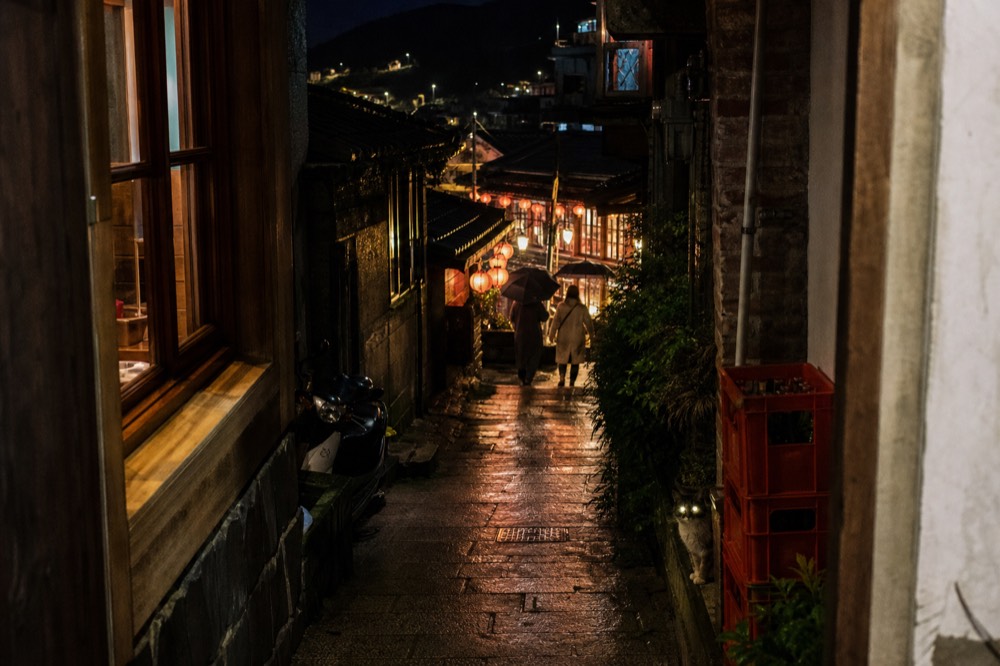
So the sensory moment people attribute to Jiufen, the surprise of stepping off a wide modern street into a narrow, lamp-lit, vertical world, happened, according to the producer who was there. It happened in Seoul. That is the verified account, and it is the only verified account of where any such reaction occurred.
Suzuki's third remark is the most generous one, and it deserves to travel as far as the rumour did. 「但我完全不會覺得困擾喔,代表大家對這個作品很關心,我們覺得很開心!」 "It doesn't trouble me at all. It means people care about the work, and that makes us happy." He was not scolding anyone. He was correcting the record gently, and a town that has benefited from the association for two decades can receive that correction gracefully.
One more piece of context comes from Mirror Media's report: it names Dōgo Onsen Honkan, the historic bathhouse in Matsuyama on the island of Shikoku, as a real reference location for the film. Note the careful wording. What is verified is that Mirror Media reported Dōgo Onsen as a reference location. Saying Ghibli "confirmed" it would sharpen the report into something it does not claim, and this site does not do that.
If you want to see what all this fuss is about with your own eyes, these three products cover the ground well.
Why Does Jiufen Still Look Like The Film?
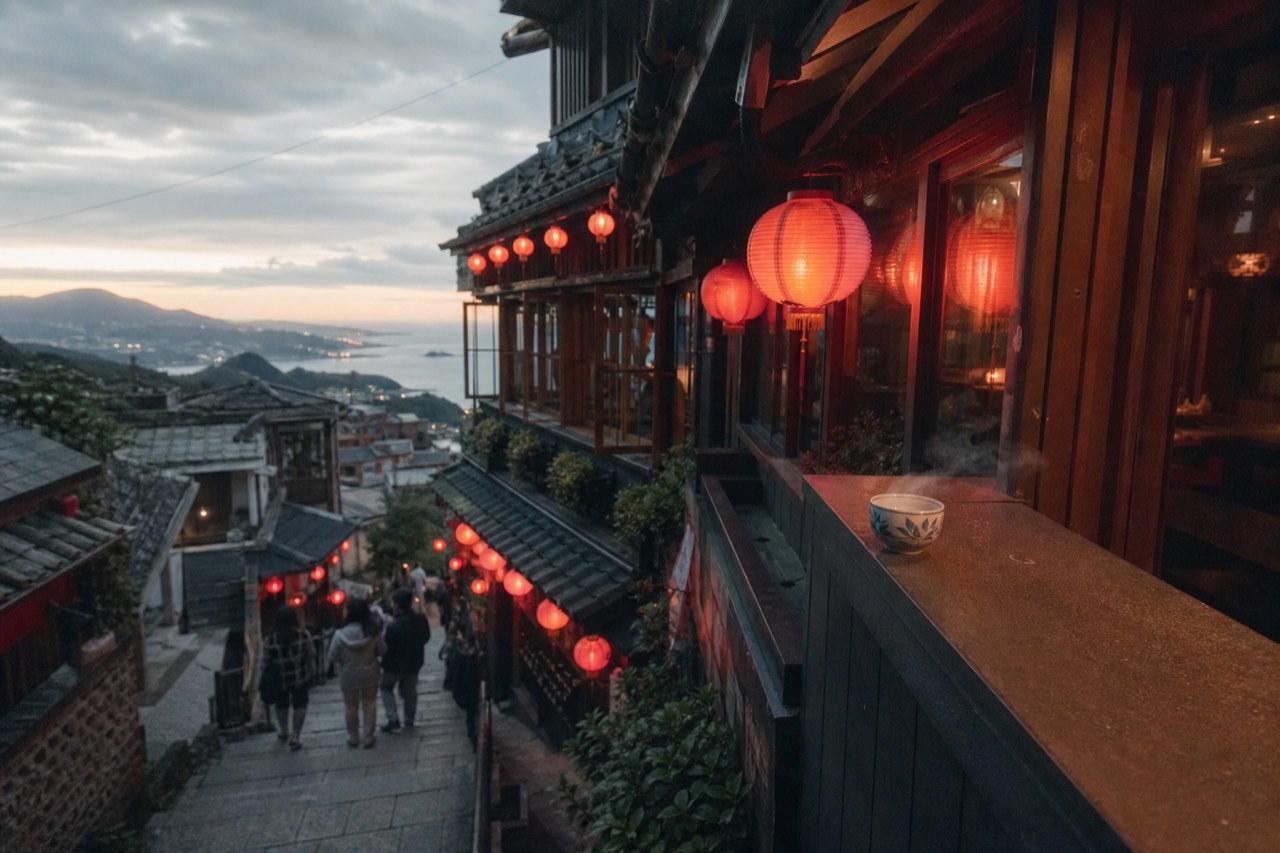
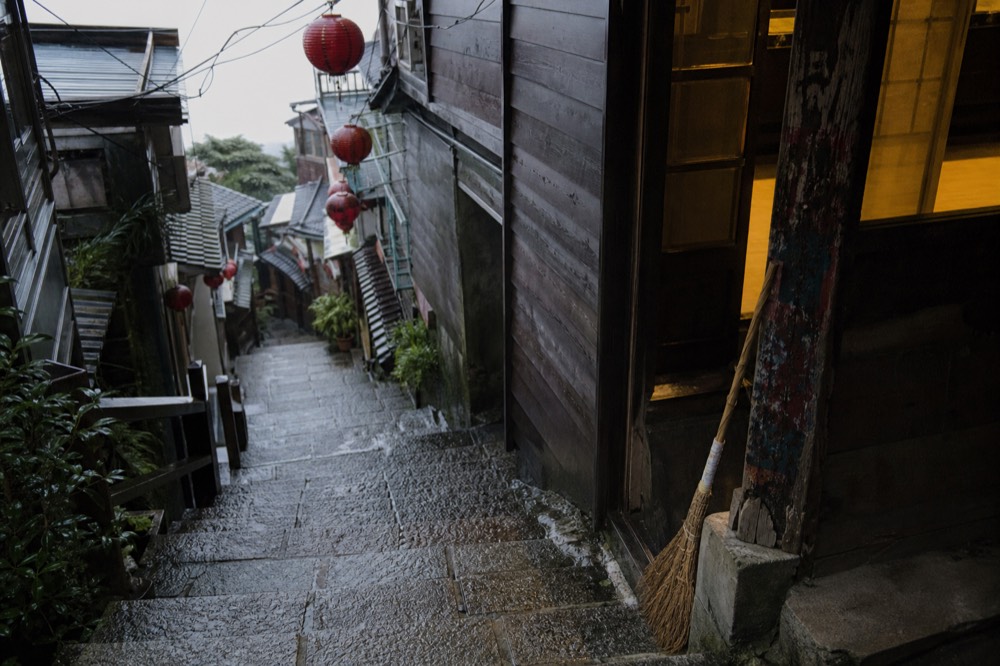
Because the resemblance is genuine, even though the inspiration is not. Jiufen is a steep hillside town of dark wooden buildings, red lanterns, covered stair-lanes and teahouses stacked above the sea, and those features genuinely echo the film's vertical, lantern-lit world. A visitor who stands on Shuqi Road at dusk is not imagining the similarity. The only false part is the claim that Ghibli came here and drew it.
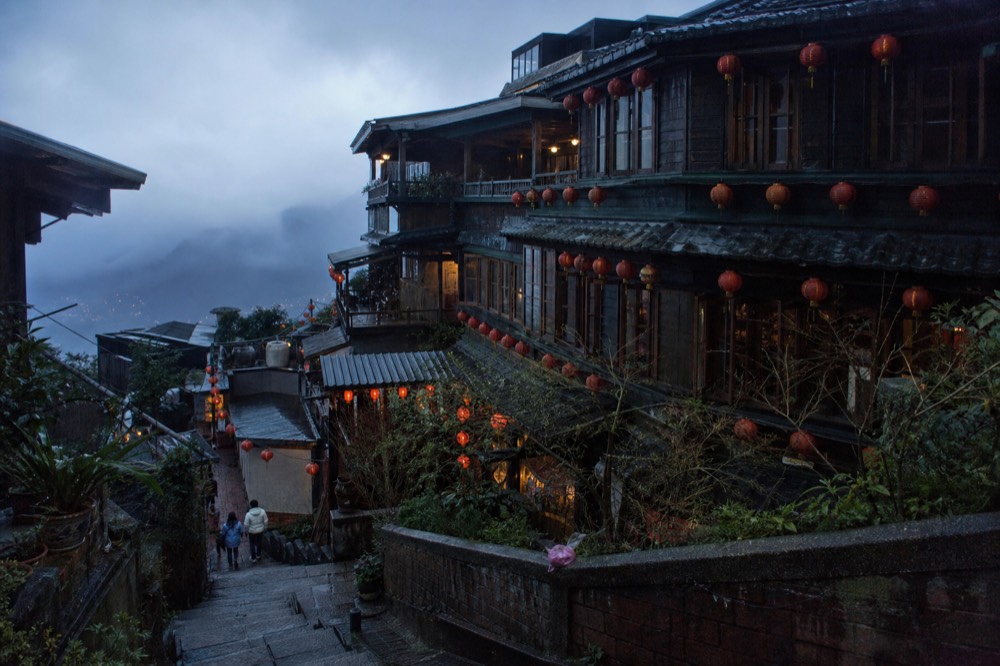
This is the distinction the whole subject turns on, and it is worth stating cleanly. There are two separate claims hiding in the sentence "Jiufen is the real Spirited Away":
- Jiufen looks like the world of the film. True, and visible to anyone.
- Ghibli based the film on Jiufen, or Miyazaki visited and sketched it. False, denied on the record by the producer who would know.
English travel content has treated claim 1 as proof of claim 2 for two decades. It is not proof of anything except that a Japanese animator and a Taiwanese mining town reached for the same visual vocabulary: lantern light, wood, stone steps, water and steam, buildings clinging to a slope. That vocabulary is shared across East Asia, which is exactly why an alley in Seoul produced the same reaction.
There is also a marketing layer that an honest page has to name. The association sells. It fills teahouses, it sells postcards, it puts Jiufen on "real-life anime locations" lists that circulate endlessly. A commercial incentive this strong does not need a conspiracy to explain the rumour's persistence; it only needs nobody to check. Nobody checked for 22 years, and then a journalist asked the right person one question.
The useful posture for a visitor is to arrive knowing both halves. You are not visiting "the town from Spirited Away", because there is no town from Spirited Away. You are visiting a remarkably photogenic gold rush town whose look happens to rhyme with a film you love, and whose own story, gold, decline, film-led revival, is better than the borrowed one. Our things to do in Jiufen guide covers that real story in detail.
Which Teahouse Is The Spirited Away Teahouse?
None of them. No teahouse in Jiufen can honestly be called the Spirited Away teahouse, because the film's producer has denied the connection and no teahouse has any documented link to the production. A-Mei Tea House markets on the association, and marketing is not provenance. Visit teahouses for tea, food and the view, not for a film connection that does not exist.
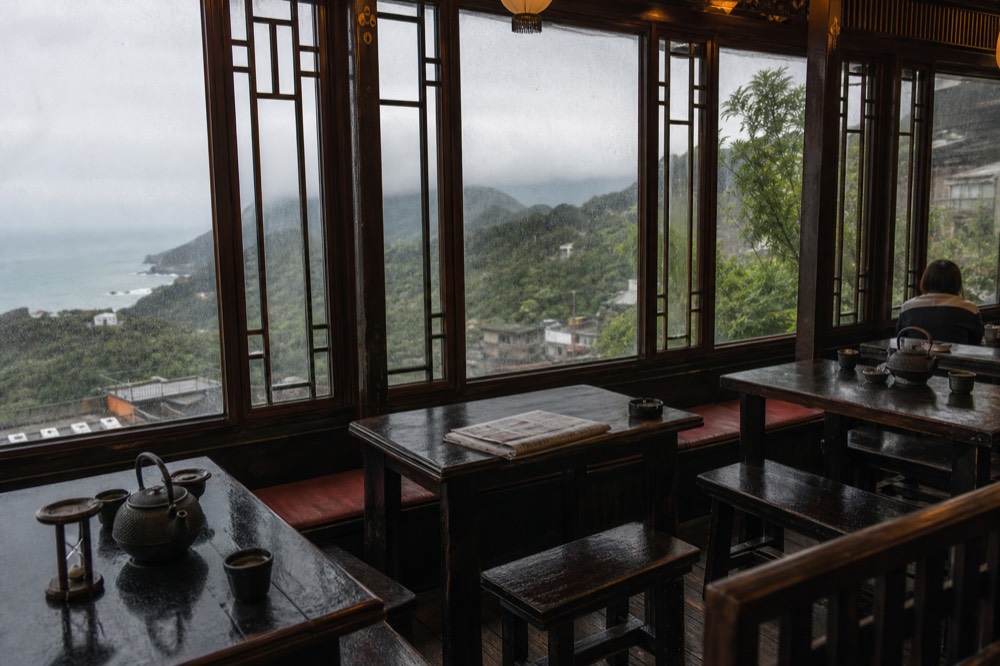
This is the sharpest edge of the whole subject, because the teahouse claim is where a harmless resemblance turns into a commercial assertion. A-Mei Tea House, the most photographed building in Jiufen, appears in thousands of posts as "the Spirited Away teahouse" or "the teahouse that inspired the bathhouse". Both phrasings are false, and the second is impossible: Miyazaki has never been to Jiufen, so no Jiufen teahouse inspired anything in his film.
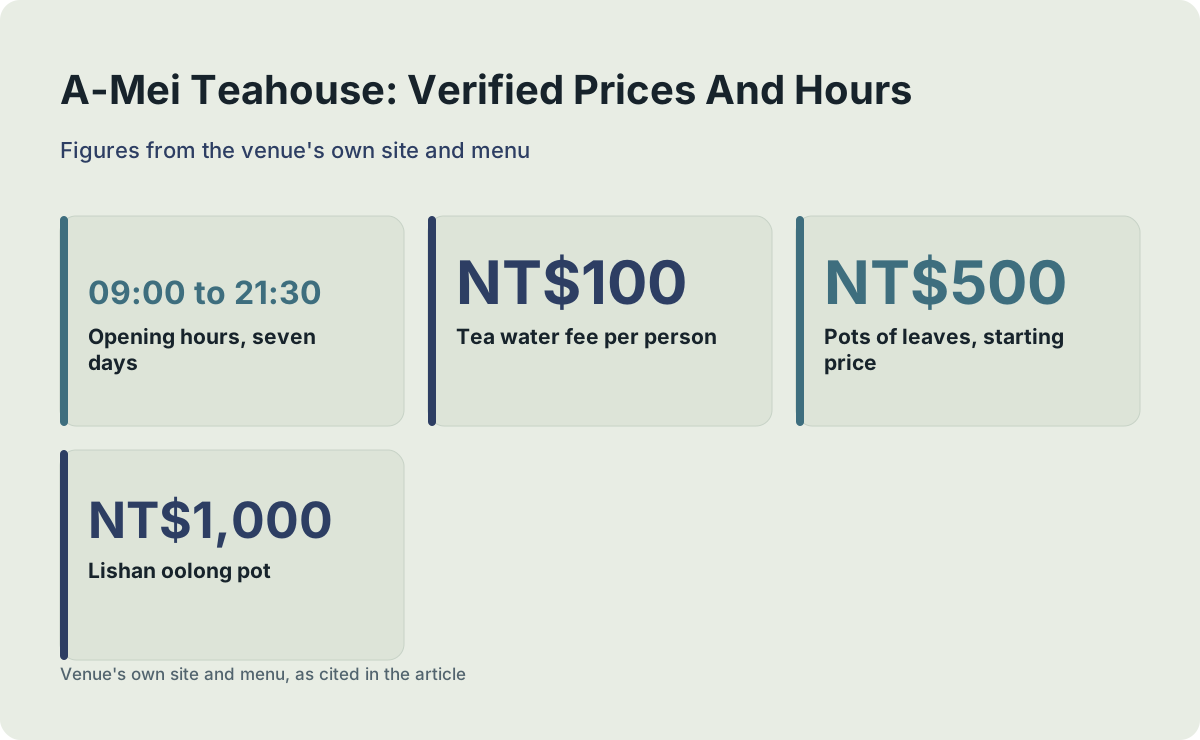
What A-Mei legitimately offers is a beautiful old building, a terrace view down to the coast, and tea service at verified prices. Those are worth having on their own terms. From the venue's own site and menu: open 09:00 to 21:30 seven days, a tea water fee of NT$100 per person before anything else, and pots of leaves from NT$500 (Tsui Yu jade oolong or aged puer) up to NT$1,000 for Lishan oolong. The honest arithmetic most blogs omit: two people sharing the cheapest pot pay NT$100 + NT$100 + NT$500 = NT$700 before any food. The full menu is on the venue's own site.
| Claim about Jiufen | Status | What to say instead |
|---|---|---|
| Jiufen inspired / modelled / was the setting of the film | False, denied on the record | Ghibli's producer denied it on 19 September 2023 |
| Miyazaki visited Jiufen or Taiwan for the film | False, denied on the record | Suzuki: neither he nor Miyazaki has ever been to Jiufen |
| Any teahouse is "the Spirited Away teahouse" | Unsupported marketing | Visit for tea, terrace views and architecture |
| The town looks like the film's world | True, and visible | The resemblance is real; only the causal claim is false |
| The resemblance Miyazaki described came from Jiufen | False | Suzuki located the moment in an alley in Seoul |
If a teahouse evening is what you are after, several Jiufen teahouses can be booked as vouchers and experiences rather than walked into cold. The Jioufen Teahouse voucher, note the older romanisation of the town's name in the listing, includes food or refreshments and is redeemed in Jiufen itself.
For the wider teahouse landscape, including which prices are verified and which are not, see our Jiufen tea houses guide. The short version: A-Mei is the only teahouse in town whose prices and hours this site has verified from its own materials, so it is the only one whose numbers appear on our pages.
Where Does The "Jiufen Is Spirited Away" Story Come From?
No verified origin exists. What is documented is only this: the film was released in 2001, the claim spread through English travel content and local marketing in the years after, and Taiwanese media called the eventual correction a 22-year misunderstanding. Where the rumour first appeared, who first printed it and which campaign amplified it are not established, and this site does not guess.
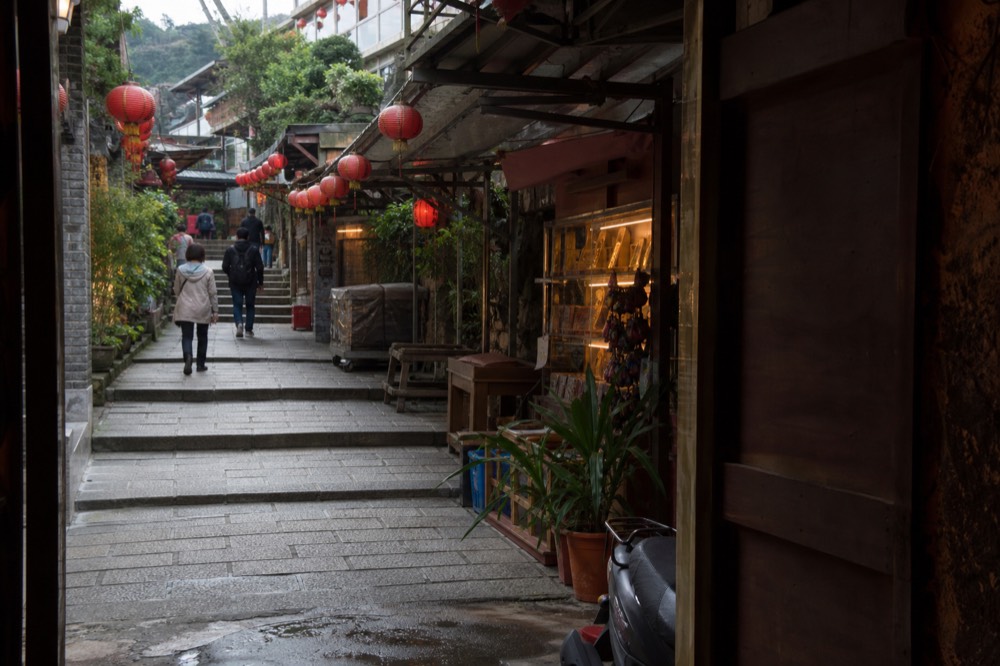
It is tempting to manufacture a patient zero: a tourism board campaign, a magazine feature, a postcard stand. Nothing in the verified record supports any specific origin, and an invented origin story would be exactly the same category of error as the claim being corrected: a plausible narrative printed as fact. The honest answer is that the association grew the way most internet folklore grows, through repetition without checking, and that it grew in both directions, with international visitors arriving already primed and local businesses responding to what the visitors expected.
There is one adjacent story that is documented, and it is often confused with the Ghibli one. Hou Hsiao-hsien's A City of Sadness (1989) is widely credited with reviving Jiufen's fortunes after the mining economy collapsed, and that credit, unlike the Ghibli claim, points in the right direction: a real film, really shot in Taiwan, whose success coincided with the town's rediscovery. Even here the ceiling is "widely credited with", because the revival is inferred rather than documented as causation. But it is a far better foundation for Jiufen's fame than a borrowed bathhouse.
The town's own history supplies the rest. In 1890 someone struck gold near Jiufen, the village drew prospectors from 4,000 families, and it was called little Shanghai, all three facts standing on the Taiwan Tourism Administration's own English page for Jiufen. Even the name has a better story than the famous one: the "nine families, nine portions" tale is officially described by New Taipei City as a legend, while the city's own Gold Museum and the national tourism body both give the camphor account, ninety stoves, ten stoves to a unit, nine units. A town with that much real history does not need a fictional one.
How Do You Visit Jiufen For The Spirited Away Feeling, Honestly?
Go in the late afternoon, stay past dusk, and walk the steep lanes as the lanterns come on. The visual effect people chase from the film, warm light, dark wood, vertical streets, crowds thinning, is genuinely there in the evening. Time your visit around sunset rather than a fixed hour, since no official source states when the lanterns are lit, and consider a weekday, when holiday traffic controls do not apply.
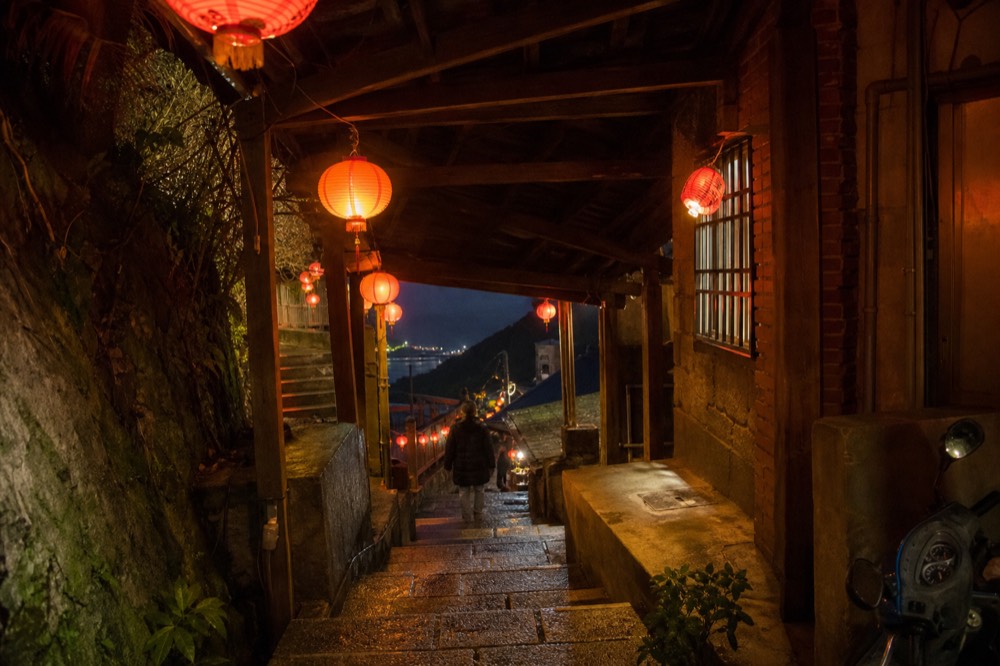
The practical craft of an evening visit matters more than the film question, because the experience lives or dies on timing. Visitors consistently report the street is calm before about 09:00 and after about 19:00, with the heaviest crowding from 10:00 to 17:00 on weekends and holidays, though these are reported patterns rather than official hours. One hard, official fact is better than all of it: under New Taipei City's holiday traffic control plan, in force since 1 January 2025, every weekend and national holiday between 08:00 and 20:00 makes Jiufen a managed-access destination, with coach access rationed to roughly 20 approved coaches per half-day slot and suspended entirely on holidays of three or more consecutive days. A weekday sidesteps the whole apparatus.
The lanes themselves are the attraction. Jishan Street, whose name means "the street that connects to the foot of Keelung Mountain", carries the shops and the crowds. Shuqi Road, "the road of many vertical steps", is the photogenic staircase. And Qingbian Road, the quiet parallel lane, is flat for a reason almost no English source explains: it is the surviving trackbed of a human-powered light railway laid in 1931, which is why one lane in this vertical town runs level while the others climb. That detail, from the city government's own 2016 place-name release, does more to explain Jiufen's layout than any film comparison.
For a first visit focused on the town itself rather than a multi-stop circuit, the Jiufen In-depth Half-Day Tour is the only roster product that goes to Jiufen and nowhere else, with morning and afternoon departures from Taipei Main Station.
The evening has its own dedicated options, and our Jiufen at night guide walks through them in full, including the night market question visitors always ask.
What Does A Guided Night Tour Of The Old Gold Rush Town Actually Cover?
A guided night walk, not a coach circuit: the roster's night tour runs about eight hours from Taipei and covers the Golden Waterfall, Jinguashi Gold Ecological Park, the Jiufen Gold Mine Museum, the Baoshishan scenic lookout, Jiufen Old Street and the Jinguashi Thirteen-Level Ruins, with hotel pickup and free cancellation confirmed. It is a smaller-volume listing, too new for a star rating, priced from $85 per person.
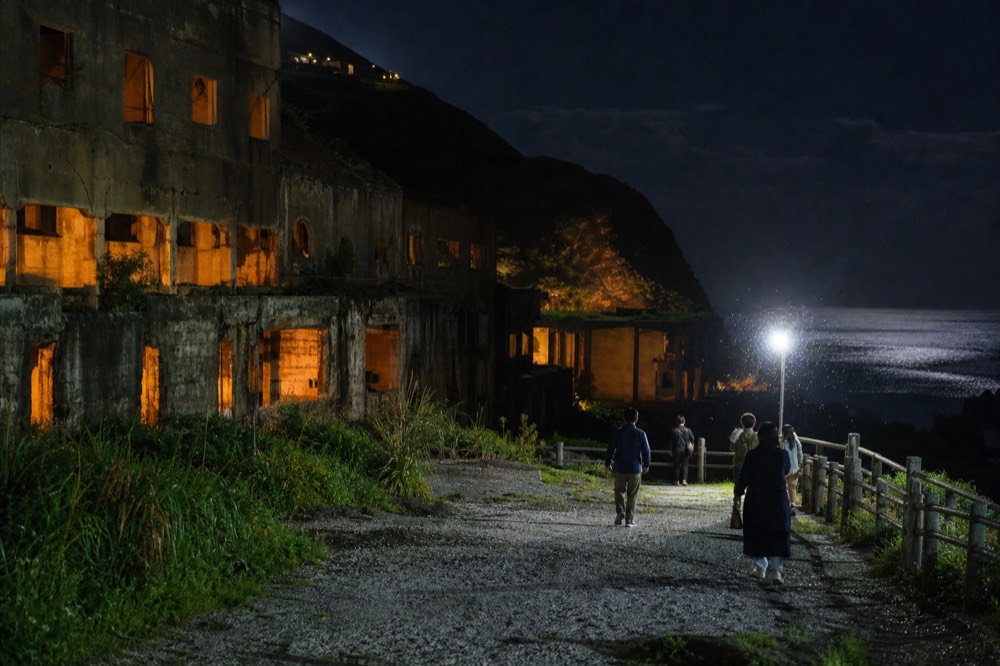
The distinction matters because most Jiufen products are coach day tours built around Old Street and a photo stop. This one is a walking tour about the mining town, and its stop list reads like the town's real history rather than its borrowed one: the Gold Mine Museum, the ruins of the smelting works at Jinguashi, the waterfall stained orange by iron from the old mine workings (visitors should not enter its water, and no geochemistry claims belong on this page), and a lookout over the coast after dark. For a visitor whose interest in Jiufen was sparked by a film, this is the tour that replaces the fictional story with the true one, on the ground, at the hour the town looks its best.
It is also, frankly, the honest answer to the question this page keeps circling. You cannot visit the bathhouse from Spirited Away, in Jiufen or anywhere else, because no single place is the bathhouse. You can visit a gold rush town that looks, at night, from certain lanes, uncannily like the world of that film, and you can learn what actually built it. The second visit is the better one.
One planning note if the Jinguashi stops appeal: the Gold Museum, admission NT$80, is closed the first Monday of every month, a rule routinely missing from English pages and worth checking against your travel dates before you commit.
Is Jiufen Still Worth Visiting Once You Know The Truth?
Yes, and arguably more so. The town's fame rests on a visual resemblance that survives the correction, plus a real history of gold, decline and revival that the film claim never needed to mention. Knowing the denial does not subtract anything from the lanes, the lanterns, the teahouses or the coastal view. It adds a true story to a place that was carrying a false one.
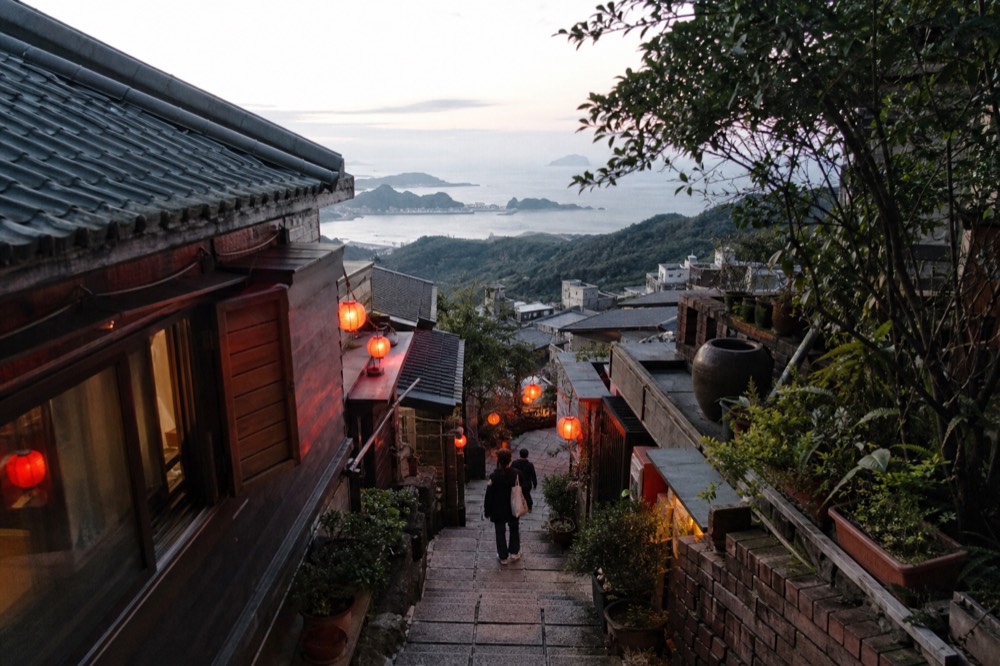
Consider what the visitor numbers say even in a world where the correction has travelled. The Ruifang scenic area that contains Jiufen Old Street recorded 3,769,615 visitors in January and February 2026 alone, third in New Taipei City, per Taiwan Tourism Administration statistics. People are not coming because of a footnote in a Ghibli interview most of them have never read, and they will not stop coming because of one. The draw is the town: the setting, the light, the food, the lanes that climb and the one that runs flat because it used to be a railway.
The correction also frees you to enjoy the resemblance without the disappointment. A visitor who arrives believing they are seeing "the real bathhouse" is set up to feel cheated by the souvenir stalls and the crowds, because the film is a film and the town is a town. A visitor who arrives knowing the truth can take the resemblance for what it is, a genuine visual rhyme, and take the town for what it is, which is more interesting.
| If you want... | The honest way to get it |
|---|---|
| The film's visual mood | Late afternoon into dusk on Shuqi Road and Jishan Street; lantern light follows sunset |
| The town's real story | The guided night walk through the mining sites, or the Gold Museum at Jinguashi |
| Tea with a view | A-Mei Tea House at verified prices, or a teahouse voucher redeemed in Jiufen |
| Fewer crowds | A weekday, or before 09:00 and after 19:00 on any day |
| The full picture in one read | The Jiufen Old Street guide on this site |
Whether you come for the rhyme or the history, Jiufen Tour exists to send you in with the facts straight: what is verified, what is denied, and what is simply beautiful.
If this page has settled the film question for you, these three products are the ones that best match what it describes: the night walk through the mining town, the teahouse voucher redeemed in Jiufen, and the half-day focused on the Old Street alone.
The short answers: Ghibli denied the connection on 19 September 2023, Miyazaki has never been to Jiufen, no teahouse is the Spirited Away teahouse, the visual resemblance is real, no verified origin for the rumour exists, and the town remains well worth visiting. Each question below unpacks one of those points with the sources behind it.
Common Questions About Jiufen And Spirited Away
Did Studio Ghibli deny that Jiufen inspired Spirited Away?
Yes. On 19 September 2023, producer Toshio Suzuki told ETtoday, Mirror Media and FTNN: "That's not true. Neither I nor Miyazaki has ever been to Jiufen." FTNN framed the correction as ending a 22-year misunderstanding.
Did Miyazaki ever visit Jiufen?
No, according to Suzuki's on-record denial: neither he nor Miyazaki has ever been to Jiufen. Suzuki said the alley that startled Miyazaki was in Seoul, on a walk the two took in Korea.
Which teahouse in Jiufen is the Spirited Away teahouse?
None. No teahouse in Jiufen has any documented link to the film, and A-Mei Tea House's use of the association is marketing, not provenance. Visit Jiufen's teahouses for tea, food and the view.
Does Jiufen still look like Spirited Away?
Yes, the resemblance is real: steep lanes, dark wooden buildings, red lanterns and teahouses stacked above the sea genuinely echo the film's world. Only the causal claim, that Ghibli based the film on Jiufen, is false.
Where did the Spirited Away rumour come from?
No verified origin exists. The film was released in 2001 and the claim spread through repetition in travel content and marketing; Taiwanese media called the 2023 correction the end of a 22-year misunderstanding. Any specific origin story would be a guess.
Is Jiufen worth visiting if it is not the real Spirited Away town?
Yes. The town's own history, the 1890 gold strike, the little Shanghai boom, the decline and the widely credited film-led revival after A City of Sadness, plus the lantern-lit lanes themselves, stands on its own. The correction removes a false story and leaves everything worth seeing in place.