Jiufen Photo Spots: Where To Point The Camera Without The Crowd
Jiufen photographs beautifully and it photographs badly at the wrong hour, because the crowds arrive on a schedule the city government actually publishes. This guide reads the control plan, the climate normals and the street layout so you know when the town empties, which lane stays quiet, and what the light does in each season.
Short answer
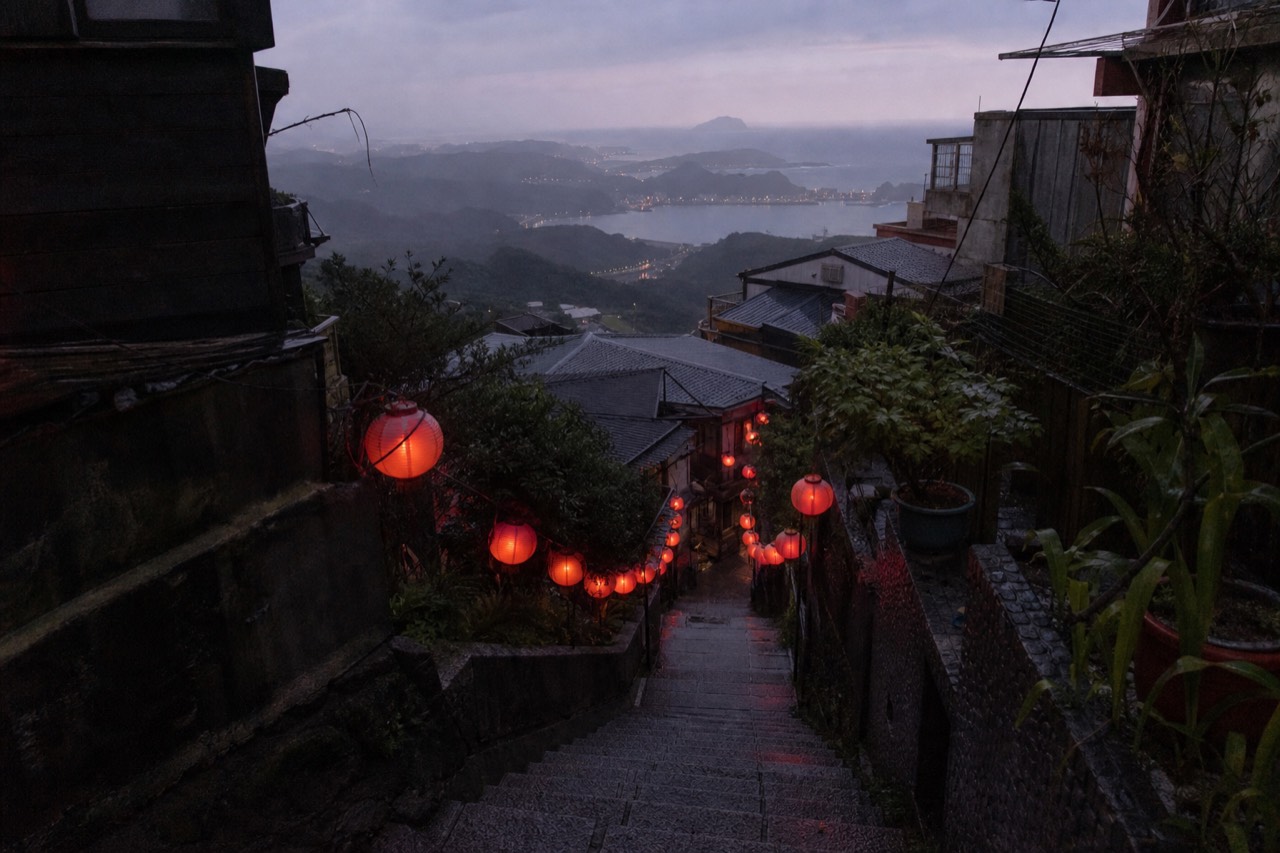
The quiet windows are before 09:00, after 19:00 and any weekday, because coach access is controlled 08:00 to 20:00 on weekends and holidays and rationed to about 20 coaches per half-day slot. Qingbian Road is the flat, empty lane, a documented 1931 railway trackbed. Lanterns follow sunset at no published hour, and December averages 1.6 sunshine hours a day.
Jiufen is one of the most photographed towns in Taiwan, and most of those photographs are taken in a four-hour window when the town is at its most crowded. The good news is that the crowd operates on a published schedule. New Taipei City's holiday traffic control plan, in force since 1 January 2025, controls access between 08:00 and 20:00 on every weekend, national holiday, Labour Day and make-up working day, and rations coach permits to roughly 20 approved coaches per half-day slot. That is not folklore or a guess from a travel forum. It is a signed government notice, and it tells a photographer exactly when the streets empty.
This guide works through the timing first, then the geography of the quiet lanes, then the light itself, including the honest winter warning that December delivers an average of 1.6 sunshine hours a day on this coast. It also covers the qipao rental experience, because that is what a large share of the people you will photograph, and photograph alongside, are wearing. No viewpoint here comes with a walking time and no staircase comes with a step count, because none of those figures has an official source. The hours, the lane names and the climate numbers all do. It is the same approach this site, Jiufen Tour, takes across every guide: verified figures, named sources, and no invented numbers.
When Is Jiufen Actually Empty Enough To Photograph?
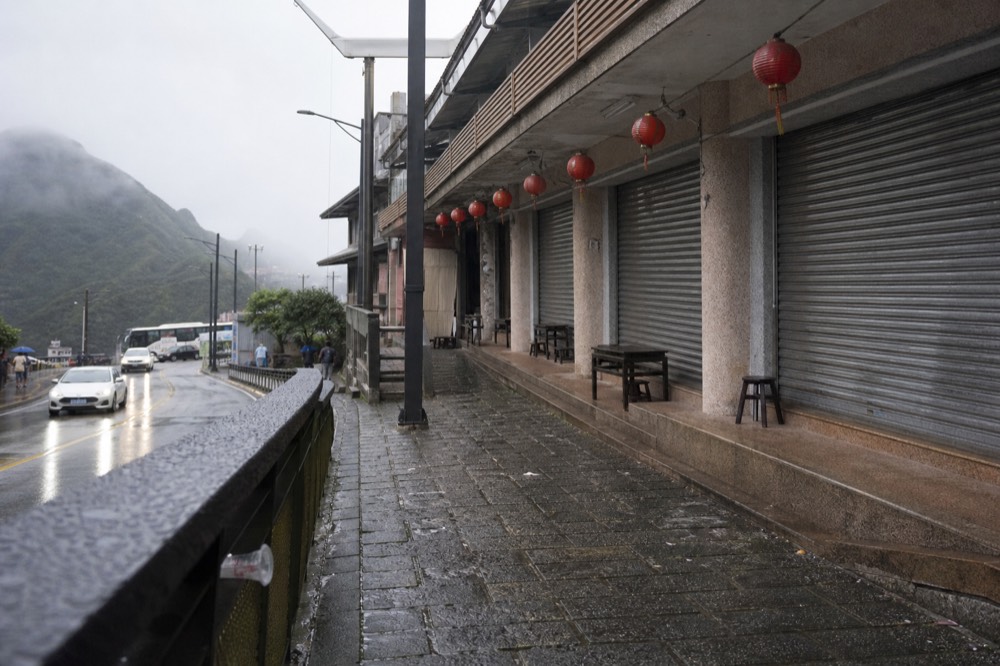
The quiet windows are before 09:00, after about 19:00, and any weekday outside holiday control hours. Coach access is controlled 08:00 to 20:00 on weekends and holidays, with roughly 20 coaches approved per morning slot and 20 per afternoon slot, and coach applications are refused entirely during holiday runs of three or more consecutive days. That makes early morning, evening and midweek the three genuinely uncrowded options.
The control plan is the single most useful document a Jiufen photographer can read, and almost no English-language guide carries it. Issued by New Taipei City Government on 10 December 2024 and in force from 1 January 2025, it amends the Ruifang, Jinguashi and Jiufen Area Holiday Traffic Control Plan. Its signed notice sets out three A-grade control points and six double-A control points, and it requires coaches to apply in advance to Ruifang Police Precinct. Coaches may not drive to Jiufen Old Street on their own at all.
Two consequences matter for photography. First, the plan restricts coaches, not private cars and never pedestrians, so the town is never closed, merely thinned. Second, because coach permits are switched off entirely on holidays of three or more consecutive days, a long weekend paradoxically has no tour-bus influx at all, only individual travellers. If you must shoot on a holiday, the first morning of a three-day run behaves differently from an ordinary Saturday.
| Day type | Control hours | Coach permits | What it means for photos |
|---|---|---|---|
| Ordinary weekday | None | No application needed | Quietest option, all day |
| Weekend or single holiday | 08:00 to 20:00 | About 20 coaches per half-day slot | Empty before 09:00 and after 19:00 |
| Holiday run of 3+ days | 08:00 to 20:00 | Refused entirely | No coach groups, but more independent visitors |
| Make-up working day | 08:00 to 20:00 | Same as weekend | Treated as a holiday, plan accordingly |
The pattern visitors report, and it is a pattern rather than an official schedule, is that the street is calm before about 09:00 and after about 19:00, with the heaviest crowding between 10:00 and 17:00 on weekends and holidays. Teahouses stay open later than the food stalls, which is why the evening town photographs differently from the afternoon one: fewer people, warmer light, more of the interior glow spilling onto the lanes.
Why Is Qingbian Road The Quiet Lane In Jiufen?
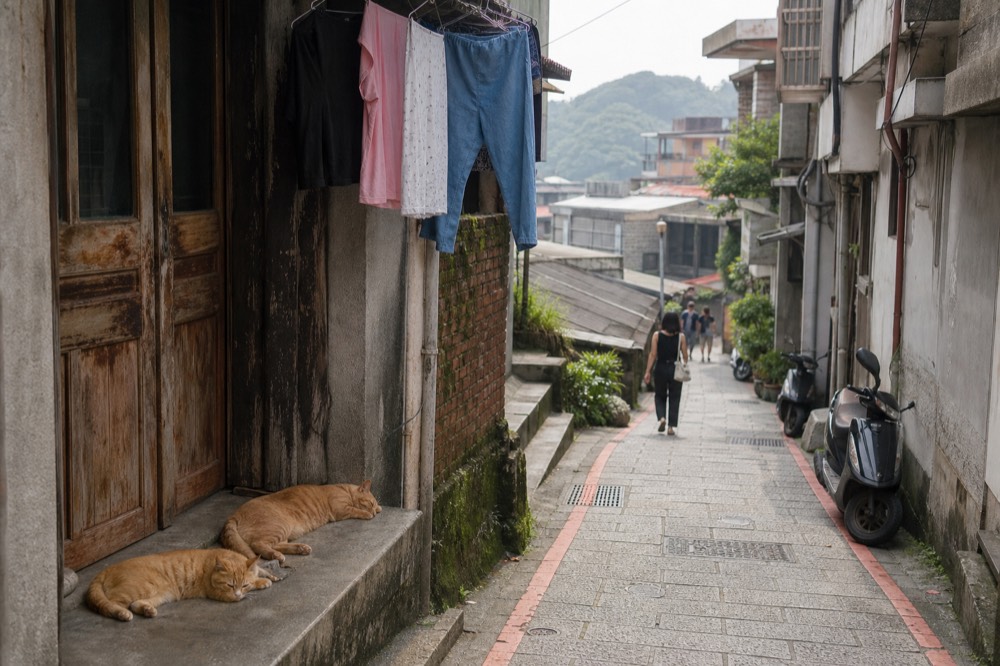
Qingbian Road is the flat, parallel lane behind Jishan Street, and it is quiet for a documented reason: it is the surviving trackbed of a human-powered light railway laid in 1931 by the Ruifang Light Railway Company. While Jishan Street became the shopping street and Shuqi Road became the staircase, Qingbian Road kept its level railway bed, and it still carries none of the stall traffic.
The New Taipei City Government's own 2016 place-name release, issued by the Gold Museum, records this directly. Qingbian Road, 輕便路, was the route of the light railway the Ruifang Light Railway Company, founded by Yan Guonian, built in 1931 to move people and supplies from Ruifang up to Jiufen and Jinguashi. The Jinguashi section survives only in fragments. The Jiufen section still has its original level roadbed, which is exactly why Qingbian Road is the flat lane in a town otherwise built on stairs.
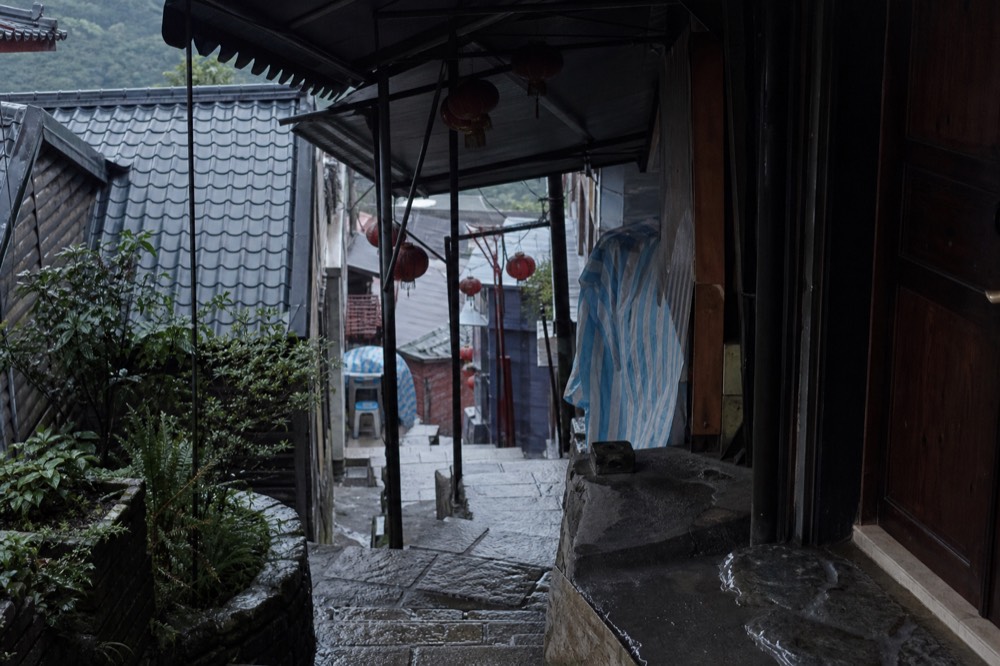
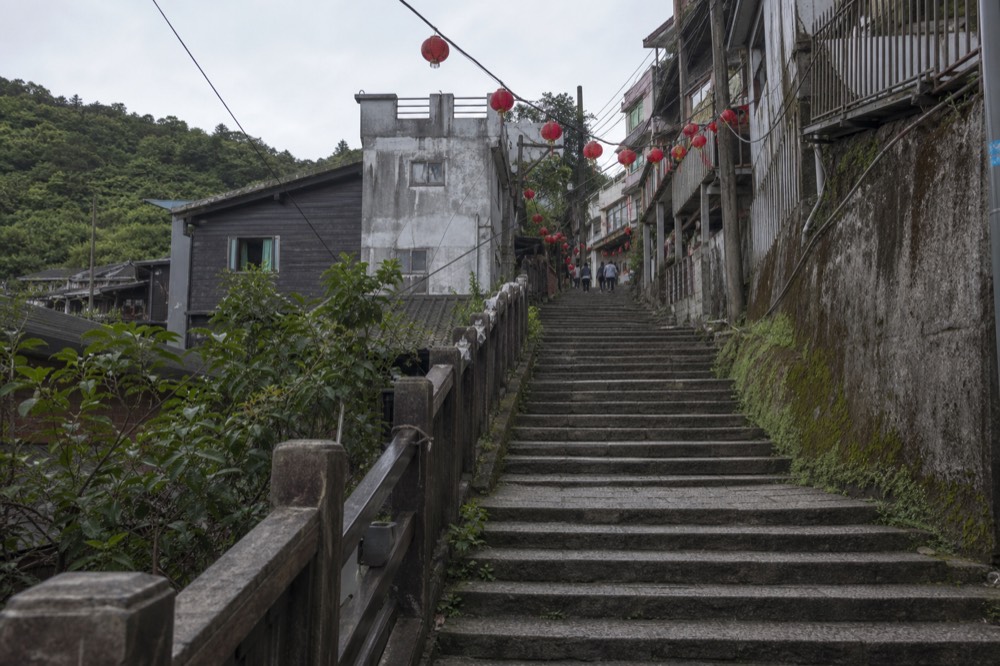
For a photographer this is the town's best-kept structural fact. Jishan Street, 基山街, means "the street that connects to the foot of Keelung Mountain", and it is the crowded one. Shuqi Road, 豎崎路, means "the road of many vertical steps", and it is the famous staircase shot, busy all day. Qingbian Road is the third street, level, older in function, and largely free of both stalls and queues. Shoot it for the architecture of the town rather than the commerce of the town.
The same release adds two details worth having in mind. Jinguashi, 金瓜石, the neighbouring settlement, is named for a summit crag shaped like a pumpkin that no longer exists, removed by open-cast mining. And the Jiufen mine had ten numbered tunnels, of which only Nos. 5, 8 and 10 still have intact portal exteriors. The No. 8 pit portal on the walk down toward the sea is one of the few places in town where the mining history is still physically in frame, and it costs nothing to stand in front of.
| Street | Name meaning | Character | Photo use |
|---|---|---|---|
| Jishan Street 基山街 | Street connecting to the foot of Keelung Mountain | Main shopping street, busiest | Food, stalls, lanterns, people |
| Shuqi Road 豎崎路 | Road of many vertical steps | The famous staircase | Vertical composition, teahouse fronts |
| Qingbian Road 輕便路 | The light railway lane | Flat, quiet, residential | Empty lanes, texture, morning light |
A practical note on access, stated honestly: Qingbian Road is level because it was a railway, and Shuqi Road is named for its steps. That is the full extent of what official sources say. No verified route description, ramp or accessible-toilet location exists for Jiufen in any source this site could find, so treat the flat lane as a fact about geography, not as a promise about accessibility.
If photographing the town in period dress appeals, a qipao rental is the experience built for exactly this, and it is covered in full further down the page. Meanwhile, for a broader sweep of what the town offers the camera, the things to do in Jiufen guide covers the non-photographic half of the day.
What Time Do The Red Lanterns Come On In Jiufen?
The lanterns follow sunset, and no official source publishes an hour. Every account of the street agrees the red lanterns light up around dusk, but no shop schedule or government page states a time, so the honest answer is to plan around sunset itself and arrive before it. In winter that means late afternoon; in summer it means the crowds have thinned by the time the light arrives.
This is a point where most guides quietly invent a number, and this site will not. There is no published lantern-lighting hour for Jiufen Old Street. What is verifiable is the pattern: shops run roughly 10:00 to 19:00 or 20:00 as reported by visitors, teahouses stay open later, and the lanterns come on as the daylight fails. A-Mei Tea House, the one teahouse in Jiufen whose hours are verified from its own site, is open 09:00 to 21:30 seven days a week, which tells you the evening town stays photographable well past the food stalls closing.
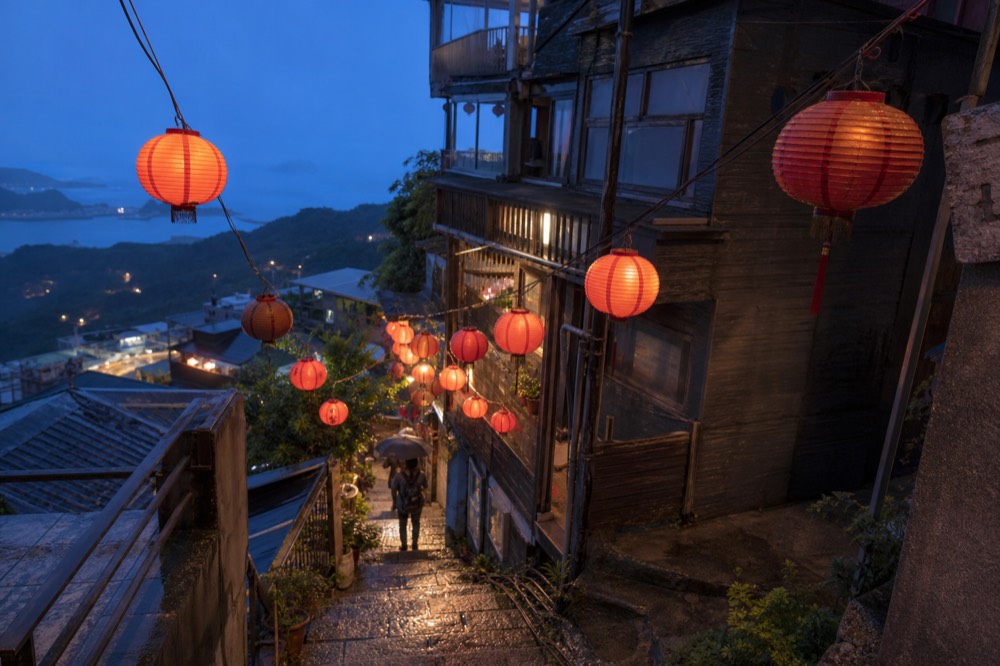
The evening shot rewards patience in a specific way. Between the stalls closing and the lanterns reaching full glow there is a blue-hour window when the sky still holds colour and the lanterns are already lit. That window is when the postcard photographs are taken, and it is also when the day-trip crowds have largely gone. The Jiufen at night guide covers the full evening, including the night market question, but the short version for photographers is: eat late, shoot later.
One caution belongs here because it is a real rule and not a caution invented for atmosphere. Sky lanterns, the flying paper lanterns of Shifen, are a different thing entirely from Jiufen's hanging red lanterns, and releasing one is banned everywhere in New Taipei City except a marked stretch of Pingxi from the Shifen Visitor Center to Shigong Bridge. Do not buy a lantern in Jiufen expecting to release it there. The Shifen old street and sky lanterns guide covers the legal release area in detail.
What Is The Qipao Experience That Everyone Is Photographing In?
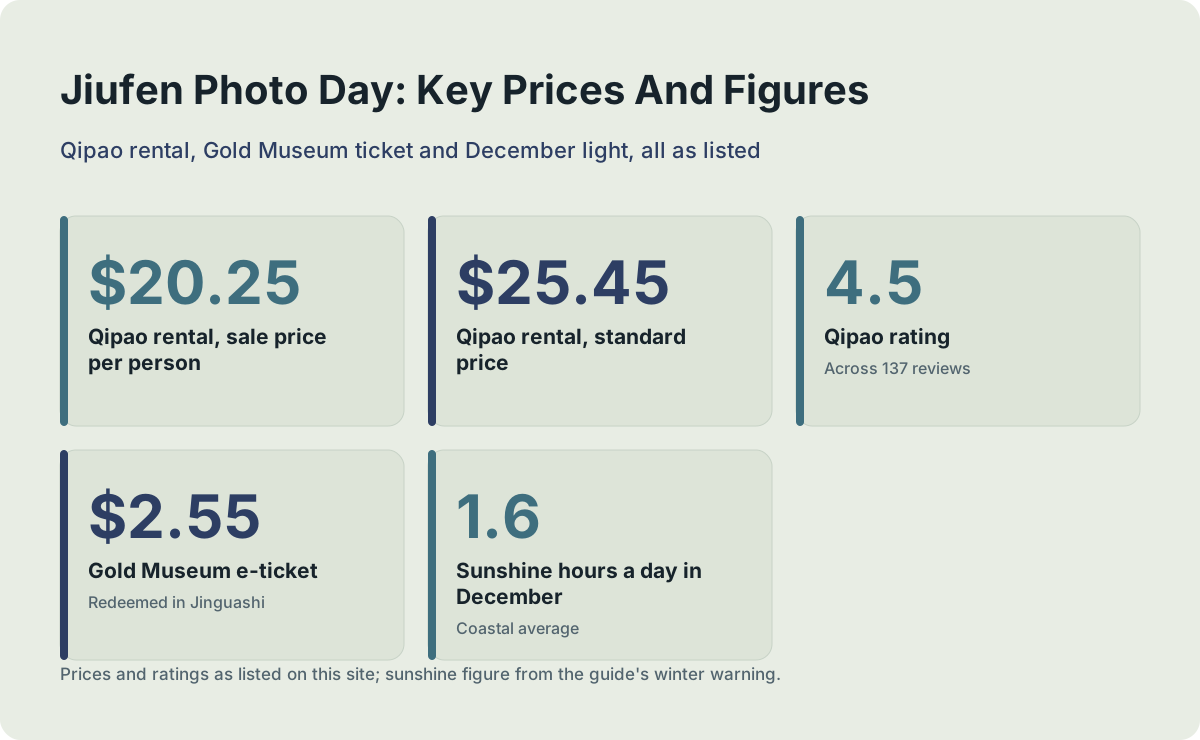
The Traditional Qipao Experience in Jiufen rents you a period dress, styled and photographed against the old street's lanes and teahouse fronts. It runs from $20.25 per person at today's sale price, down from a standard $25.45, is rated 4.5 across 137 reviews, and is redeemed in Jiufen itself, not boarded in Taipei. It is the single most photogenic bookable experience in town.
The qipao rental is the quiet engine of a remarkable amount of Jiufen photography. Walk Jishan Street on any afternoon and a share of the people you see in the frame, and photographing each other, are visitors in rented qipao using the town as a backdrop. The experience is exactly what it sounds like: you choose a dress, get styled, and spend your session shooting in the lanes. Because it is redeemed in place in Jiufen, it pairs naturally with a morning or weekday arrival, when the lanes are emptiest and the background is cleaner.
The arithmetic of a photo day in Jiufen can be planned against real, listed prices. The qipao rental is one of several in-town experiences, and the cheapest ticket on this site's entire roster is the New Taipei Gold Museum e-ticket at $2.55, redeemed over in Jinguashi. A morning of shooting, a qipao session and a teahouse stop is a full and genuinely photogenic day that never boards a vehicle in Taipei.
| In-town experience | From price | Rating | Notes |
|---|---|---|---|
| Traditional Qipao Experience | From $20.25 per person, sale price from $25.45 | 4.5 across 137 reviews | Period dress, redeemed in Jiufen |
| Jiufen Old Street Taiwan Tea Experience | From $16.85 per person | 4.6 across 135 reviews | Includes indigenous clothing experience |
| Jiufen Red Lantern Blessing ticket | From $7.89 per person | 4.3 across 51 reviews | A blessing lantern in Jiufen, not a Shifen sky lantern |
| New Taipei Gold Museum e-ticket | From $2.55 per person | 4.6 across 528 reviews | Redeemed at the Gold Museum, Jinguashi |
A scheduling note worth its own sentence: book the qipao session for the morning. The sale price is per person, the experience sits on Jiufen Old Street itself, and the morning lanes are the ones without queues in the background.
Which Teahouse Window Gives The Best Photograph?
Haiyue Tower Landscape Teahouse is the bookable teahouse view in Jiufen, from $15.79 per person at today's sale price, down from a standard $18.95, rated 4.5 across 366 reviews, with food or refreshments included and redemption in Jiufen. A-Mei Tea House is the one whose own prices are verified, and its window tables are the classic interior shot.
The teahouse photograph is the second iconic Jiufen image after the staircase: warm interior light, tea service in frame, the drop to the sea beyond the window. Haiyue Tower is the teahouse you can book on this site, and its listing includes refreshments, which makes it a mid-shoot rest as much as a destination. It is a smaller-volume listing than the big coach tours, so its review count of 366 is the honest scale of it.
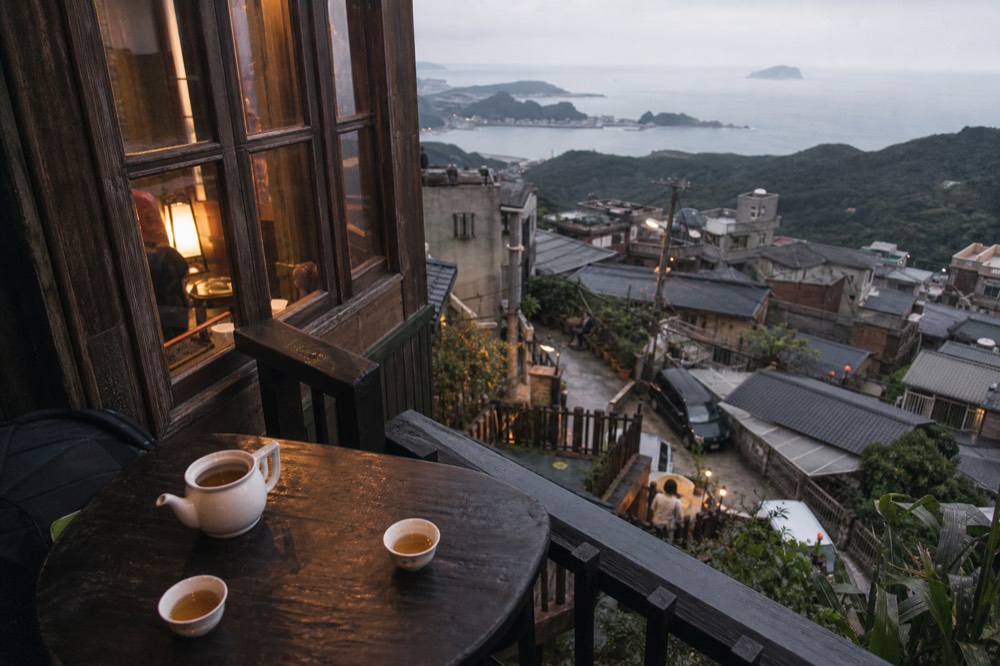
For A-Mei Tea House, the numbers are verified from the venue's own menu, and they are worth knowing before you sit down, because English pages almost always quote only the tea water fee. The full floor for two people is NT$100 per person water fee plus the cheapest pot of leaves at NT$500, so NT$700 before any food. Parties of six or more must order two portions of leaves. The tea-and-snack set is NT$350 per person, and set meals at NT$300 to NT$350 are served only between 10:30 and 13:30. The Jiufen tea houses guide carries the full breakdown.
| Teahouse | What is verified | Best photo use |
|---|---|---|
| Haiyue Tower | From $15.79 per person, sale price from $18.95, 4.5 across 366 reviews, refreshments included | Bookable window seat with the view |
| A-Mei Tea House | Open 09:00 to 21:30, NT$100 per person water fee, cheapest pot NT$500 | The classic interior, evening glow |
| Jioufen Teahouse | From $24.29 per person voucher, 4.8 across 52 reviews | A quieter voucher option, older romanised name |
Can You Photograph Jiufen And Yehliu In One Evening?
Yes, and the Half Day Private Tour to Yehliu Geopark and Jiufen by Night is the product built for it: six hours, from $105 per person, hotel pickup, free cancellation confirmed, reaching Yehliu Geopark, the Jinguashi Thirteen-Level Ruins, the Golden Waterfall and Jiufen Old Street. It is a newer listing with too few reviews for a star claim, which is the honest way to state its standing.
The evening pairing works because the two places peak at opposite ends of the day. Yehliu's rock formations are a daylight subject, and the park's hours are 08:00 to 17:00 year-round, extended to 18:00 in summer, with last entry at the closing hour itself, not before it. Jiufen's lanterns come on at dusk. A six-hour afternoon-to-evening run captures both, and doing it privately means the vehicle, not the control plan's coach ration, sets your schedule.
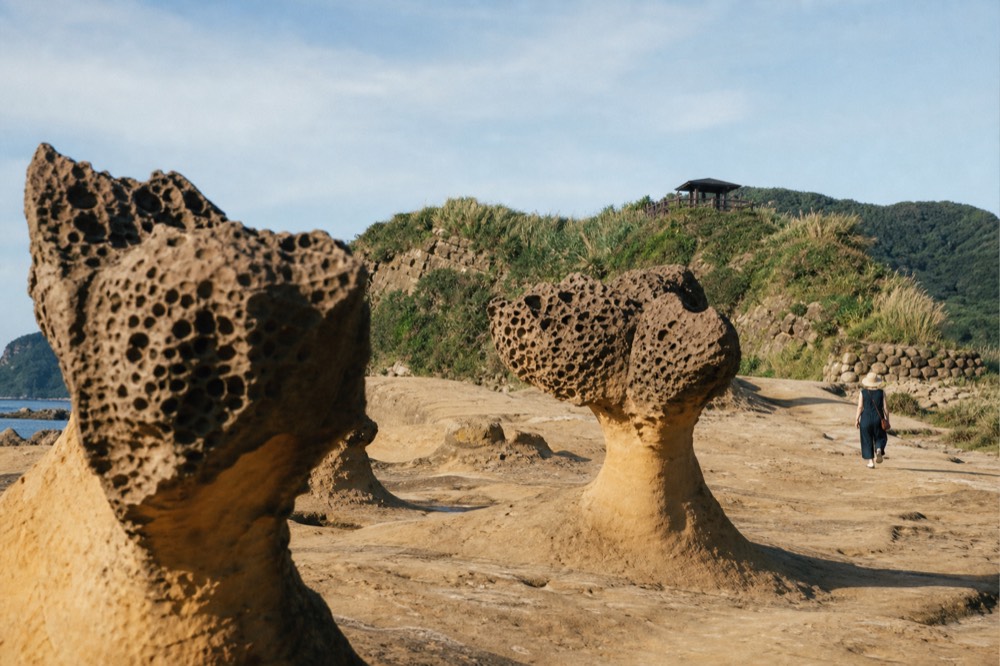
Two Yehliu facts a photographer should carry, both from the park's own ticket page. Admission is NT$120 for adults, NT$60 concession, and the free list includes licensed guides. And the fines are startling: climbing on or damaging the rock formations carries up to NT$500,000 plus restoration costs, and flying a drone, which the park bans outright, carries NT$300,000 to NT$1,500,000. The formation photographs you have seen were taken from behind the safety line, and yours should be too. The Yehliu Geopark guide covers the park's geology and the Queen's Head's measured decline in full.
| Stop on the evening run | Subject | Light to plan for |
|---|---|---|
| Yehliu Geopark | Sandstone formations, Queen's Head | Afternoon, before the 17:00 or 18:00 close |
| Jinguashi Thirteen-Level Ruins | Industrial ruins above the coast | Late afternoon silhouette |
| Golden Waterfall | Iron-stained cascade | Do not enter the water; the colour is iron staining from old mine workings |
| Jiufen Old Street | Lanterns, lanes, teahouses | Dusk into blue hour |
What Does The Weather Do To Jiufen Photographs?
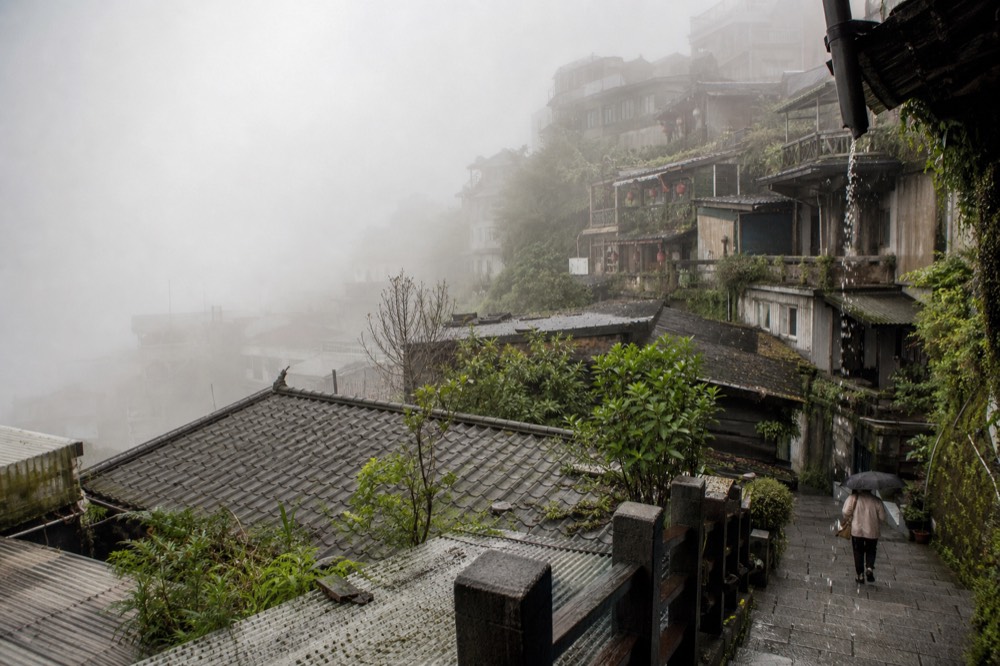
This coast is wet: the nearest measured station, Keelung about 12 km away, records 3,589.7 mm of rain a year against Taipei's 2,329.5, rain on 193.6 days a year, and just 48.5 sunshine hours in the whole of December, about 1.6 hours a day. July is the driest month at 119.5 mm, and September through February carries 61% of the year's rain. Fog and drizzle are the winter norm, not the exception.
There is no weather station at Jiufen itself, so the honest numbers are Keelung's, from the Central Weather Administration's 30-year normals for 1991 to 2020, and any page putting rainfall figures "at Jiufen" is inventing them. The pattern transfers: same windward coast, same northeast monsoon, and Jiufen sits higher, so if anything it is wetter. But the numbers below are Keelung's, and they are the ones with a source.
For photographers the table has a counterintuitive reading. The usual advice for Taiwan is to avoid summer, but on this coast July is the driest and sunniest month, 119.5 mm of rain across 8.5 rain days and 229.2 sunshine hours. November is the wettest month at 396.9 mm. If your heart is set on the classic warm-lantern glow against a clear blue-hour sky, July and August are your months, and the best time to visit Jiufen guide works the whole calendar.
| Month | Rainfall mm | Rain days | Sunshine hours | Photo verdict |
|---|---|---|---|---|
| January | 327.8 | 19.6 | 52.6 | Drizzle and fog; moody, not golden |
| April | 211.1 | 16.0 | 91.2 | A shoulder option |
| July | 119.5 | 8.5 | 229.2 | Driest, sunniest; clearest views |
| August | 211.4 | 11.6 | 208.2 | Hot, bright, humid |
| November | 396.9 | 18.6 | 65.3 | Wettest month; expect rain |
| December | 356.6 | 19.5 | 48.5 | 1.6 sunshine hours a day; the honest winter warning |
The winter flip side deserves to be said plainly rather than buried. Fog on this coast is a photographic subject in its own right, and the town's reputation for it comes from the monsoon, which delivers over 60% of the annual rain between September and February. A winter visit that plans for fog rather than sun, shoots the lanterns at dusk and treats a grey sea as texture rather than a failure, will come home with work a July visitor never gets.
How Do You Photograph Jiufen Without Standing In Someone's Shot?
Shoot the three quiet structures, the level railway lane, the pit portals and the staircases off the main drag, in the control-plan windows before 09:00 and after 19:00 or on a weekday. Frame vertically on Shuqi Road, use the long lens on Jishan Street to compress the lanterns, and let the evening teahouse glow do the colour work. Every one of these is a composition choice, not a walking-time claim, because no verified walking times exist.
The honest summary of this whole guide is that Jiufen rewards photographers who plan around two published schedules and one street map. The first schedule is the traffic control plan, which empties the town at predictable hours. The second is the climate record, which tells you the fog is real, the summer is clear, and December is almost sunless. The map is the three-street layout, in which the flat railway lane sits one street away from the entire crowd.
A closing thought on the town's most famous association, because it will cross your viewfinder. Jiufen's resemblance to Spirited Away is real and worth photographing, but the causal claim is false: Studio Ghibli producer Toshio Suzuki denied it to Taiwanese media on 19 September 2023, saying neither he nor Miyazaki had ever been to Jiufen, and attributing the moment of resemblance to an alley in Seoul. Shoot the lanterns for what they are. The Jiufen Spirited Away guide carries the full denial with its sources.
And if the day needs a structure beyond wandering, the trio below covers the three ways to be in the frame: dressed for it, seated above it, or driven through it at the hours the light is right.
The recurring questions are about timing, quiet streets and weather: shoot before 09:00 or after 19:00 on weekends, any time on a weekday, Qingbian Road for the empty lane, and July rather than December if you want sunlight. The answers below pull the verified figures together in one place.
Common Questions About Photographing Jiufen
When is Jiufen empty enough to photograph?
Before about 09:00, after about 19:00, and any ordinary weekday. Coach access is controlled 08:00 to 20:00 on weekends and holidays under the city's traffic plan, with roughly 20 coaches approved per half-day slot, and coach permits are refused entirely on holiday runs of three or more consecutive days.
What time do the lanterns come on in Jiufen?
They follow sunset, and no official source publishes an hour. Plan around dusk itself: arrive before sunset in winter for the stalls-still-open glow, and expect the blue-hour window after the day crowds leave in summer.
Which street in Jiufen is the quiet one?
Qingbian Road, the level lane parallel to Jishan Street. It is the surviving trackbed of a human-powered light railway laid in 1931, which is why it is flat in a town of staircases, and it carries almost none of the stall traffic.
Is December a good month for Jiufen photos?
Only if you plan for fog. The Keelung coast averages 48.5 sunshine hours in the whole of December, about 1.6 hours a day, and November is the wettest month at 396.9 mm. July, at 119.5 mm and 229.2 sunshine hours, is the clear-sky month.
Can you fly a drone over Jiufen or Yehliu?
Not at Yehliu. The park is a no-fly zone and drone flying carries fines of NT$300,000 to NT$1,500,000 on the park's own ticket page. Climbing on the rock formations there carries up to NT$500,000 plus restoration costs.
What is the qipao experience in Jiufen?
A period-dress rental redeemed in Jiufen itself, from $20.25 per person at today's sale price, down from a standard $25.45, rated 4.5 across 137 reviews. It is the outfit a large share of visitors are already photographing in, and it pairs best with a quiet morning lane.