Where Is The Biggest Sky Lantern Festival In Taiwan?
The biggest sky lantern festival in Taiwan happens in Pingxi District, New Taipei City. Here is what the law actually says, where lantern release is legal all year, and how to get there.
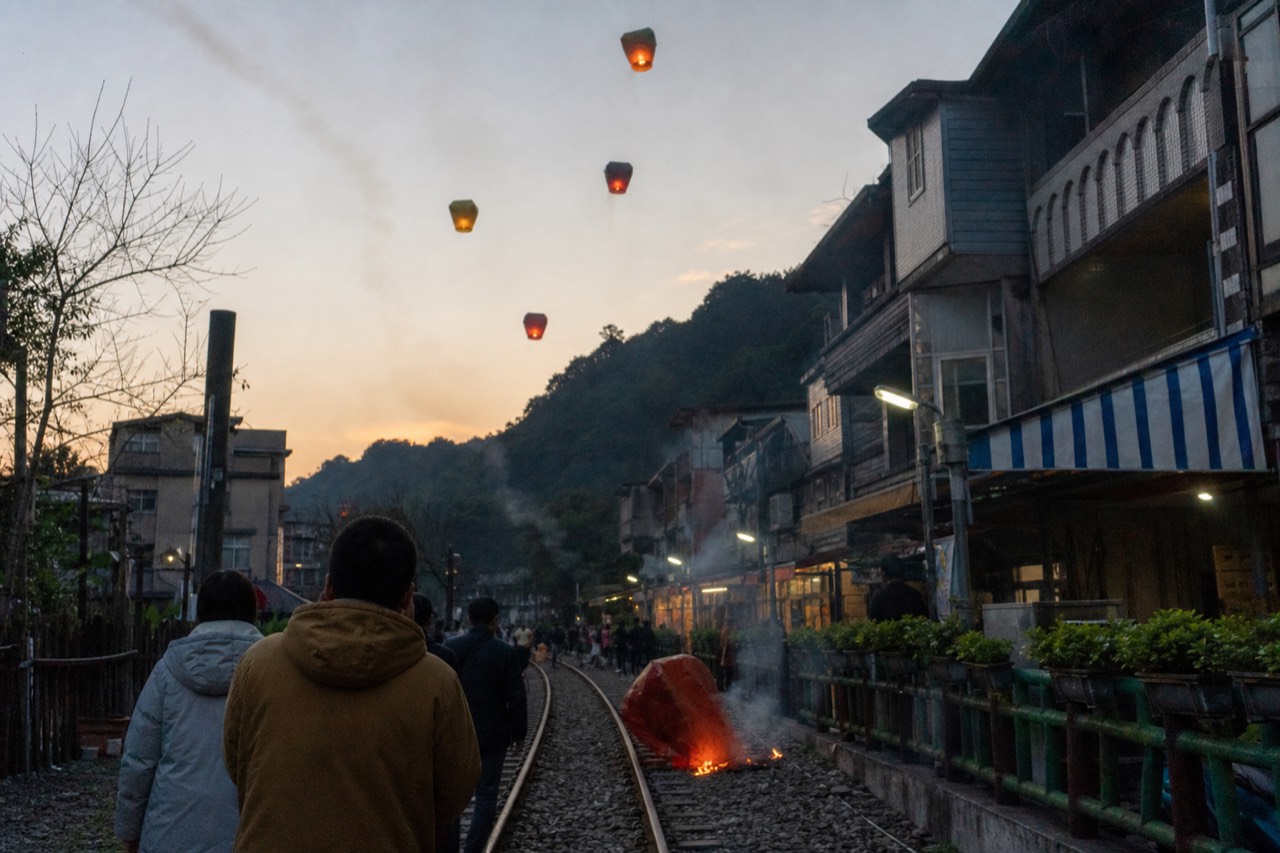
Where Is The Biggest Sky Lantern Festival In Taiwan?
The biggest sky lantern festival in Taiwan takes place in Pingxi District, in New Taipei City, on the island's northeast corner. The district's lantern town is Shifen, and the festival itself is a one-night event, while the legally marked stretch of road where visitors release lanterns on ordinary days runs all year round, from the Shifen Visitor Center to Shigong Bridge.
That distinction is the whole story, and it is worth slowing down on. People searching for "the biggest sky lantern festival" usually picture a single enormous event. What exists is a district, Pingxi, whose lantern culture is strong enough that the national government wrote a dedicated statute around it, and a marked release zone that operates every day of the year within that district. The festival is the headline; the stretch is the everyday reality you can actually plan a trip around.
Taiwanese law is unusually specific here. The New Taipei City Sky Lantern Release Management Measures, promulgated on 15 June 2011 under the Fire Services Act, ban releasing a sky lantern everywhere in New Taipei City except one marked stretch of Pingxi District, plus any area the city government separately announces. The permitted stretch runs from the Shifen Visitor Center to Shigong Bridge, within 200 metres of the Keelung River along County Road 106, and it is marked on the ground by government notice boards. The full statutory text is published on the New Taipei City laws database, and it is worth reading in the original if you plan to release a lantern.
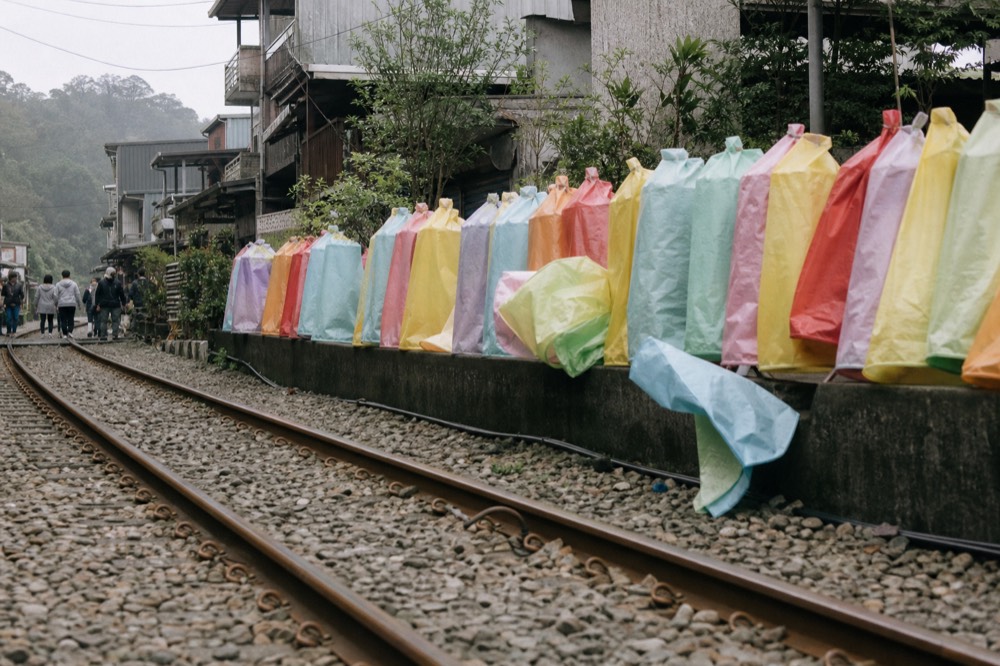
So the honest answer has two halves. The festival is in Pingxi District, and it is a one-night occasion. The experience most visitors actually want, standing on an old street beside a railway line and watching a lantern carry a wish into the sky, is available at Shifen on any ordinary day, inside the legally marked zone, and it is that zone the statute protects.
There is a second reason the statute matters to a visitor, beyond legality. Because the permitted stretch is fixed and marked, the lantern economy at Shifen is concentrated and stable: the shops, the safety notices, the labelled lanterns and the release spots along the tracks all sit where the law says release may happen. You are not hunting for a place to release; the district has already been engineered around the answer. That is rare for a fire-based ritual anywhere in the world, and it is the quiet reason the experience at Shifen feels organised rather than improvised.
If you would rather have the logistics handled, a guided day tour that includes the lantern release is the simplest route. The three options below are the strongest on this site for combining the northeast coast with a lantern at Shifen.
Where Can I Experience Floating Lanterns?
You can release a floating lantern at Shifen, in Pingxi District, any day of the year, inside the marked stretch from the Shifen Visitor Center to Shigong Bridge along County Road 106. Outside that stretch, and everywhere else in New Taipei City, release is banned, so Shifen is not just the best place, it is the only legal place without a special government announcement.
The release zone follows the Keelung River. The statute permits release within 200 metres of the river basin boundary along County Road 106, which is why the lantern shops cluster where they do, along the rail line that runs beside the water. Release sites must be clear of flammable material and must not obstruct people or vehicles, and no site may be within 100 metres of a petrol station, gas station, oil tank farm, ammunition or powder magazine, combustible gas tank or chemical plant. The zone is marked on the ground by government notice boards, so you do not have to guess where the boundary sits.
Shifen itself is a strange and lovely place to do this. The Pingxi branch railway runs straight down the middle of the old street, and trains still use it, so the lantern ritual happens literally on the tracks between services. The shops along the street sell lanterns, and the law requires each one to display the official safety notice and to label every lantern with the seller's name and address. That labelling rule is not decoration; it is traceability, so a lantern that ends up somewhere it should not be can be traced back to the shop that sold it.
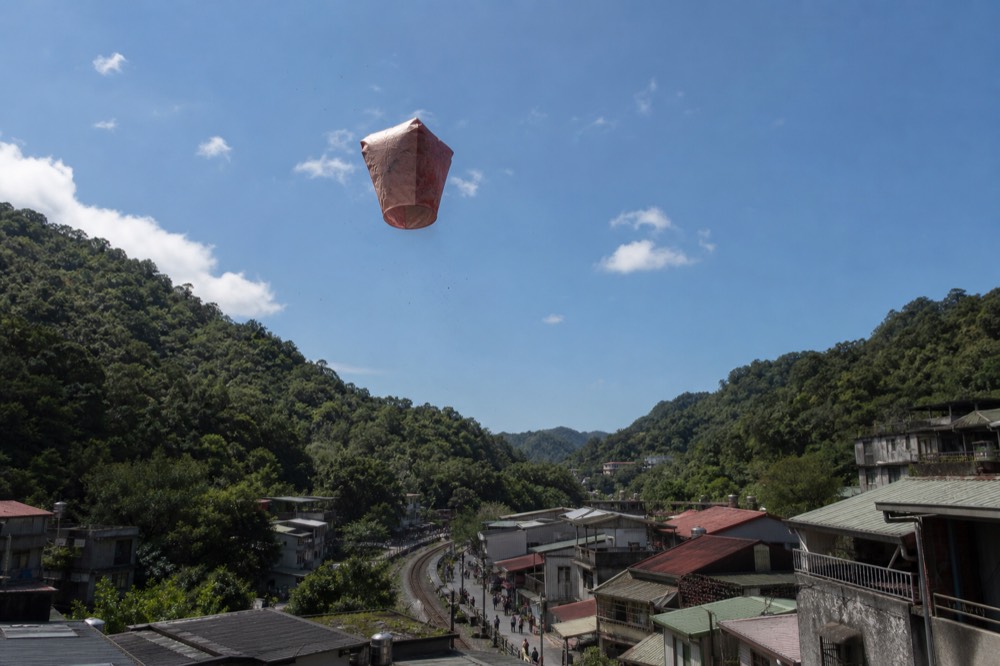
One timing rule matters more than the rest: no releases are allowed between 22:00 and 06:00, except at New Year, at festivals the government announces, or with Fire Bureau permission. Shifen by day is the default, and the last branch train back toward Ruifang leaves Shifen late in the evening, so most visitors release in daylight anyway. Our guide to Shifen Old Street and the lantern ritual covers the street itself in more detail.
A practical note on how the release actually works, since the statute frames it more tightly than the souvenir experience suggests. The lantern is unfolded, a wish or message is written on the paper, the fuel patch is lit while the lantern is held low over the track, and the lantern rises when the air inside heats enough to lift it. The accompaniment rules and the site rules all apply at the moment of lighting, which is why shop staff on the old street supervise the release rather than simply handing over a lantern and stepping back. The ritual takes a few minutes; the regulation around it took a statute.
The shared coach day tour that builds the lantern release into the ticket price is the Yehliu, Jiufen, Shifen Day Tour & Sky Lantern, and a private Keelung shore excursion does the same. It runs 9 hours from Taipei, stops at Yehliu Geopark, Jiufen Old Street, Shifen Waterfall and Shifen Old Street, includes food or refreshments and hotel pickup, and confirms free cancellation.
For travellers who want the same release without the coach-party feel, the Half Day Private Tour to Jiufen, Shifen Waterfall & Sky Lantern packs six stops into 6 hours with hotel pickup, and it too confirms free cancellation. It is the denser, more private version of the same idea.
Why Are Floating Lanterns Illegal?
Floating lanterns are illegal across almost all of New Taipei City because a lit lantern is an airborne fire, and the city's 2011 management measures ban release everywhere except the marked Pingxi stretch. The ban is not about the lantern itself but about location: an open flame drifting over a city, a forest or a gas station is a hazard, so the law confines release to one riverside zone built for it.
The statute is the story here, and it is more detailed than almost any English guide suggests. Beyond the zone and the hours, it regulates the object itself. A legal sky lantern in New Taipei City must have a base of 60 to 70 centimetres, a height of 130 to 140 centimetres, an outer circumference of 360 to 370 centimetres, and a weight of not more than 300 grams. The fuel must be a kerosene and soybean oil mixture or an equivalent. No firecrackers or fireworks may be attached. Anyone under 14, and any person with a disability, must be accompanied by a guardian, an accompanying adult or another adult family member when releasing.
| Rule in the 2011 measures | What it says |
|---|---|
| Where release is legal | One marked stretch of Pingxi, Shifen Visitor Center to Shigong Bridge, within 200 m of the Keelung River along County Road 106 |
| Where release is banned | Everywhere else in New Taipei City, unless separately announced |
| Night ban | No releases between 22:00 and 06:00, except New Year, announced festivals, or Fire Bureau permission |
| Mass releases | 100 or more lanterns at once requires an application to the Fire Bureau five days in advance, with a safety plan and a guarded-zone map |
| Shop duties | Display the official safety notice; label every lantern with the seller's name and address |
| Accompaniment | Under-14s and persons with a disability must be accompanied |
The mass-release clause explains the festival's structure better than any promotional description. Any organisation releasing 100 or more lanterns at once must apply to the Fire Bureau five days in advance with an application form, a safety plan and a map of the guarded release zone. A festival-scale launch is, in legal terms, a permitted exception to a general ban, planned and inspected in advance, not a free-for-all. That is why the festival is one night and the everyday stretch is every day: the everyday stretch is sized for individuals and families, and the festival is an organised event on top of it.
It also answers a question people ask quietly: is this safe? The statutory answer is that the lantern itself is engineered to a specification, the fuel is controlled, the site is inspected for flammables and distance from fuel storage, and the seller is traceable on the lantern's own label. That is a regulated activity, not a risky souvenir. What the law does not do is publish a price, and neither will we: no official lantern price exists in any source we could verify, so check the shop board in Shifen on the day.
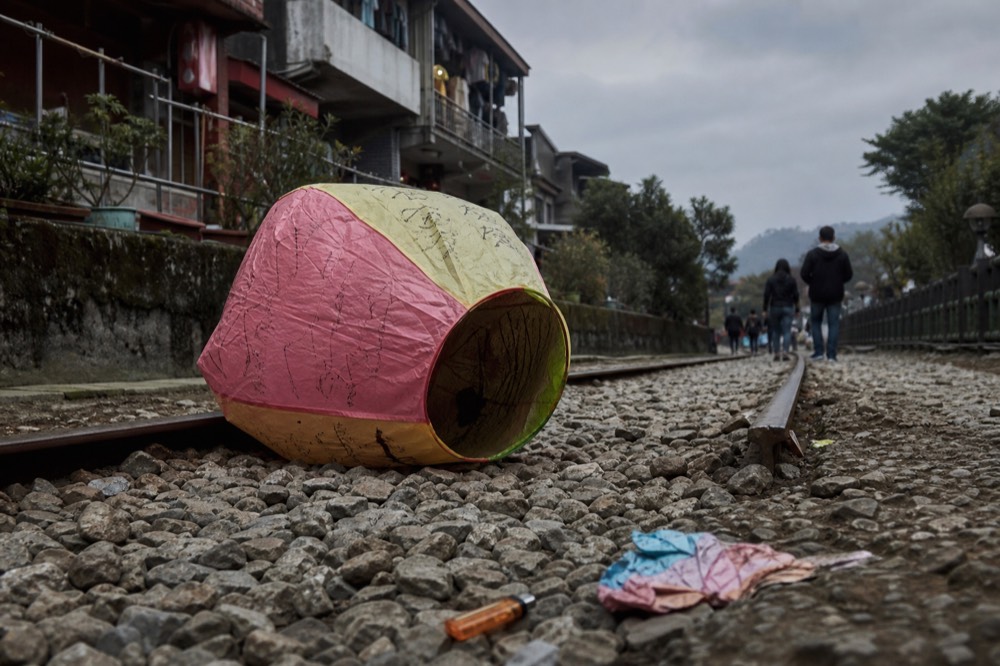
The word "illegal" also deserves a caveat, because it is easy to misread. Release is banned outside the zone, but the ban is enforced through the Fire Services Act's penalty provisions, and the ordinary visitor inside the marked stretch at Shifen, buying a labelled lantern from a compliant shop in daylight, is doing something the law was written to enable. The illegality is geographic, not moral. A visitor who understands that framing makes better decisions: they release where the boards say, they skip the night window, and they do not carry a lantern home to Taipei and light it from a rooftop, which is the actual scenario the statute exists to prevent.
How Do You Get To Shifen From Taipei?
There is no direct train from Taipei to Shifen; every route changes at Ruifang, on the Pingxi branch line. From Taipei Main Station, 45 to 47 direct trains a day reach Ruifang in 32 to 68 minutes for NT$73 on a local, and from Ruifang 17 branch trains a day reach Shifen in 27 to 32 minutes for a flat NT$29.
That "no direct train" fact surprises people, because a lot of English content implies you can ride straight through. The Taiwan Railway Corporation's own booking system returns zero direct services between Taipei and Shifen. Ruifang is the junction, and the branch line beyond it is single-track, small and unchanged by demand: the same 17 trains run on a Saturday as on a Monday, so the line gets no extra weekend capacity at all.
| Leg | Trains per day | Fare | Journey time |
|---|---|---|---|
| Taipei Main Station to Ruifang, Local or Fast Local | 45 to 47 direct total | NT$73 | 32 to 68 minutes, median 46 |
| Taipei Main Station to Ruifang, Tze-Chiang or Puyuma | included above | NT$114 | fastest found 33 minutes |
| Ruifang to Shifen, Pingxi branch | 17 | NT$29 flat | 27 to 32 minutes |
| Ruifang to Houtong | 44 | NT$22 | 5 to 7 minutes |
| Ruifang to Jingtong, branch end | 16 | NT$44 | 37 to 51 minutes |
The express barely wins. A Puyuma saves roughly 13 minutes over the median local and costs NT$41 more, so the local train is the sensible default on this route. The branch timetable is the thing to actually study: departures from Ruifang run roughly hourly through the middle of the day, then thin out, with a 1h39m gap after the late-afternoon departure and a 1h44m gap after the early-evening one. Miss an evening branch train and you wait a long time on a small platform.
A workable independent plan looks like this: take a morning local from Taipei Main Station to Ruifang, roughly three quarters of an hour, then pick up a mid-morning branch train to Shifen. Release your lantern on the old street, walk to Shifen Waterfall if the weather holds, and take a mid-afternoon branch train back to Ruifang rather than gambling on the evening gaps. Concession fares exist on the main line, NT$37 on a local against the NT$73 full fare, for children, seniors and disability certificate holders. The whole day can be done on rail for less than the cost of a single coach excursion ticket, and the branch line itself, single track through river gorges, is a genuine scenic ride rather than a commute.
If timed transfers sound like work, the coached alternatives remove them. The Yehliu, Jiufen, Shifen Day Tour (Optional Tiaoshi Coast) runs 9h15 to 10h, stops at Yehliu Geopark, Jiufen Old Street, Shifen Old Street and Shifen Waterfall, with optional add-ons for Tiaoshi Coast and Golden Waterfall, and is rated 4.9 across 14,933 reviews, from $21.19 per person. The Half Day Private Tour to Jiufen, Shifen Waterfall & Sky Lantern covers the release itself privately, from $99 per person.
One more thing worth knowing before you commit to a weekend. On weekends, national holidays and make-up working days between 08:00 and 20:00, the Ruifang, Jinguashi and Jiufen area operates under a signed traffic control plan, in force since 1 January 2025, under which coaches must apply in advance and are rationed to roughly 20 per half-day slot, with applications refused entirely on holiday runs of three or more consecutive days. The official notice is published as a PDF. The plan restricts coaches, not trains and not pedestrians, which is a quiet argument for the rail route on busy days. For pairing the lantern town with the mountain village, see Jiufen and Shifen in one day.
What Should You Know Before You Release A Lantern?
Before releasing a lantern at Shifen, know four things: you must be inside the marked zone, you cannot release between 22:00 and 06:00, under-14s and persons with a disability need an accompanying adult, and the lantern you buy should carry the seller's name and address on it, which the law requires. Everything else is weather, timing and taste.
Timing around the day matters more than most itineraries admit. The branch line's evening gaps mean a late afternoon arrival can strand you, and the shops along Shifen Old Street report their own rhythms rather than official hours, so treat any opening time you read elsewhere as a pattern visitors describe, not a published schedule. Arriving mid-morning on a weekday gives you the street, the tracks and the release zone at their calmest. The Taiwan Tourism Administration's Jiufen page is a good official anchor for the wider area, though it says nothing about lanterns, which tells you something about how local the statute really is.
| Legal lantern specification | Required measurement |
|---|---|
| Base | 60 to 70 cm |
| Height | 130 to 140 cm |
| Outer circumference | 360 to 370 cm |
| Weight | Not more than 300 g |
| Fuel | Kerosene and soybean oil mixture, or equivalent |
| Attachments | No firecrackers or fireworks |
The specification table is not trivia; it is how you spot a compliant lantern. A shop inside the marked zone, displaying the safety notice, selling labelled lanterns within those dimensions, is operating inside the law's design. A lantern offered elsewhere in the city, or at a size the statute does not allow, is not a bargain, it is a breach. And the accompaniment rule is worth repeating to any family group: a child under 14 does not release a lantern alone, legally, anywhere in New Taipei City.
Weather deserves one honest paragraph, because this is the northeast coast. There is no weather station at Shifen or at Jiufen, and the nearest representative station is Keelung, on the same windward coast, which records 3,589.7 millimetres of rain a year against Taipei's 2,329.5, with rain on 193.6 days. A lantern rises on heated air, and a soaked lantern or a gusting wet evening changes the experience, so a dry-weather window is worth choosing. The driest month on that Keelung record is July, at 119.5 millimetres across 8.5 rain days, which quietly inverts the usual advice to avoid Taiwan in summer for this particular corner of the island. The Central Weather Administration's climate normals are the source for all of those figures.
Finally, the environmental question people ask honestly: what happens after the lantern falls? New Taipei runs a lantern-paper recovery programme that pays in goods rather than cash; that is all we can say about it, because no figure in any source we could verify is publishable. If you want the fullest picture of the ritual and the street around it, our Shifen Old Street and sky lanterns guide goes deeper, and the site's own Jiufen Tour homepage lays out the full northeast coast circuit.
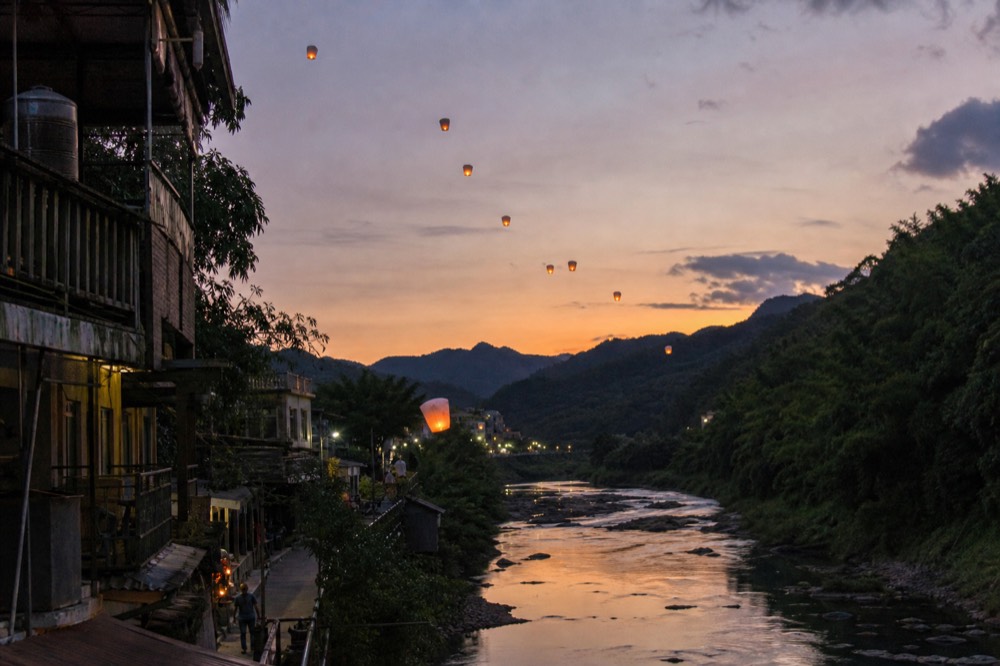
Whether you go for the festival night or an ordinary Tuesday, the practical choice is the same: get to Ruifang by local train, take the branch to Shifen, release inside the marked stretch, and let the statute's notice boards mark the boundary for you. These three tours cover the same ground with the logistics handled.
The questions below are the ones visitors ask most about the festival and the everyday release at Shifen, answered from the statute and the rail operator's own timetable rather than from secondhand guides. Between them they cover where the festival is, where release is legal, why the ban exists, the night window, the train route and the rules for children.
Common Questions About The Sky Lantern Festival
Where is the biggest sky lantern festival?
In Pingxi District, New Taipei City, whose lantern town is Shifen. The festival is a one-night event, while the legally marked release stretch at Shifen, from the Shifen Visitor Center to Shigong Bridge, operates all year.
Where can i experience floating lanterns?
At Shifen, inside the marked stretch along County Road 106, any day of the year outside the 22:00 to 06:00 night ban. Nowhere else in New Taipei City permits release without a separate government announcement.
Why are floating lanterns illegal?
Because a lit lantern is an airborne fire. New Taipei City's 2011 management measures ban release everywhere in the city except the marked Pingxi stretch, where the site, the lantern's specification and the seller are all regulated.
Can you release a sky lantern at night?
Not between 22:00 and 06:00, except at New Year, at festivals the government announces, or with Fire Bureau permission. Daylight and early evening are the legal windows.
Is there a direct train from Taipei to Shifen?
No. Every route changes at Ruifang. From Ruifang the Pingxi branch runs 17 trains a day to Shifen, 27 to 32 minutes, flat fare NT$29, with the same 17 trains on a Saturday as on a Monday.
Do children need an adult to release a lantern?
Yes. Anyone under 14, and any person with a disability, must be accompanied by a legal guardian, an accompanying adult or another adult family member when releasing a lantern.