Jinguashi And The Golden Waterfall: The Gold Museum Guide
Jinguashi is Jiufen's mining twin, one valley over, and most day trips rush past it. The Gold Museum is closed the first Monday of every month, the Golden Waterfall runs orange with iron staining, and the Yin Yang Sea's colour has two competing explanations.
Short answer
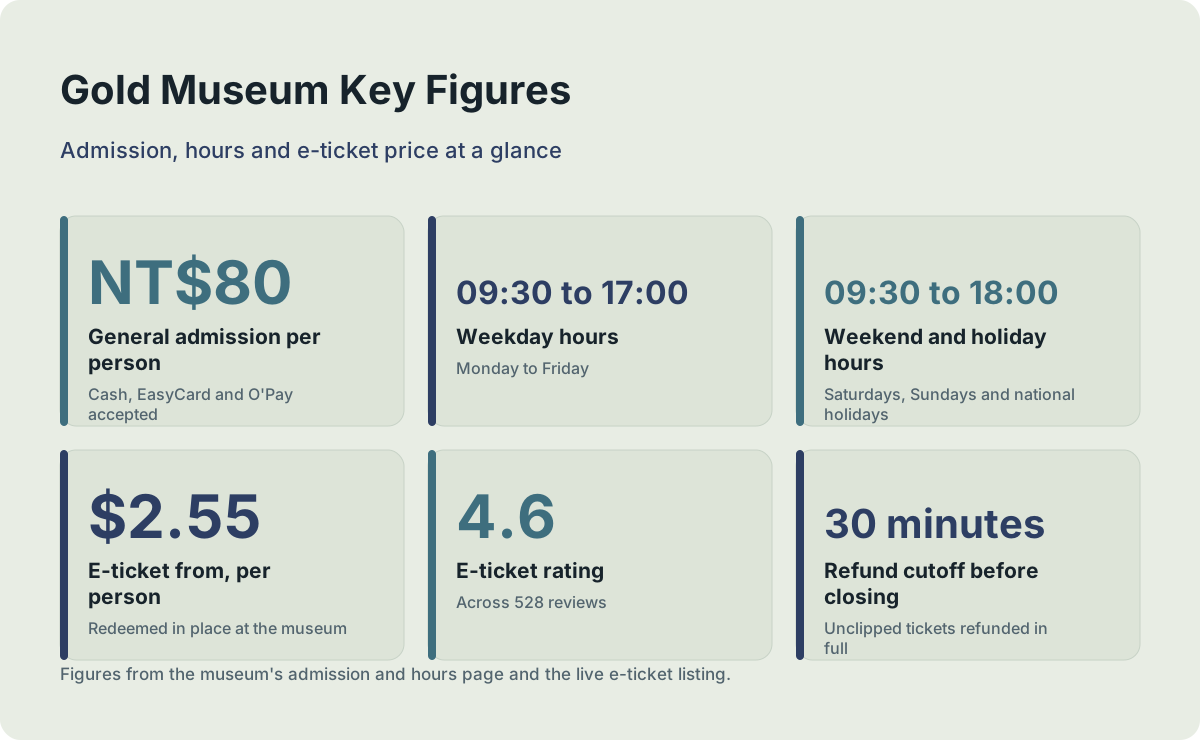
The Gold Museum in Jinguashi costs NT$80 per person, opens 09:30 to 17:00 on weekdays and 09:30 to 18:00 on weekends and holidays, and is closed the first Monday of every month. Cash, EasyCard and O'Pay are accepted. The Golden Waterfall and Yin Yang Sea sit below the village on the coast road.
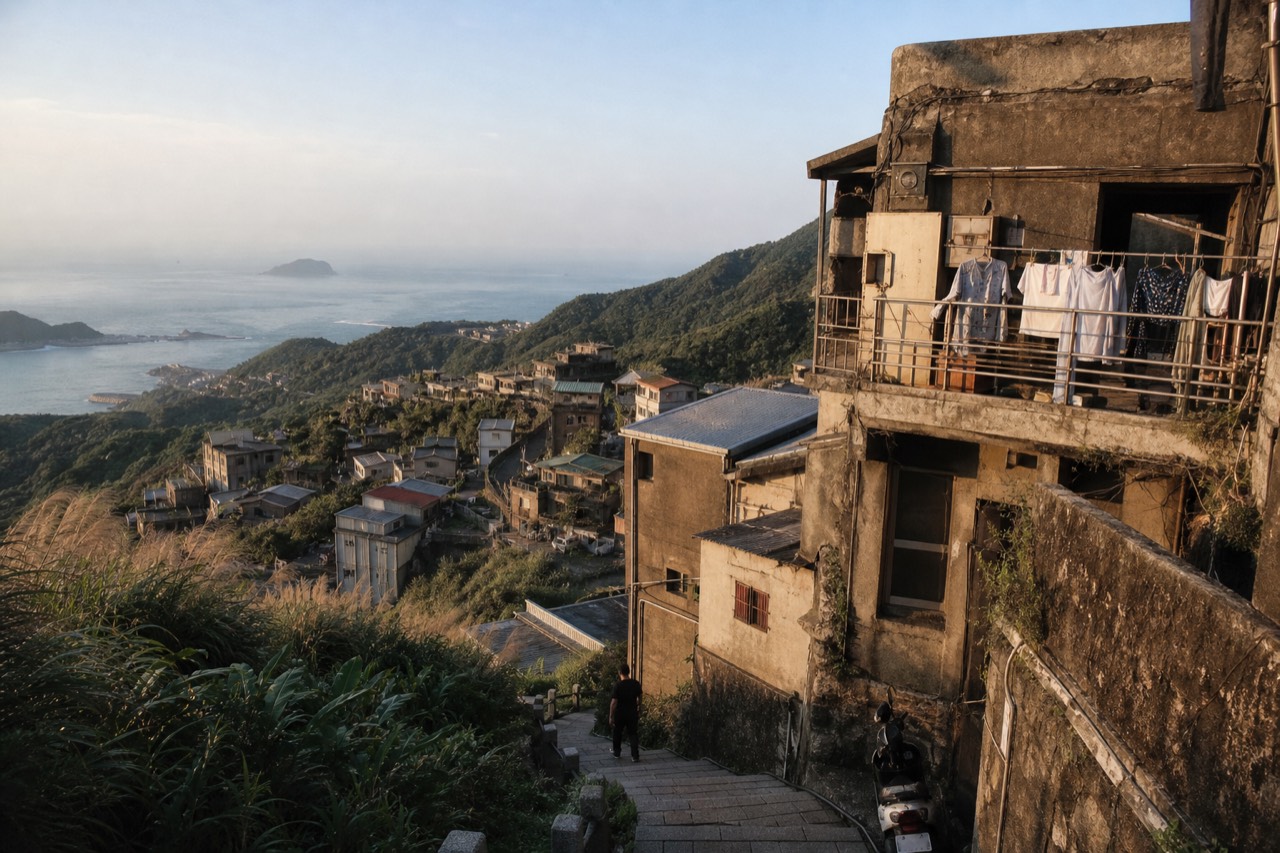
Jinguashi sits one valley east of Jiufen, and the two towns share a gold field and almost nothing else. Jiufen got the lanterns, the teahouses and the crowds; Jinguashi kept the mine workings, the museum built inside them, and a stretch of coast where the water and the rocks run strange colours. The Taiwan Tourism Administration's own page for the area records that in 1890 someone struck gold near Jiufen and the village drew prospectors of 4,000 families, a place once called little Shanghai. Jinguashi is where the heavier machinery ended up, and its landscape still shows it.
Most Taipei day tours stop at Jiufen Old Street and leave. The ones that come this far usually pause at the Golden Waterfall for photographs and move on. That is a mistake with a fix, and the fix is mostly scheduling, because the single fact that catches visitors out is simple: the Gold Museum is closed the first Monday of every month. This page is part of the Jiufen Tour guide set covering the whole northeast coast circuit.
What Is Jinguashi, And How Is It Different From Jiufen?
Jinguashi is a former copper and gold mining village in Ruifang District, a short hop from Jiufen by local bus, built around mine workings that have been turned into a museum landscape rather than a lantern-lit old street, and its name comes from a pumpkin-shaped summit crag that open-cast mining has since removed entirely.
The name is worth pausing on, because the crag it describes no longer exists. A New Taipei City Government release of 6 January 2016, issued by the Gold Museum, explains that Jinguashi, 金瓜石, is named for a summit crag shaped like a pumpkin, 金瓜 in Taiwanese Hokkien, and that the crag was rich in gold and was removed by open-cast mining. The town is named after a rock you can no longer find on the skyline. The same release names Shuinandong, the coastal settlement below the museum, for a natural stone cave found by Han settlers in the late Qing period.
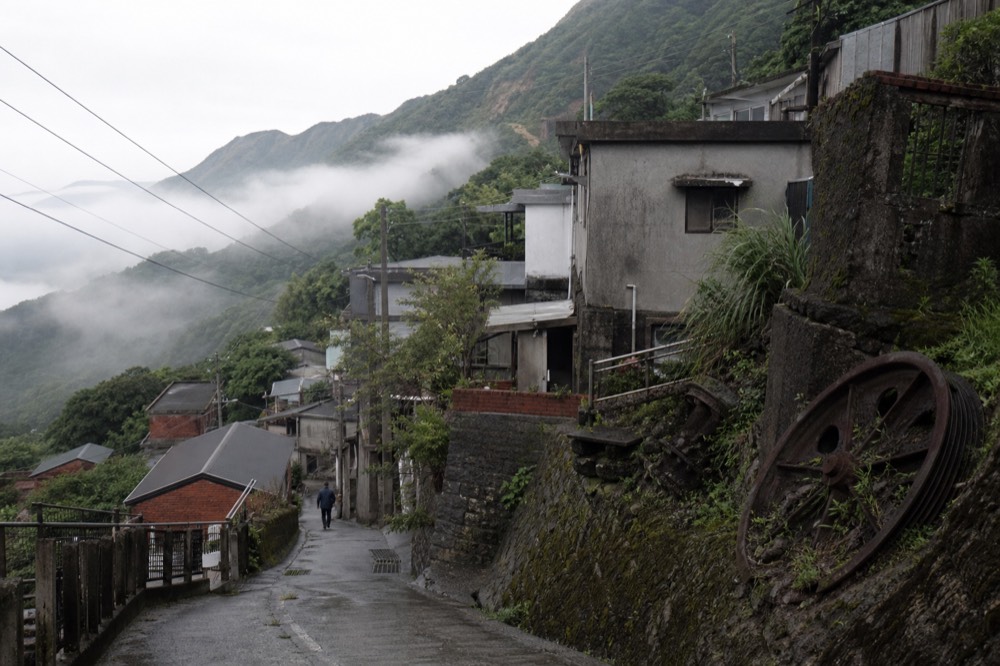
Where Jiufen's streets are retail, Jinguashi's are industrial heritage. The village layout follows the mine: offices, dormitories, shrines and processing buildings strung along the valley, with the Gold Museum at the centre of it. The same city release records that the Jiufen mine had ten numbered tunnels running down the hill, that Nos. 1 to 4 are gone to open-cast working or collapse, and that only Nos. 5, 8 and 10 still have intact portal exteriors. Two bus stops in the area, including one still signed with an old pit name, carry the mine's numbering into everyday use.
For planning purposes the practical difference is this: Jiufen is a street you walk and shop along, while Jinguashi is a spread-out site you move through, with the museum, the old mine portals, the Golden Waterfall and the Yin Yang Sea strung along the road that drops from the village to the coast. If you are building the day yourself, our Jiufen and Shifen in one day guide covers the northern half of the circuit, and this page covers the southern half.
How Much Does The Gold Museum Cost, And When Is It Open?
The Gold Museum charges NT$80 per person for general admission, opens 09:30 to 17:00 Monday to Friday and 09:30 to 18:00 on Saturdays, Sundays and national holidays, accepts cash, EasyCard and O'Pay at the ticket office, and refunds unclipped tickets in full up to 30 minutes before closing.
Those figures come from the museum's own admission and hours page, and its Chinese mirror carries the same numbers. Experience activities inside the museum are charged separately from the base ticket. The refund rule is unusually generous for a Taiwanese public museum: an unclipped ticket can be refunded in full with no handling fee up to 30 minutes before closing, and EasyCard purchases are refunded in cash.
| Item | Detail |
|---|---|
| General admission | NT$80 per person |
| Weekday hours | Monday to Friday, 09:30 to 17:00 |
| Weekend and holiday hours | 09:30 to 18:00 |
| Payment at the ticket office | Cash, EasyCard, O'Pay |
| Refunds | Unclipped tickets, in full, up to 30 minutes before closing |
| Experience activities | Charged separately from admission |
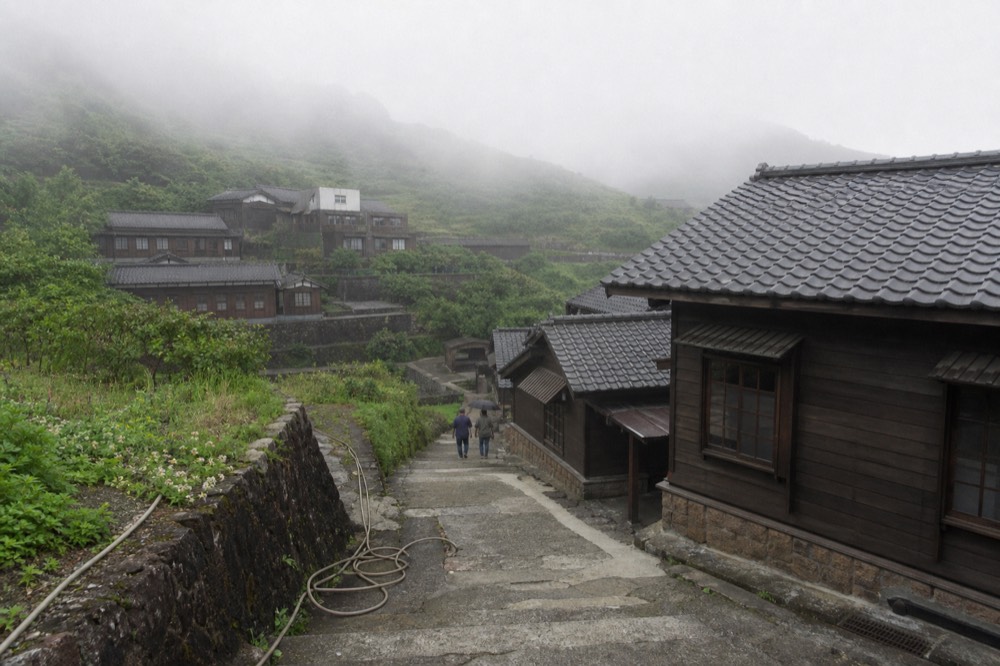
The free-entry list is long, and it is worth reading before you queue, because a large share of Taiwanese visitors pay nothing. Registered New Taipei City residents, nationals aged 65 and over and under 12, indigenous nationals aged 55 and over, enrolled students, disability certificate holders plus one necessary companion, low-income certificate holders and volunteer honour card holders all enter free, with proof of status shown at the gate.
| Who enters free | Proof required |
|---|---|
| Registered New Taipei City residents | Proof of registration |
| Nationals 65 and over, and under 12 | ID |
| Indigenous nationals 55 and over | ID |
| Enrolled students at any domestic school | Student enrolment |
| Disability certificate holders | Certificate plus one companion |
| Low-income certificate holders | Certificate |
| Volunteer honour card holders | Card |
If you would rather not deal with the ticket office at all, an e-ticket for the museum can be bought ahead and redeemed at the gate.
The e-ticket is the cheapest bookable item anywhere on this site, at from $2.55 per person, rated 4.6 across 528 reviews on the live listing. It is redeemed in place at the Gold Museum in Jinguashi; it is not a tour, nothing is boarded in Taipei, and it does not include the separately charged experience activities inside. Its cancellation policy is not stated on the listing, so check the terms there before buying.
Why Is The Gold Museum Closed On The First Monday Of Every Month?
The museum closes on the first Monday of each month as a standing maintenance closure, and if that Monday falls on a national holiday it opens instead and closes the following day, which means the closure moves rather than disappears, and it is also closed on Lunar New Year's Eve and the first day of Lunar New Year.
This is the single most useful practical fact about Jinguashi, and it is routinely missing from English pages. Plenty of Taipei itineraries are built around a Monday, because Monday is the quiet day at museums elsewhere in Taiwan and the day many travellers pick for Jiufen to dodge weekend crowds. At the Gold Museum, a Monday visit is a coin flip on the calendar: first Monday, shut; every other Monday, open 09:30 to 17:00.
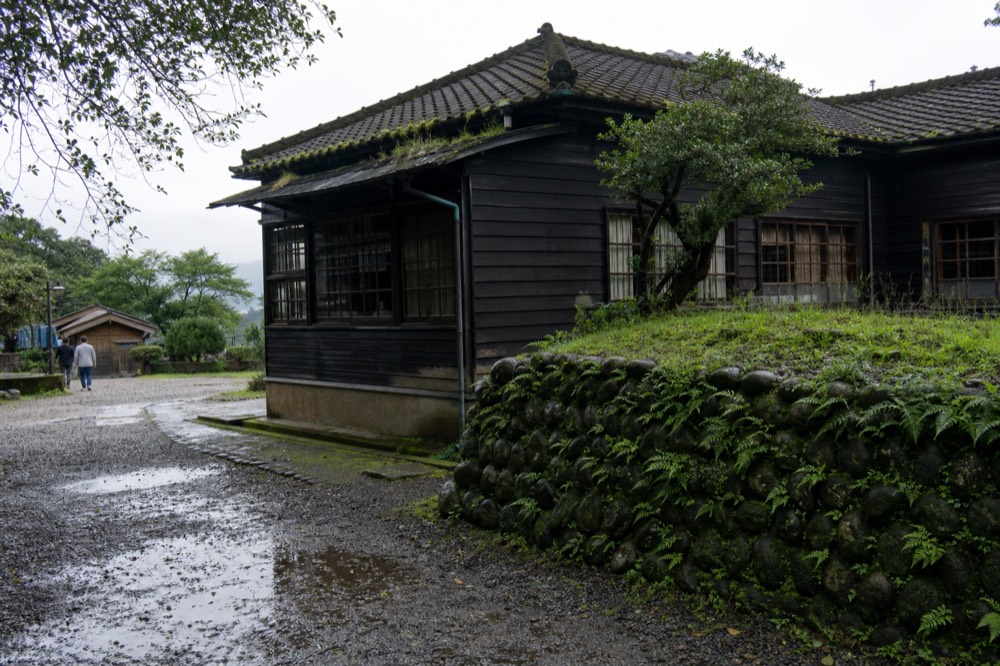
The holiday swap rule matters for long weekends. If the first Monday of a month is a national holiday, the museum opens that day and closes the Tuesday after, so a public-holiday Monday visit works while an ordinary one does not. Add the Lunar New Year closures and the government-declared natural-disaster day closure, and the honest advice is simply to check the museum's own page for the date you have in mind.
If your date lands on a first Monday, the rest of Jinguashi does not close with the museum. The village streets, the old mine portals visible from the road, the Golden Waterfall and the Yin Yang Sea are all open-air, and the museum grounds themselves can still be walked in parts. A reasonable fallback is to spend the morning on the coast below the village and give the museum's interior a miss.
What Is The Golden Waterfall, And Why Is It That Colour?
The Golden Waterfall is a small waterfall on the runoff channel below Jinguashi's old mine workings, and its orange and rust colouring is iron staining from those workings, deposited as the water passes through the old mine site; it is a viewing stop from the roadside, and visitors should not enter the water.
The colour is the reason the stop exists on every tour route, and the honest explanation is short: iron staining from the old mine workings. That is the phrase to hold onto, because the internet reaches quickly for chemistry. This site does not print acidity or metals figures for the falls, and the practical guidance is simply that the water is not for entering, whether paddling, swimming or touching, and the viewing spots from the road and the viewing platform are the intended way to see it.
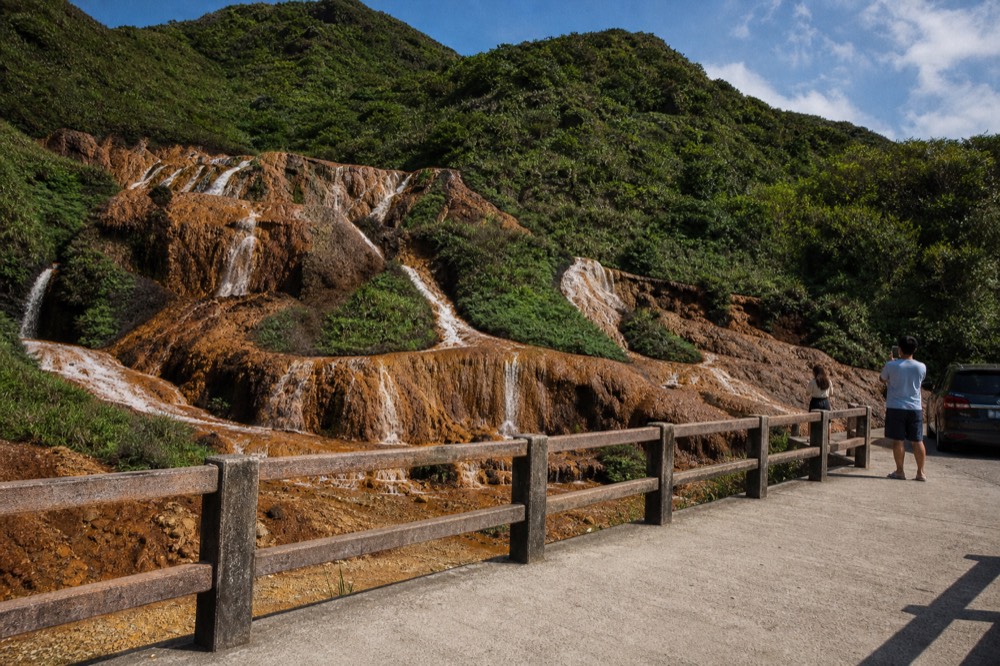
The falls sit on the road between Jinguashi and the coast at Shuinandong, which makes them an easy stop on the way down rather than a destination in their own right. Tour buses pull in at the roadside; independent travellers arriving by bus can do the same. There is no entrance fee, no ticket and no listed opening time, because it is a waterfall beside a road.
A note on expectations: this is a compact cascade, not a wide jungle fall. What makes it remarkable is the colour and the setting, the orange water against the stained rock with the hillside mine landscape behind it. If you want a walk-to waterfall with a trail and a swimming pool below it, the one at Shifen, covered in our Shifen Waterfall guide, is the better fit and is a different branch of the same day circuit.
What Is The Yin Yang Sea, And Why Are The Two Colours There?
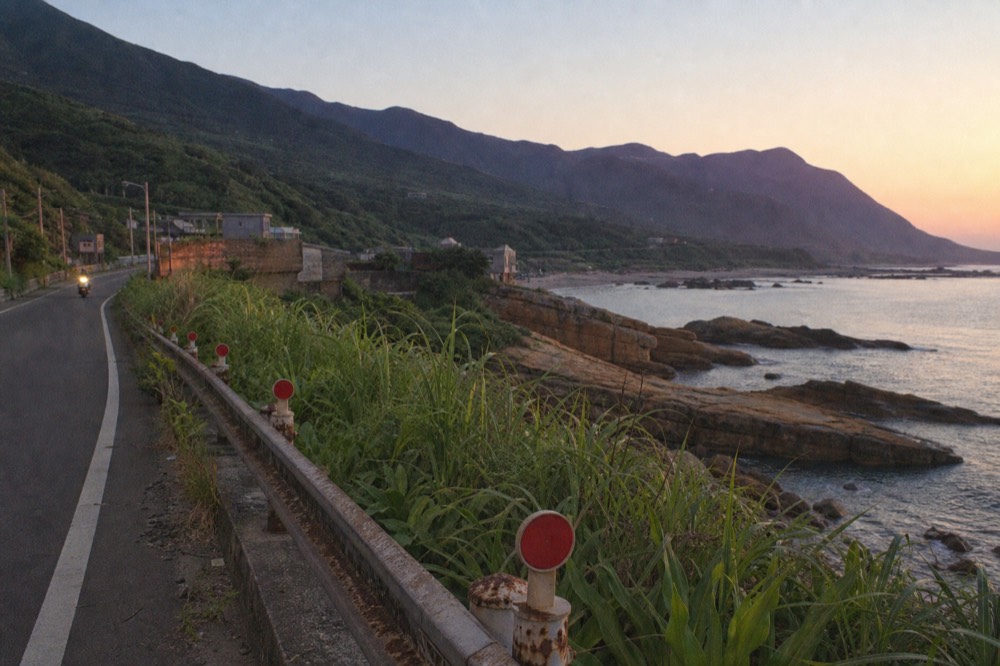
The Yin Yang Sea is the stretch of coast at Shuinandong where the near-shore water runs a distinct yellow-gold against the blue further out, and the cause is genuinely contested between natural mineral weathering in the rocks and drainage from the area's mining past, so this site does not adjudicate between the two explanations.
That last clause is deliberate. Two explanations circulate, one natural, involving pyrite and other minerals weathering in the local geology, and one historical, involving the mine drainage that also stains the Golden Waterfall. Researchers and official sources do not agree on the split between them, and a page that picks a winner is writing a conclusion the evidence does not support. What can be said plainly: the colour boundary is real, visible from the roadside viewpoints above the bay, and it is one of the most photographed sights on the northeast coast.
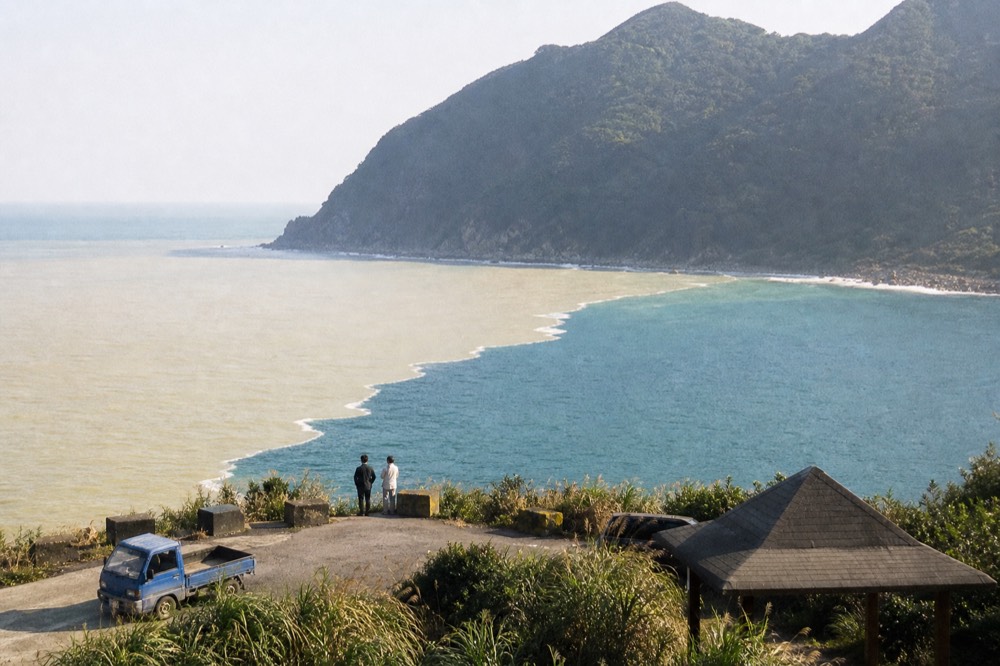
The viewing is roadside. The bus stops and coach pull-outs along the coast road between Shuinandong and the waterline give the angle most photographs are taken from, looking down over the boundary between the stained inshore water and the open sea. Like the Golden Waterfall, it costs nothing and has no hours.
The two stops pair naturally. The Golden Waterfall is the hillside half of the same drainage story and the Yin Yang Sea is the coastal half, and they sit minutes apart on the same road, so a Jinguashi visit that ends by dropping down to the coast collects both. Several tours on our roster, including the coast-focused ones described later on this page, build exactly that sequence into their itineraries.
How Do You Get To Jinguashi From Jiufen?
Local Keelung Bus routes 788, 827 and 825 connect Ruifang, Jiufen and Jinguashi on the New Taipei open-data bus network, with 788 running 05:00 to 22:30 seven days a week as far as Shuinandong and the Gold Museum area, while 827 runs a reduced weekend service whose last holiday departure is 11:10, making it a morning-only option on weekends.
Those service patterns come from the New Taipei City Government's open bus dataset, which lists 788 as a Keelung to Shuinandong route with 120 stops, running 05:00 to 22:30 on both weekdays and holidays, with the Gold Museum among its named stops. Route 827 runs Ruifang to Fushan Temple with a last weekday departure at 17:00 but a last holiday departure at 11:10. Route 825 is a limited Ruifang to Jinguashi service. This site does not print fares or journey times for these routes, because the dataset does not carry them in a verified form; check the operator's own information before relying on a specific bus.
| Route | Runs between | Weekday span | Holiday span | Notes |
|---|---|---|---|---|
| 788 | Keelung to Shuinandong | 05:00 to 22:30 | 05:00 to 22:30 | Gold Museum is a named stop; the reliable option |
| 827 | Ruifang to Fushan Temple | 07:40 to 17:00 | 08:10 to 11:10 | Morning-only on weekends and holidays |
| 825 | Ruifang to Jinguashi | 09:30 | 09:30 | Very limited service |
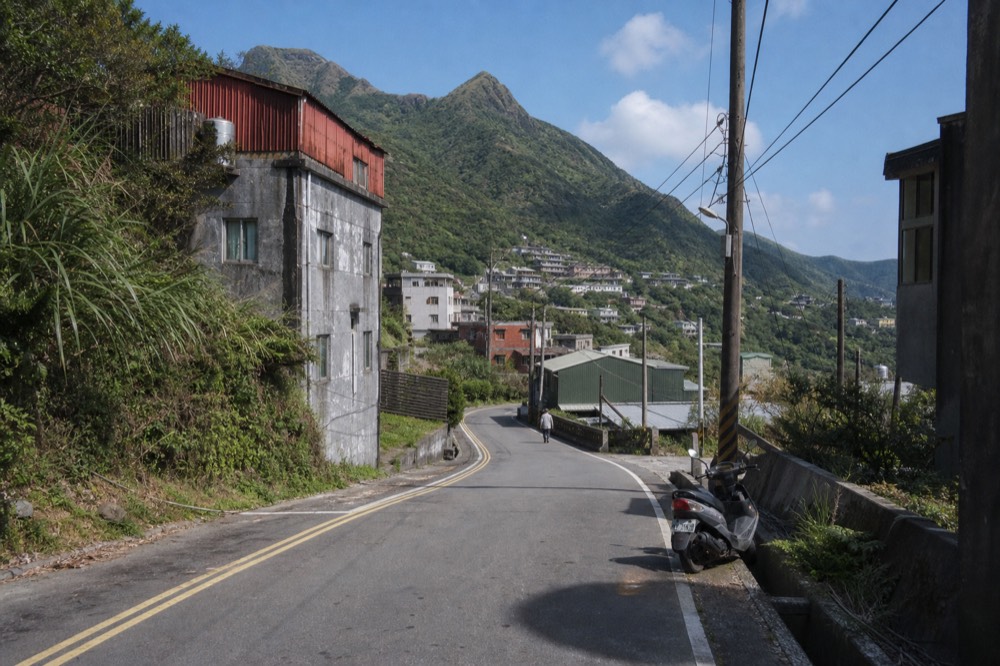
There is a second, less-known constraint on road access to this whole area. Under the New Taipei City Government's holiday traffic control plan, in force since 1 January 2025, control hours run 08:00 to 20:00 on every weekend, national holiday and make-up working day, and the signed notice designates the stretch from Jiufen Police Station to the Quanjitang car park at Jinguashi as a dangerous, accident-prone section where two vehicles cannot easily pass, barring large coaches except shuttles and scheduled services. Coach access to the area is rationed through advance application, with roughly 20 coaches approved per half-day slot and no applications at all during holiday runs of three or more consecutive days.
The practical read for an independent traveller: on a weekend the roads into and around Jiufen and Jinguashi are managed, and the bus, the shuttle from the park-and-ride lots, and the train to Ruifang followed by a local bus are the stress-free ways in. A private car works too, since the plan restricts coaches rather than private vehicles, but the narrow dangerous section between the two villages is worth knowing about before you drive it. Our Taipei to Jiufen guide carries the full rail picture, including the Taipei to Ruifang fares and frequencies.
What Else Is There To See In Jinguashi?
Beyond the museum itself, Jinguashi's sights are the old mine portals, of which tunnels Nos. 5, 8 and 10 still have intact exteriors, the Jinguashi Thirteen-Level Ruins, the remnant industrial buildings strung along the valley, and the village streets themselves, several of which appear as stops on guided tours of the old gold rush town.
The mine portals are the quiet star of the village. The ten numbered tunnels ran down the hill from the Jiufen side of the field, and the 2016 city release records that only the fifth, eighth and tenth keep their portal exteriors today, the rest lost to open-cast working or collapse. They are visible from the roads and paths around the village, and the old pit names survive in local bus stop signage, which is about as direct a link to the mining era as the area offers.
| Sight | What it is | Access |
|---|---|---|
| Mine tunnels Nos. 5, 8 and 10 | Intact portals of the old numbered mine tunnels | Visible from village roads and paths |
| Thirteen-Level Ruins | Long concrete remains of the old smelting works stepping down the hillside | Photo stop from the coast road |
| Gold Museum | Museum complex in the restored mine buildings | Ticketed, NT$80, closed first Mondays |
| Golden Waterfall | Iron-stained cascade below the old workings | Roadside viewing, no fee |
| Yin Yang Sea | Two-coloured coastal water at Shuinandong | Roadside viewpoints, no fee |
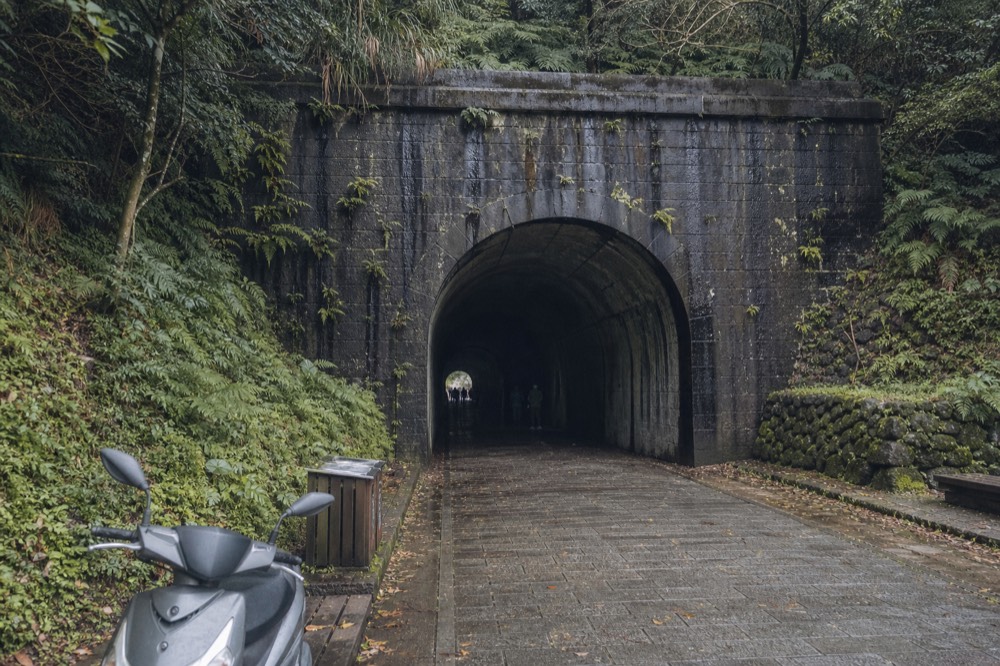
The Thirteen-Level Ruins, the long concrete remains of the old smelting works stepping down the hillside above Shuinandong, appear on several tour itineraries in this area, usually as a photo stop from the coast road. Like the rest of the industrial landscape, it is best understood as a viewing site rather than a walk-through attraction. The city government's place-name release is the best single primer on what all of these names mean and where they came from, including the vanished pumpkin crag the village is named after.
Guided options exist for travellers who want the story rather than just the view. A guided night walk of the old gold rush town, rated across a small number of reviews on a newer listing, covers the Golden Waterfall, the Gold Ecological Park, the Gold Mine Museum, the Baoshishan lookout, Jiufen Old Street and the Thirteen-Level Ruins in one guided itinerary, from $85 per person with hotel pickup and free cancellation confirmed.
For travellers who want Yehliu and the coast folded into the same day, a private half-day to Yehliu Geopark and Jiufen by night also reaches the Thirteen-Level Ruins, the Golden Waterfall and Jiufen Old Street, from $105 per person with free cancellation confirmed. It is a newer, smaller-volume listing, so there is no star rating to print, but its stop list is one of the densest routes through this landscape.
How Should You Plan A Day That Includes Jinguashi?
A workable day pairs Jiufen Old Street in the late morning with the Gold Museum in the afternoon and the Golden Waterfall and Yin Yang Sea on the way down to the coast, arriving by train to Ruifang and local bus, avoiding the first Monday of the month, and reversing the order in summer when the museum's weekend hours stretch to 18:00.
The order matters less than the spacing. The museum needs the middle of the day more than Jiufen does, because the old street is at its best early and late while the museum is simply daytime. The coast stops, the waterfall and the sea, work at any hour and cost nothing, so they absorb whatever slack the day has left.
| Time of day | Where | Why then |
|---|---|---|
| Morning | Jiufen Old Street | Quietest before midday; shops reported to open around 10:00 |
| Midday | Gold Museum, Jinguashi | Full hours; first Monday excluded |
| Afternoon | Golden Waterfall | Roadside stop on the descent to the coast |
| Late afternoon | Yin Yang Sea viewpoints | Light on the water; no closing time |
| Evening | Return via Ruifang, or stay for Jiufen at night | Lanterns follow sunset; see our Jiufen at night guide |
Weather belongs in the plan too. There is no weather station at Jiufen or Jinguashi; the nearest manned station is Keelung, about 12 km away on the same windward coast, and its 30-year normals show 3,589.7 mm of rain a year against Taipei's 2,329.5 mm, with rain on 193.6 days a year. September through February takes 61% of the year's rain, and November is the wettest month at 396.9 mm. July, at 119.5 mm across 8.5 rain days, is the driest, which inverts the usual avoid-Taiwan-in-summer advice for this corner of the island. The fog and drizzle the area is famous for are the northeast monsoon's work, not tropical downpours, and a wet-day plan should favour the museum over the coast stops. Our best time to visit Jiufen guide carries the full month-by-month picture.
The questions travellers ask most about Jinguashi cluster around the same few practical points: whether the Gold Museum is open on a Monday, what admission costs and who enters free, whether the Golden Waterfall and the Yin Yang Sea can be approached or only viewed, and how the local buses between Jiufen and Jinguashi actually run, and each answer below is short, direct and drawn from the verified sources cited in the sections above.
Common Questions About Jinguashi And The Golden Waterfall
Is the Gold Museum open on Mondays?
Yes, except the first Monday of every month, when it is closed. If that first Monday is a national holiday, the museum opens that day and closes the following day instead. It is also closed on Lunar New Year's Eve and the first day of Lunar New Year.
How much is Gold Museum admission?
NT$80 per person for general admission. A long list of categories enter free, including New Taipei residents, nationals 65 and over and under 12, enrolled students, and disability certificate holders plus one companion. Payment at the ticket office is cash, EasyCard or O'Pay.
Can you swim in the Golden Waterfall?
No. The falls are a viewing stop, and visitors should not enter the water. The orange colour is iron staining from the old mine workings, and the intended way to see the falls is from the roadside and viewing areas.
What causes the Yin Yang Sea's two colours?
The near-shore water runs yellow-gold against the blue sea further out. The cause is contested between natural mineral weathering in the local rocks and drainage from the area's mining past, and no page should settle that argument as fact. Both explanations circulate, and the colour itself is the verified part.
How do you get from Jiufen to Jinguashi?
Local Keelung Bus routes connect them, with 788 the reliable all-day option running to 22:30 seven days a week and stopping at the Gold Museum area. Route 827's last holiday departure is 11:10, so it is a morning-only bus on weekends. This site does not print fares or journey times for these routes; check the operator's information before you travel.
Is Jinguashi worth it if you have already seen Jiufen?
For most travellers, yes, if the mining story interests you at all. Jiufen is a lantern-lit shopping street; Jinguashi is the mine itself, with a museum built into the workings, free coast sights below the village, and a fraction of the old street's crowds. Budget the afternoon for it and check that your date is not a first Monday.